Should Your Visual Novel Change Its Steam Capsule for the Autumn Sale?
October 2, 2026
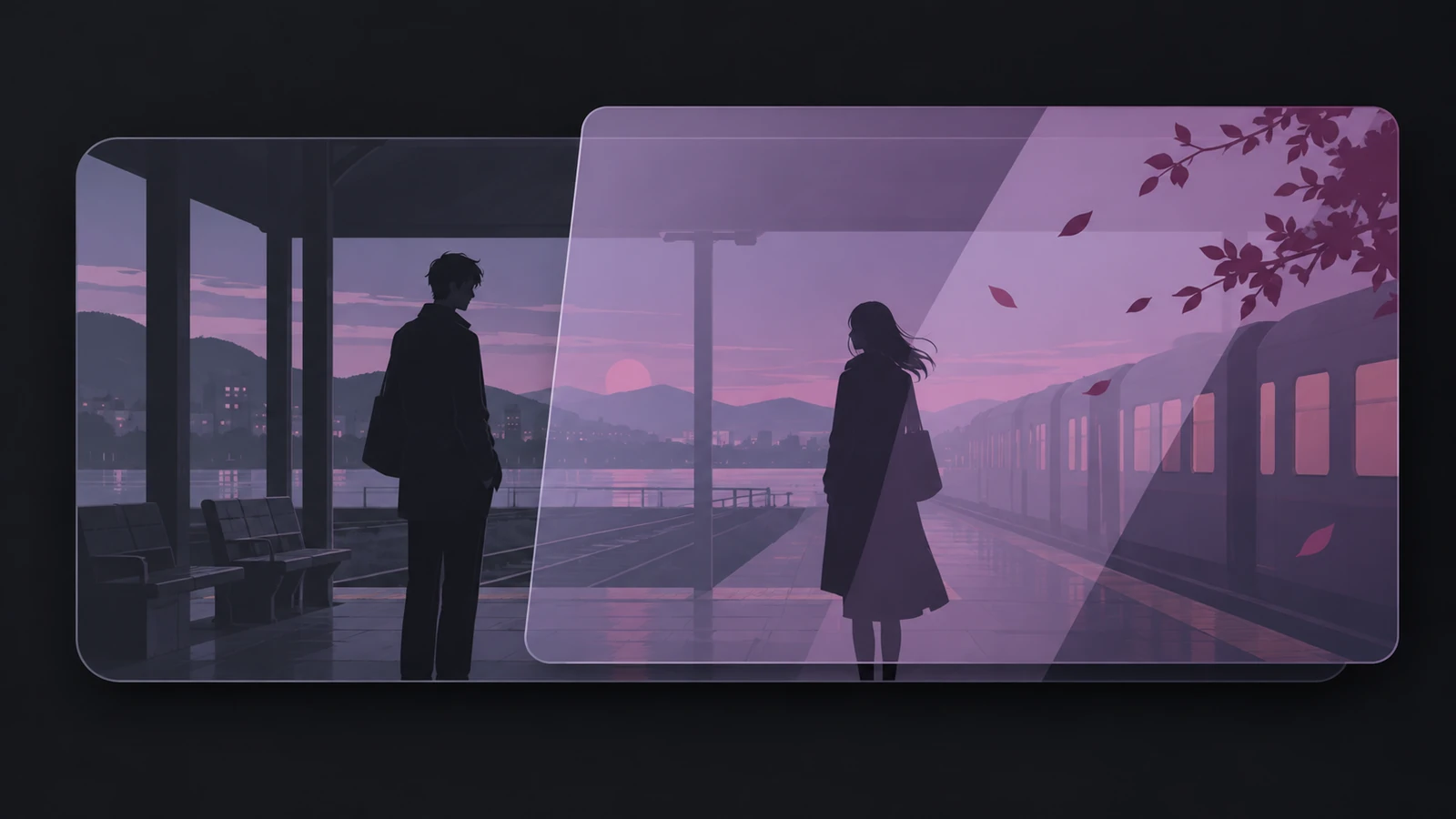
A visual novel joins the Steam Autumn Sale, and its creator opens the store art folder. The discount is live. Does the capsule need orange leaves, a large percentage, or a temporary sale banner before the week is over?
Usually, no. A discount and an artwork update are separate decisions. Valve's 2026 Steam Autumn Sale runs from October 1 to October 8 at 10 a.m. Pacific, but participation does not by itself require new capsule art. Steam's default capsule rules also prohibit discount marketing copy such as an on-sale message or a percentage. The useful question is not whether the store is holding a sale. It is whether your game has real new content or a time-sensitive in-game event that temporary artwork should communicate.
Consider a fictional mystery visual novel called Last Train at Violet Bay. It already has a clear capsule: two adult travelers beneath a station clock, the title readable at small size, and no extra claims. The game receives a seasonal side story at the same time as the sale. That new story may justify an Artwork Override. If the only change is a lower price, the existing capsule can keep doing its job.
What is an Artwork Override actually for?
Steam keeps a set of default graphical assets for a game's normal store presence. An Artwork Override is a temporary set of capsule images placed over those defaults for a chosen period. Valve describes it as a way to call attention to new content, updates, tournaments, seasonal events, downloadable content, or similar product news. When the chosen end time arrives, the store automatically returns to the default images.
That last part is important. An override is not a replacement folder with a reminder attached. It is a scheduled layer. You choose a start and end time, upload the temporary assets, publish the change, and retain the default set underneath.
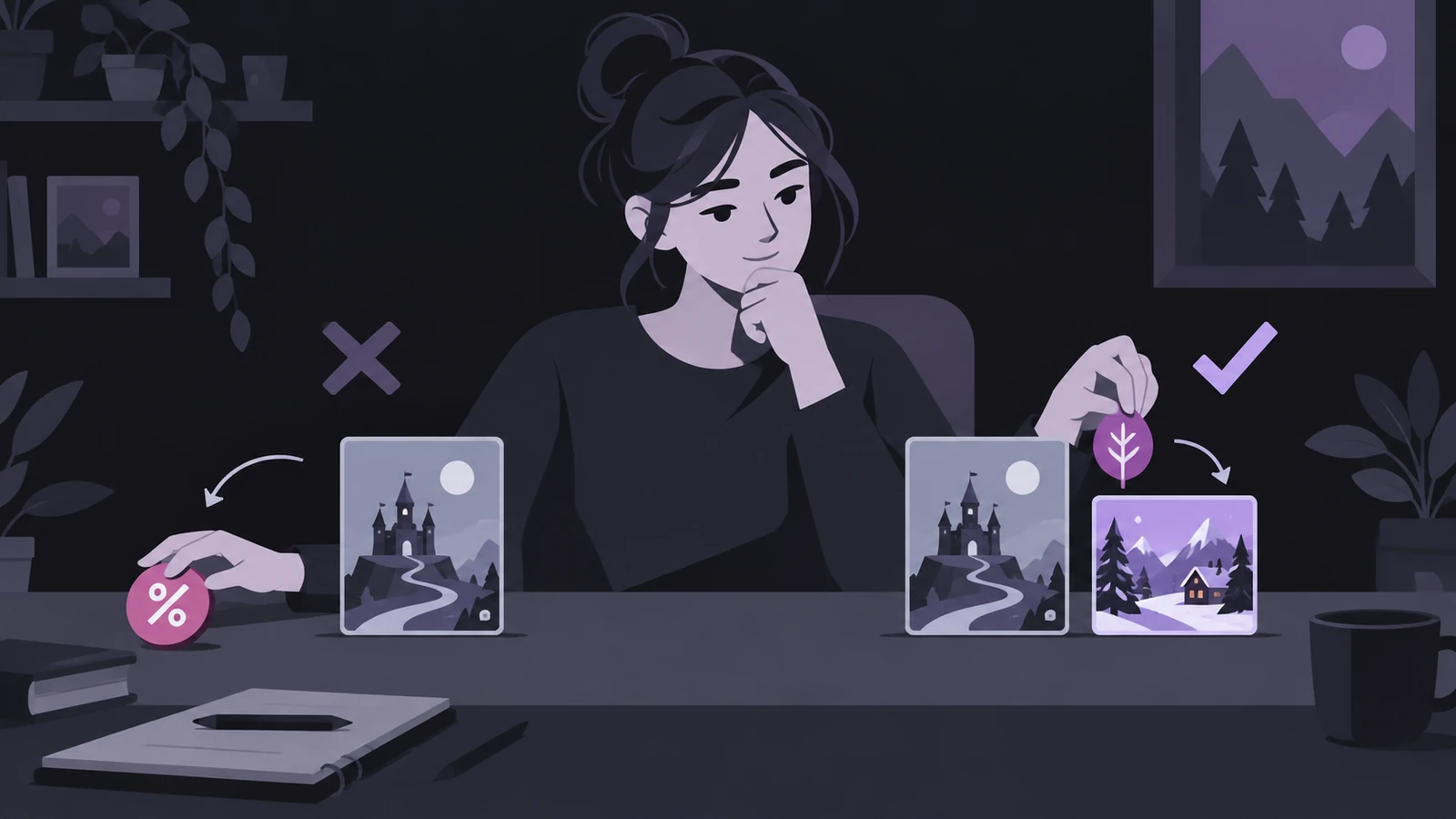
For Last Train at Violet Bay, the seasonal side story is the reason for the override. The sale is the timing context. If the side story did not exist, placing “Autumn Sale” or a discount percentage across the capsule would not become acceptable merely because the game is discounted.
This distinction also protects the game's identity. A store visitor may see the capsule in a narrow list, a recommendation row, or an email. If every inch is occupied by price language, the title and the story's mood become harder to recognize. A stable default capsule can be more useful than a hurried seasonal variation.
Which words and symbols must stay off the capsule?
Valve's base graphical asset rules are strict. A standard capsule is limited to game artwork, the game's name, and an official subtitle. It cannot carry review scores, award names or symbols, discount marketing copy, promotion for another product, or miscellaneous text.
Temporary overrides permit a narrow extra category. Text can describe a major game update, a new seasonal event, downloadable content, or similar new content. The permission does not extend to “On Sale Now,” a discount percentage, or a call to preorder or wishlist. If the message describes the transaction rather than the game, it does not belong on the capsule.
All capsules also need a readable product name, the correct dimensions, and artwork suitable for a broad store audience. Text about an update must be localized into the languages the game supports. For a text-heavy visual novel, that localization requirement deserves its own space in the schedule. Shrinking one English phrase until it barely fits is not a substitute for preparing each supported version.
The practical design test is simple. Hide the seasonal layer and ask whether the capsule still identifies the same game. Then show the temporary version at a small size. The title should remain readable, the characters should not be cropped into confusion, and the new-content cue should not overpower the base composition.
Last Train at Violet Bay uses one quiet change: the station scene shifts from summer rain to late-autumn dusk, and a short localized subtitle names the seasonal side story. It does not add a price, a rating, or a store instruction. A creator without a genuine update should stop before this step and keep the default art.
Why do the header and main capsules need separate attention?
Steam does not use every capsule in the same place. Valve notes that the Header capsule appears in the Daily Deal area and many lists, while the Main capsule is used in wishlist emails. The standard asset documentation also shows distinct required shapes for Header, Small, Main, and Vertical capsules.
One wide crop cannot simply be squeezed into every slot. A pair of characters that reads clearly in the Main capsule may become two unrecognizable fragments in the Small capsule. A long subtitle that fits a large image may fail as soon as the card appears in a compact list.
Prepare each required size from the same visual idea, but recompose it for that frame. Keep faces and the title away from unsafe edges. Check the smallest presentation first, because it exposes an unreadable title and a crowded update cue faster than a large preview does.
This is also where a polished temporary set can become too expensive for a small release. Four carefully recomposed capsules, localized update wording, review time, and a final live check are real production work. If the new content is minor or the schedule is already full, keeping the default set is a legitimate decision.
How should the start and end times be set?
Valve recommends starting an override five minutes before a coordinated discount. The reason given is operational: the new artwork has time to be picked up for any wishlist email connected to the discount. This is a recommendation for timing, not permission to put discount copy into the image.
The end matters just as much. Set it to the moment when the temporary message stops being true. If the seasonal side story remains available after the sale, the override does not necessarily need to end with the discount. If the content itself disappears at a fixed time, the artwork should not continue promising it afterward.

Record three checks around that schedule:
- Before activation, confirm the default set is complete and current.
- After activation, view the public store page and at least one compact capsule placement.
- After expiration, confirm that the default images have returned and no temporary wording remains.
Automatic restoration reduces manual work, but it does not remove the need to inspect the result. A wrong end time can keep an expired message visible. A missing default image can make the restoration expose an old or incomplete asset. The schedule works best when both layers are ready before the first one goes live.
Where does a Novelez project hand off to Steam?
Novelez can export a project, including its assets, as a Ren'Py project archive. The current Novelez documentation describes that export as a path for continuing in Ren'Py or building distributable files. It does not say that Novelez configures a Steam store page, uploads capsule art, or schedules Steamworks overrides.
Treat those as separate production stages. In Novelez, finish and test the story. After export, build and test the distributable version. In Steamworks, prepare the store assets, discount, and any temporary override. The capsule should describe the version players can actually obtain, not a seasonal scene that exists only in the editor.
For Last Train at Violet Bay, the creator first verifies that the side story is present in the distributed build. Only then does the temporary capsule become truthful. If the build slips, the art schedule should move too. Store presentation should follow the shipped content, not race ahead of it.
A short go-or-no-go check
Use an Artwork Override only if every answer below is clear:
- There is real new content, an update, or a time-sensitive in-game event to communicate.
- The temporary image does not contain discount copy, review scores, awards, or unrelated promotion.
- Every required capsule size keeps the game name readable.
- Any update wording is localized for supported languages.
- The default images are complete and ready to return.
- The start time accounts for the recommended five-minute lead when coordinated with a discount.
- The end time matches when the content message stops being true.
- Someone will check the public store after activation and after restoration.
The 2026 Steam Autumn Sale is a reason to review your store presence, not an order to redesign it. Keep the default capsule when the only news is price. Use a temporary layer when the game itself has something new to say, and make sure the layer leaves on time. If your visual novel joined a sale tomorrow, would its capsule need a new-content message, or would the existing art already tell the right story?