Does a Visual Novel Need Choices to Work?
August 21, 2026
A visual-novel creator can finish a strong story without giving the reader a single choice. The harder question is not whether the format permits a linear story. It does. The useful question is whether a decision would let the reader understand, express, or risk something that the written scene cannot deliver as well on its own.
That distinction matters because choice is often treated as an entry fee. A new creator opens an engine, sees a menu command in the tutorial, and assumes every few minutes of reading must lead to two buttons. Soon the script contains polite variations that return to the same next line, several endings that exist only to justify the buttons, and a test plan much larger than the story needed.
You are allowed to begin with the story instead. A linear visual novel, often called a kinetic novel, can still use character art, backgrounds, music, scene direction, and reader-controlled pacing. What it gives up is control over the story's course. That is not automatically a defect. Sometimes the point is to witness a precise sequence from a carefully chosen viewpoint.
Start with the path that must work
Before drawing a branch, write down the sequence that would remain if every choice disappeared. Who wants what at the beginning? What changes the situation? What final moment resolves or transforms that desire? If those pieces do not hold together, extra paths will hide the weak connection rather than repair it.
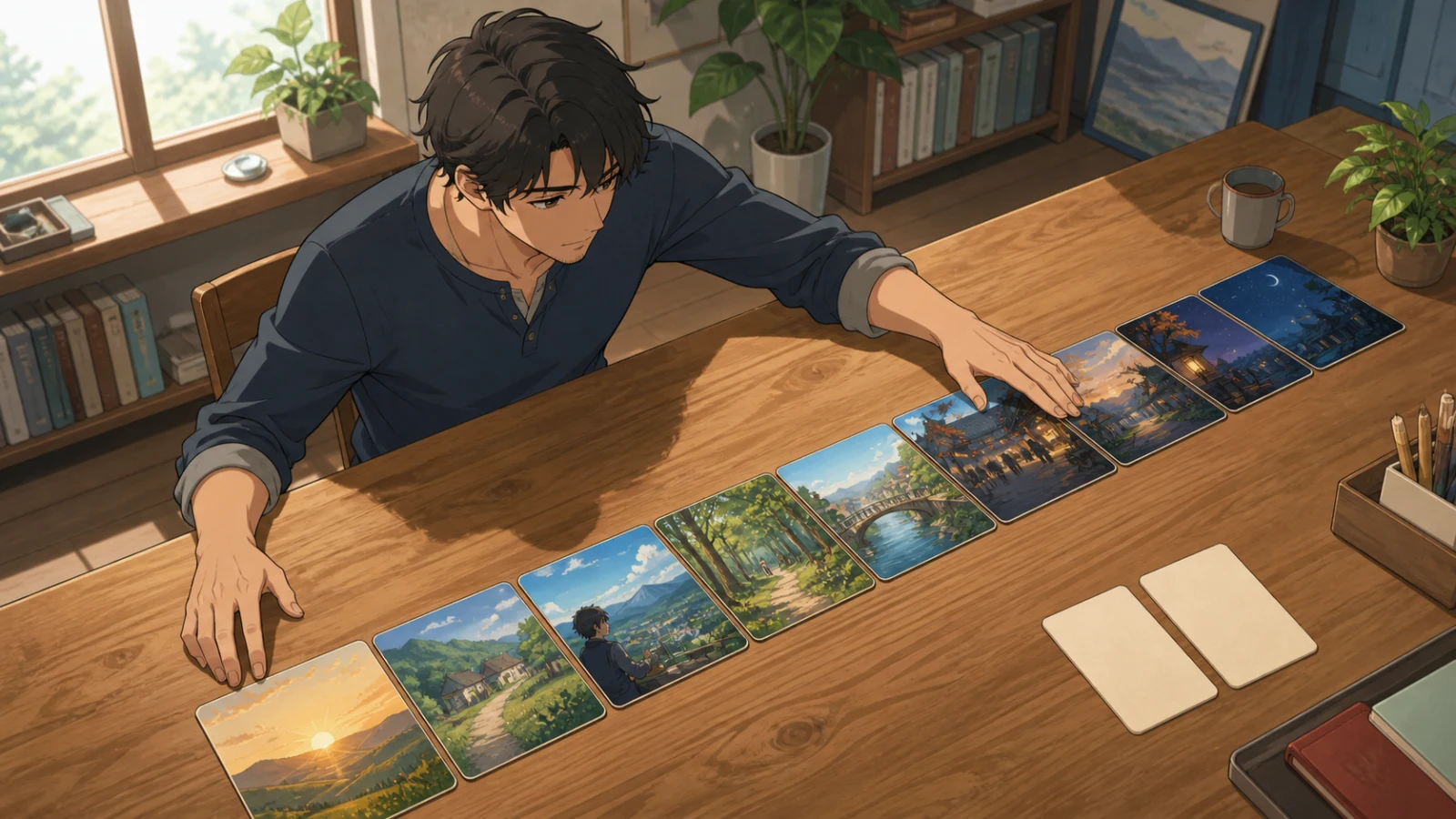
This linear spine is not wasted work if you later add interaction. It gives every branch somewhere purposeful to leave from and somewhere sensible to return. Ren'Py's own quickstart separates ordinary dialogue flow from menus, labels, and jumps: a script can advance line by line, while a menu explicitly transfers control when the story needs it. The technical mechanism is optional; the narrative consequence is what earns its place.
Try reading the spine aloud or showing a rough build to one person. Mark the moments where the reader leans forward and forms an opinion before the protagonist acts. Those are candidates for a choice. A gap caused only by slow exposition is not. Fix the scene first.
What should a choice actually change?
A useful choice does not always need a new ending. It can change one of three things.
It can change events: the reader goes to the roof instead of the station and sees a different scene. It can change knowledge: both routes reach dinner, but one reveals why a character lied. Or it can change expression: the plot stays put, yet the reader decides whether the protagonist answers with warmth, suspicion, or silence, and the next lines acknowledge that stance.
The third kind is easy to underestimate. Small reactive differences can make a protagonist feel inhabited without doubling the entire story. The important part is acknowledgment. If two buttons produce the same response word for word, the reader learns that the button was decorative. If the next exchange changes tone, recalls the selection later, or alters what the protagonist notices, the decision has done real work even when the routes converge.
Ask a blunt question at every proposed menu: what will the reader know or feel after choosing that they would not get from simply reading the author's preferred version? If the answer is only “there should be interaction here,” remove the menu.
Count the work after the button
The cost of a choice is not the two labels on screen. It is everything that must remain coherent after either label is selected.
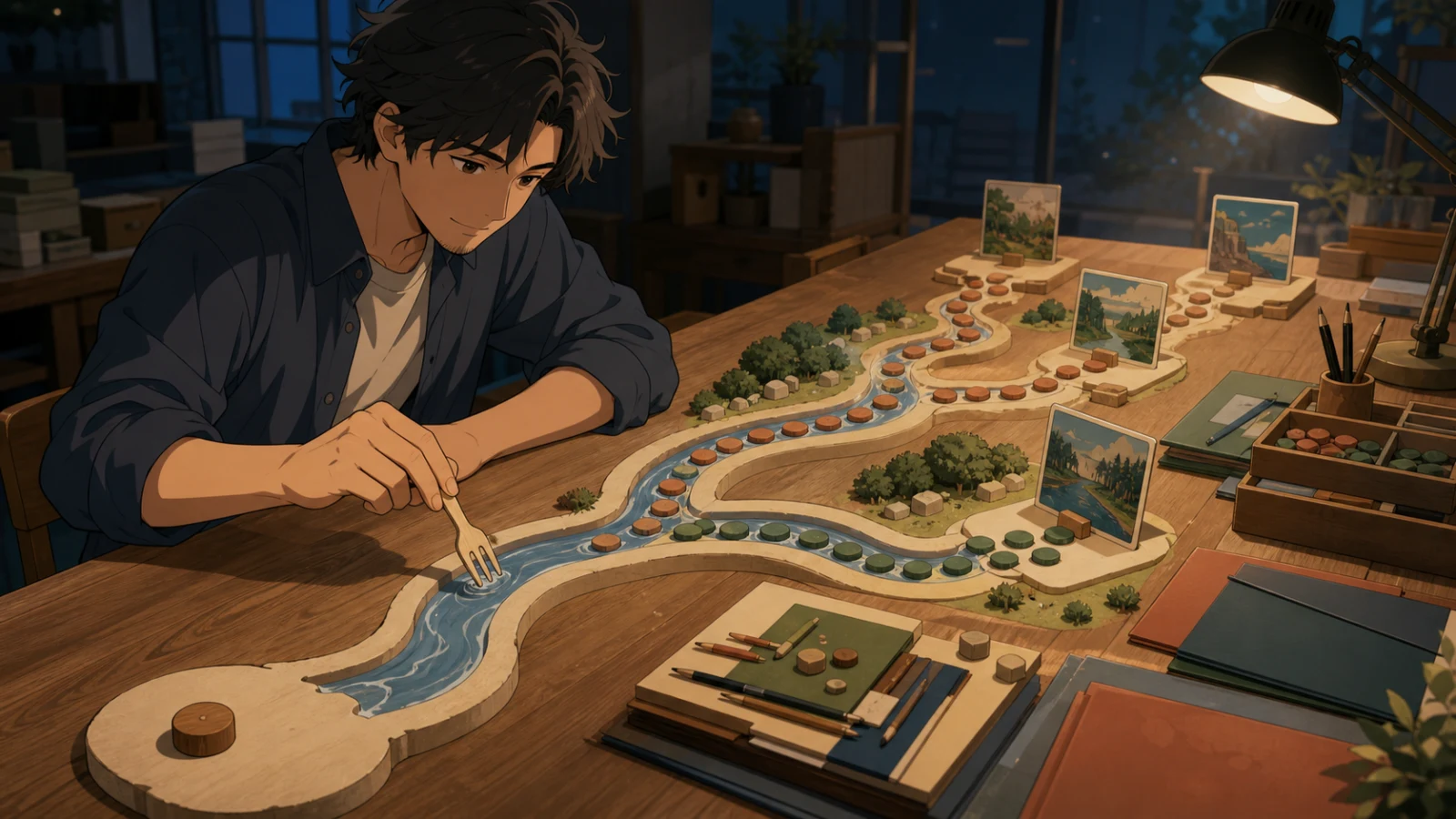
A short branch may require two dialogue variants, then converge. A persistent choice may need a remembered value, altered reactions in later scenes, another illustration, and separate test passes. A route split can multiply word count, backgrounds, character states, music cues, endings, save points, translation context, and bug reports. The visible fork is the smallest part.
Estimate choices in scenes, not buttons. Sketch each outcome as a box and connect it to the next shared or separate scene. Then count the boxes you must write and test. If a decision creates three buttons but all three converge after four lines, the scope is modest. If two buttons open five unique scenes each, you have added ten scenes, even though the menu looked simple.
There is another hidden cost: comparison. Readers often save before a choice and check the other option. That means alternate responses sit beside one another in memory. A thin branch written as filler becomes easier to spot than it would in a linear story.
When is a linear story the stronger choice?
Stay linear when the experience depends on inevitability, tightly controlled revelation, or a protagonist whose decisive action should belong to that character rather than the player. Mystery, tragedy, memoir-like work, and short atmospheric pieces often benefit from a single deliberate route. So does a first project whose main goal is learning how to finish, publish, and revise a complete work.
Linear structure also makes production promises clearer. Every reader receives the scenes you considered essential. You can spend the saved time improving expression changes, sound timing, transitions, and prose instead of writing an alternate route that fewer people will see.
Do not use “kinetic” as an excuse for passivity. A linear visual novel still needs movement. Change the emotional pressure, visual composition, sound, location, or unanswered question often enough that advancing the text feels like entering the next beat rather than scrolling through a document.
When does branching deserve the budget?
Add choices when the story is about judgment, allegiance, sacrifice, curiosity, or self-definition and you want the reader to own part of that tension. Branching is especially valuable when two reasonable values collide. Choosing safety or honesty is interesting. Choosing the clearly correct answer or an obviously foolish one usually is not.
You also need enough aftermath for the decision to breathe. A choice made at the final line can select an ending, but it cannot reveal much about living with the consequence. A choice earlier in the story can shape a relationship, unlock information, and return as a remembered detail without requiring a completely separate novel.
Start with one consequential fork. Do not promise five routes while testing the basic premise. Build the linear spine, add the fork, and follow both outcomes through to a point where they either converge honestly or finish separately.
Test the decision, not just the paths
Path testing asks whether both buttons reach valid scenes. Decision testing asks whether a reader understands what they are deciding.
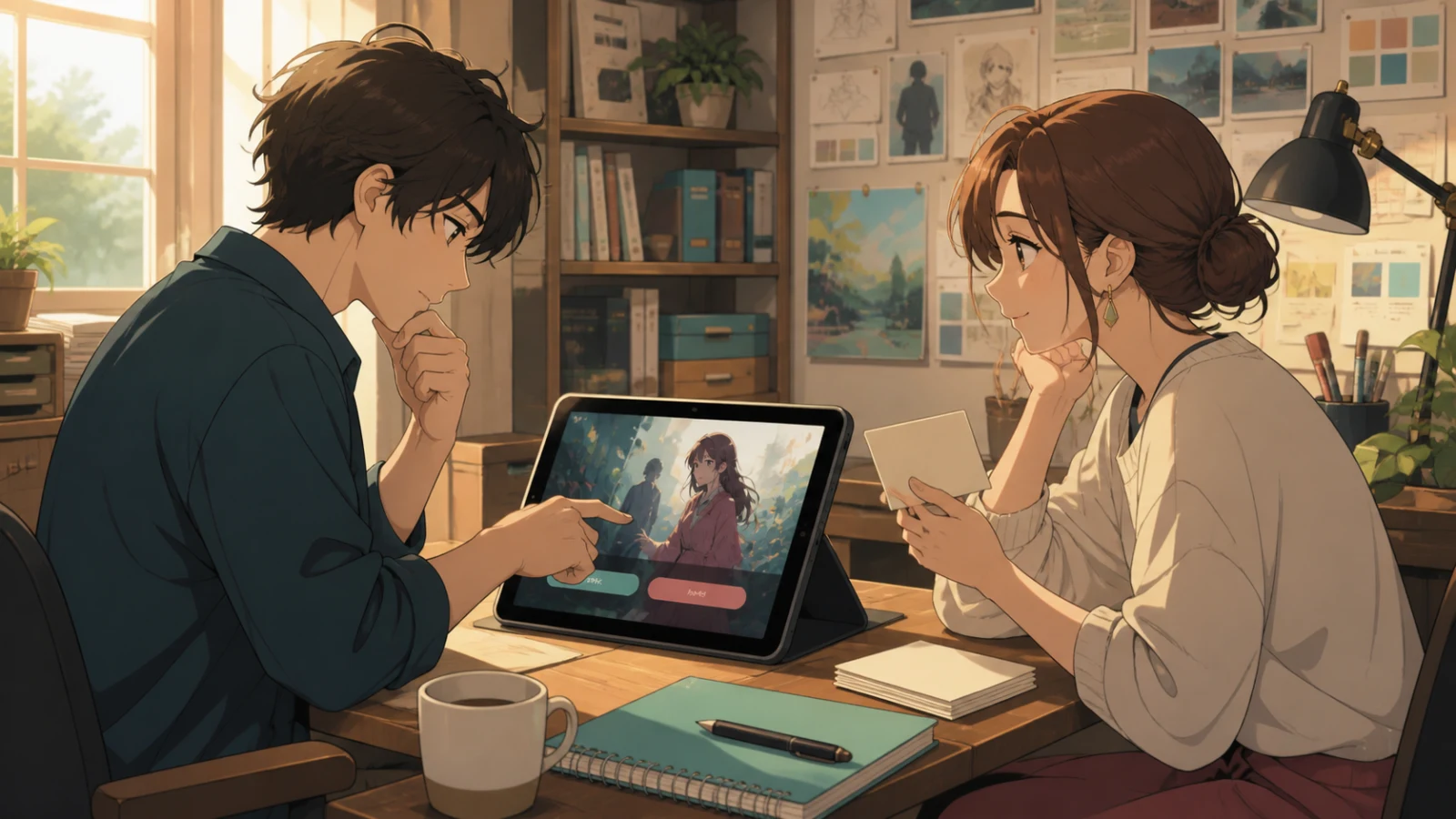
Give a rough build to someone without explaining the menu. After they choose, ask what they expected each option to mean and why they selected one. If their explanation matches the conflict you intended, the choice is legible. If they thought one button meant something entirely different, revise the wording or the setup. If they clicked at random because neither mattered, the scene has not earned the fork yet.
Avoid labels that conceal consequences merely to manufacture surprise. A choice can contain uncertainty without being misleading. The reader does not need a full forecast, but they should know the immediate intention: stay and listen, leave before being seen, tell the truth, protect the secret. Surprise should come from what follows a decision, not from the button meaning something other than it said.
How does Novelez help with the decision?
Novelez does not decide whether your story should branch, and it cannot make a weak choice meaningful. That remains a writing decision.
It does let you build the story as visible scenes instead of hiding the structure inside code. You can lay down the linear spine, connect the scenes in order, and add a branch only where a reader decision has earned more work. Because the project can be published to a link, a rough version is easy to hand to a test reader; after revising the choice or its outcomes, you publish the corrected flow again rather than packaging a new downloadable build.
The sensible first project is therefore not “interactive at any cost.” It is complete at the smallest honest scope. If one path tells the story best, finish that path with confidence. If one decision changes what the reader understands or owns, build that fork carefully and make both sides worth choosing.
A final structure check
- The story still has a clear beginning, change, and ending with every menu removed.
- Each remaining choice changes events, knowledge, or the protagonist's expressed stance.
- The next scene acknowledges what the reader selected.
- Every branch has been counted as scenes to write, illustrate, and test.
- The option labels describe the reader's immediate intention without a trick.
- A test reader can explain what they thought they were deciding.
- Converging paths return for a story reason, not because the draft ran out of time.
- A linear version is acceptable if it serves the experience better.
Choices are a tool, not proof that a visual novel belongs to its form. Use them when the reader should carry responsibility for a moment. Leave them out when the strongest experience is to watch the moment unfold exactly once.