How Is AI Changing the Way We Create Visual Novels?
June 16, 2026
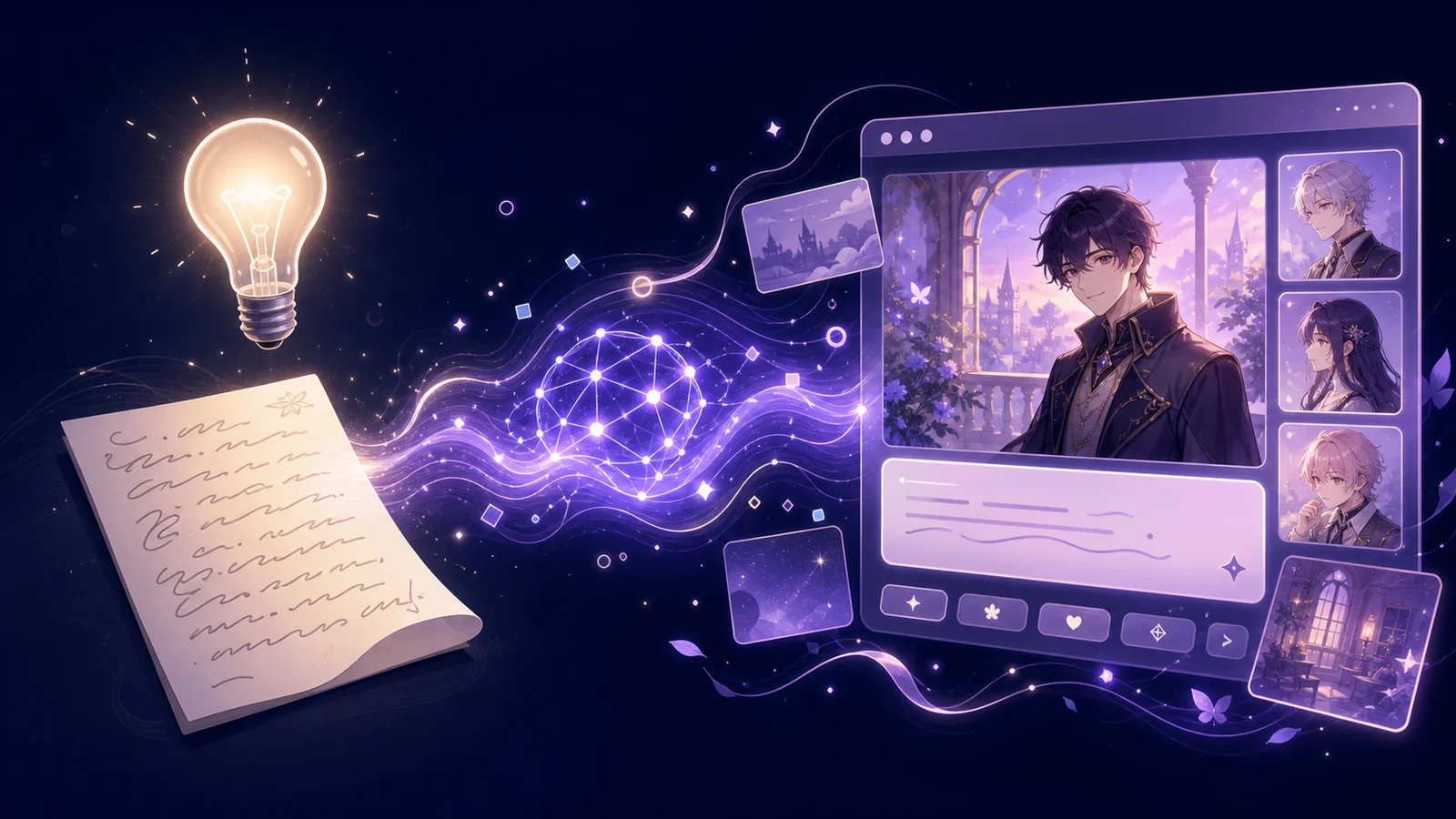
Have you ever thought about making your own visual novel?
You've got a story in your head, clear as day. But the moment you try to start, it gets overwhelming, right? "How do I draw the art?" "How do I turn this into an actual game?" "Do I have to learn to code?"
Yeah, I've been there too. But lately, this whole picture has been changing pretty fast, thanks to AI. So today, let's walk through how AI is changing the way we create visual novels.
🧱 Why Was It So Hard Before?
Let's start here. A visual novel actually needs three things at once: writing, art, and tech. And that combination set the bar pretty high.
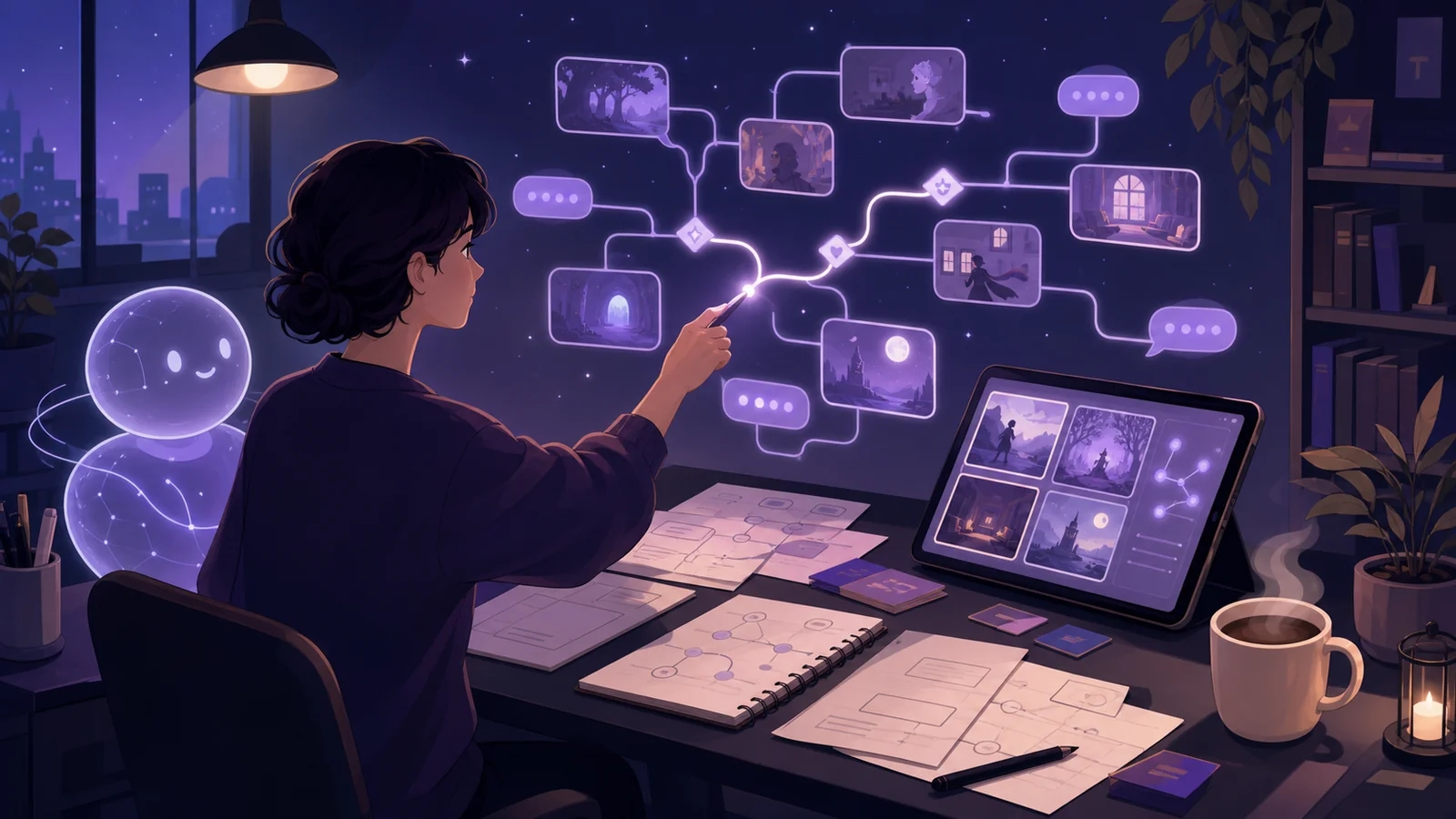
1️⃣ Story — You design characters, write dialogue, and map out all the branches that split based on the player's choices.
2️⃣ Art — You need multiple expressions for each character, plus backgrounds for every scene.
3️⃣ Tech — You have to assemble all of it into a working game, which usually meant coding.
So making a visual novel on your own basically meant being a writer, an illustrator, and a programmer all at the same time. Hit a wall on any one of those, and it was easy to just give up.
But AI has started knocking those walls down, one by one. Let's see how.
🎨 The First Wall: Art
The most visible change is in the art.
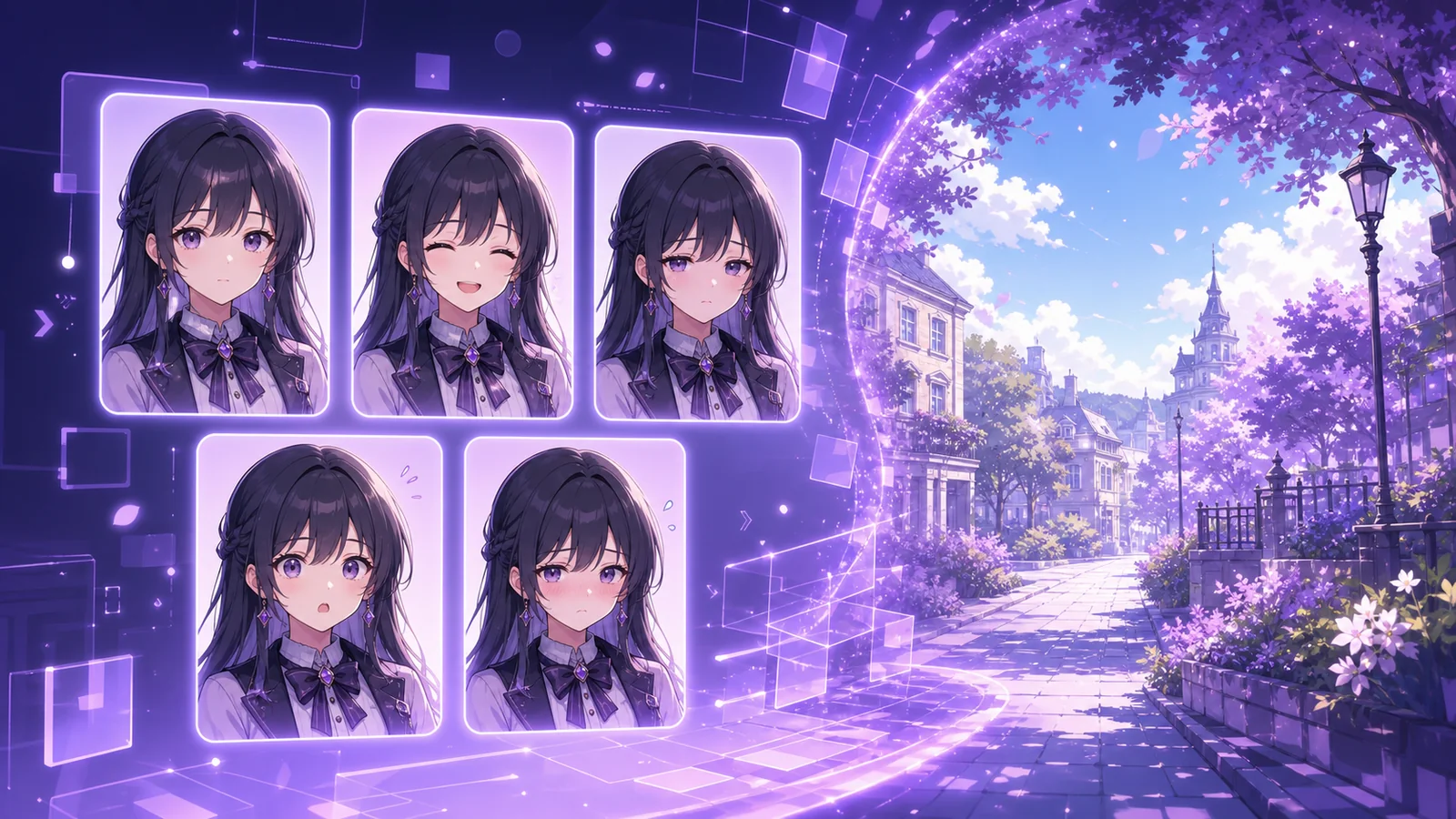
It used to be that using a single character properly meant drawing a lot of expressions. Happy, sad, surprised, embarrassed… most visual novels use somewhere between ten and twenty-plus expressions per character. Drawing all of those by hand took an enormous amount of time.
Now, image-generation tools like NovelAI and Midjourney can create a whole set of expressions for the same character at once, keeping a consistent art style. Same goes for backgrounds. Describe "a classroom at sunset" or "a rainy alleyway," and you get an atmospheric background in minutes.
In fact, gathering assets like characters and backgrounds used to take weeks or even months. With AI, that can shrink to days, sometimes a single day. For anyone who never felt confident about drawing, that's a huge shift.
✍️ The Second Wall: Story
"So does AI just write the whole story for me?" Here's where we need to be a little more careful.
AI is genuinely great at assisting with story. When you want to spread a branch in several directions, get unstuck on a scene, or nail down a character's voice, ask AI and ideas come pouring out. As a brainstorming partner, it's hard to beat.
But here's a key point. AI doesn't know "why" this story is being told. Experts keep saying the same thing: AI has no intentionality, so what emotion you want to leave behind, which choice tugs at the heart, that's something a human still has to decide.
That's why the approach people point to as the best right now is co-creation. AI spreads the branches and expands the scenes, and the writer picks out the voice, the stakes, and the "this doesn't fit my story" bits. The human holds the wheel; AI rides along to help.
🛠️ The Third Wall: Tech
The last wall was "how do I actually turn this into a game?" Honestly, this is where most people used to quit.
Making a visual novel used to mean writing scripts yourself. Every line of dialogue, every choice, every scene transition had to be written in code. If you didn't know programming, you often couldn't even start.
Now, tools are emerging that build your game's structure from plain language, no coding required. Work that once took twenty or thirty people is now genuinely being done by a single creator.