How Many Music Tracks Does Your Visual Novel Need?
August 23, 2026
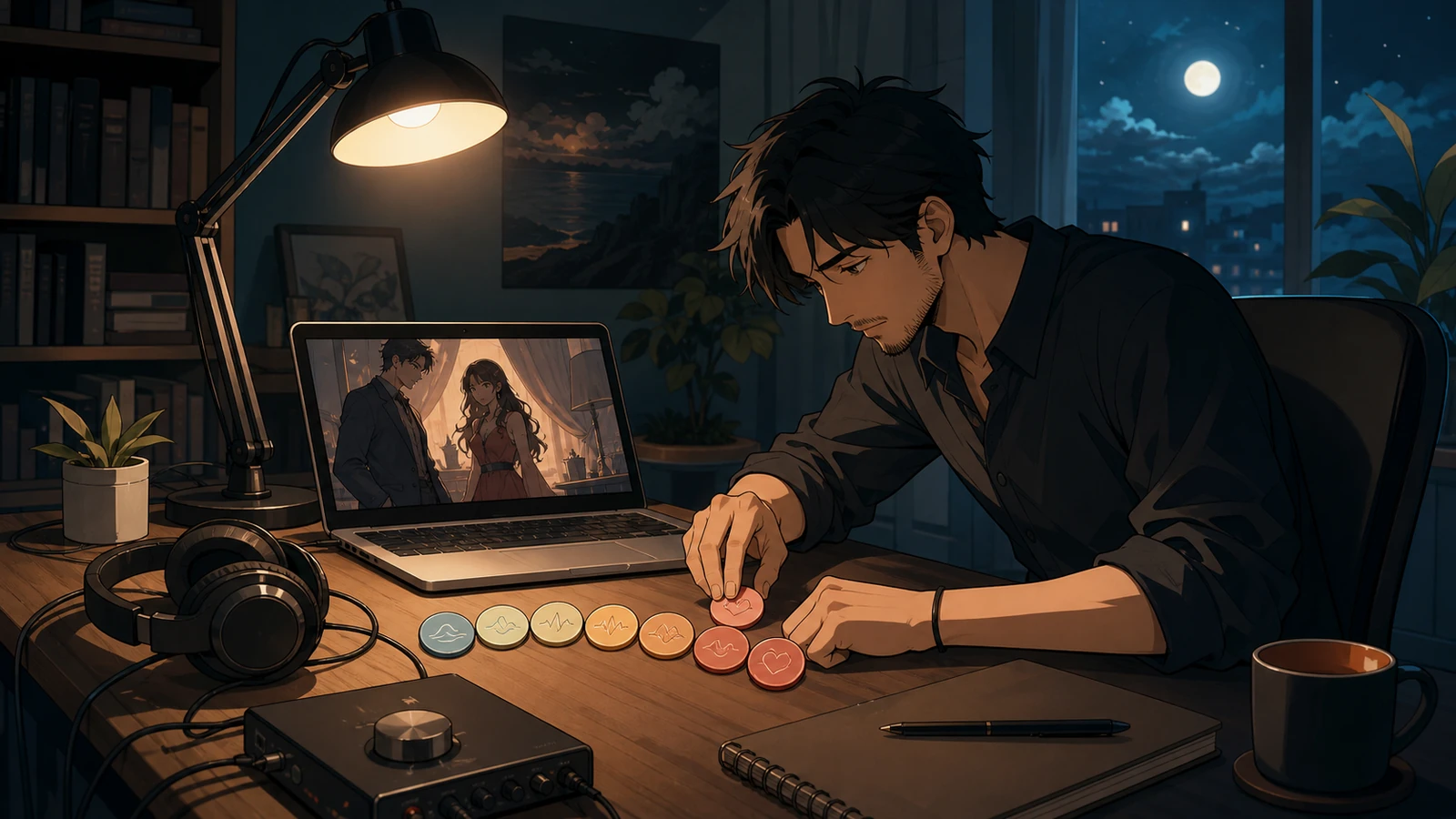
You have finished the scene list for a short visual novel, opened a music marketplace, and immediately met a number you never planned for: how many tracks are you supposed to buy or commission?
There is no useful answer based on word count alone. A ten-thousand-word story might move between one room and three emotional states. Another story of the same length might cross six locations, alternate comedy and danger, and give every route a different ending. The second one creates more musical jobs even though the scripts weigh the same.
The practical answer is to count jobs before songs. A small soundtrack is complete when every important dramatic function has a cue, silence is used deliberately, and no track has to pretend to be two incompatible things.
Start with a cue map, not a target number
Print your scene list, or put it in a table. Beside each scene, write what the reader should feel while they are clicking through it. Do not write genres such as piano, lo-fi, or orchestral yet. Write jobs: ordinary conversation, private warmth, uncertainty, open danger, aftermath, ending.
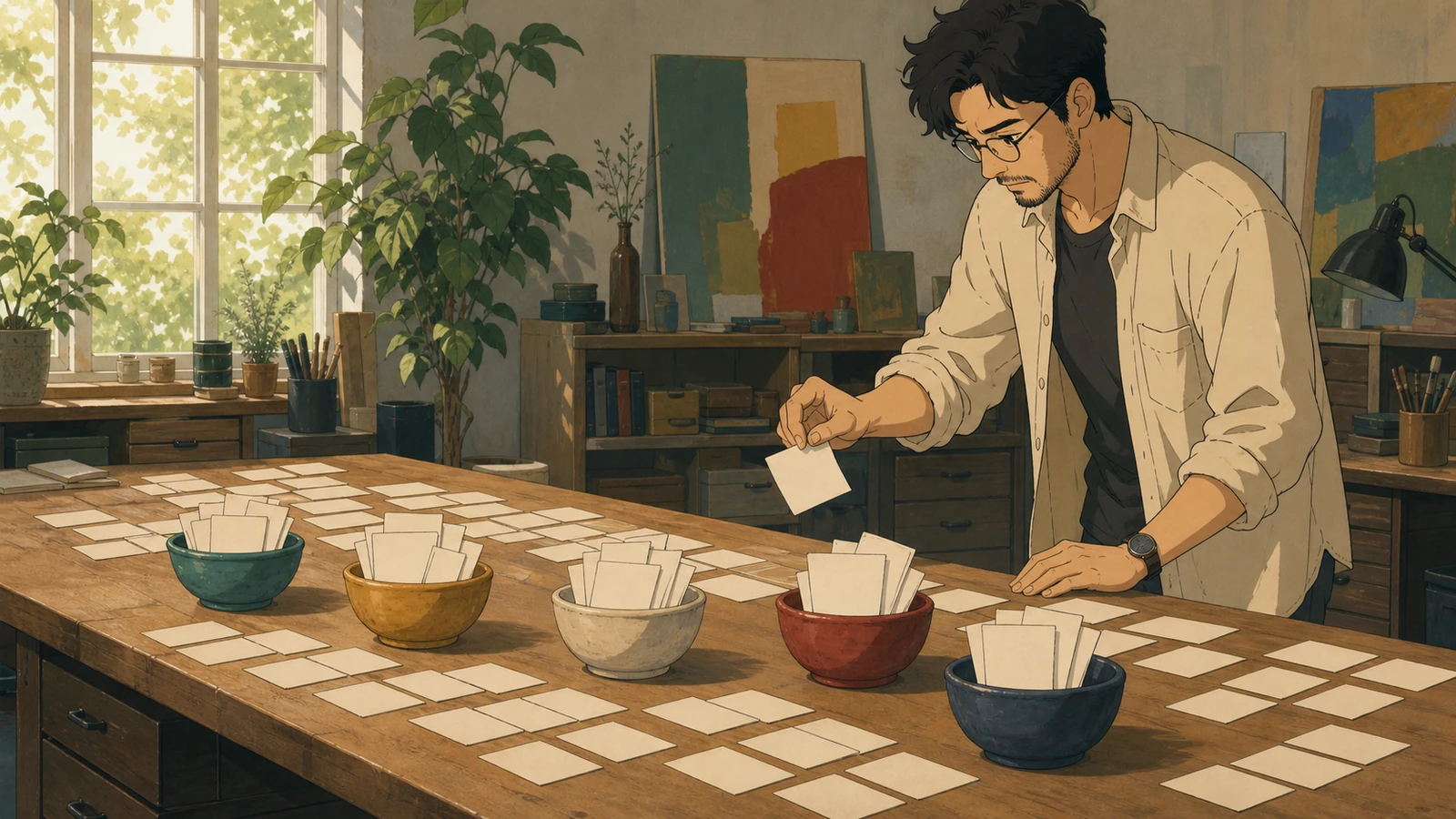
Now group scenes that can honestly share a cue. The café introduction and a relaxed walk home may both need an everyday track even though the backgrounds differ. A confession and a reconciliation may share a tender cue if the music does not announce one specific outcome. Two scenes in the same bedroom may need different music when one is comic and the other frightening.
This changes the question. You are no longer guessing whether a short visual novel deserves six tracks or sixteen. You are looking at a visible list of musical jobs. If five groups cover the story and two moments work better in silence, five may be enough. If one group contains both a chase and a quiet suspicion scene, it is not a real group and should split.
Keep special cues expensive in narrative terms. A character theme, route theme, or ending song earns its place when recognition matters later. If a melody appears once and never changes how another scene is heard, a reusable mood cue may do the same work for less money and less production time.
Build the minimum set in layers
Start with the cues that keep the story readable rather than the cues that sound impressive in a playlist.
The first layer is a neutral home base. It covers ordinary conversation and gives the reader a sound to return to after something intense. The second layer covers contrast: usually warmth, unease, or urgency, depending on the story. The third layer belongs to the turn that defines the work, such as a revelation, a breakup, a pursuit, or the quiet after the final choice.
Only then add location themes and character themes. A location needs its own music when returning there should change the reader's posture before anyone speaks. A character needs a theme when hearing it again carries information. Giving every room and person a track by default produces a larger invoice, more transitions to manage, and less chance for any melody to become familiar.
Sound effects belong on a different list. Ren'Py separates music and sound into normal channels by default, and its preference menu exposes separate music, sound, and voice volumes. That separation reflects a useful planning rule: a door slam, phone vibration, or cup placed on a table is a momentary event, not a substitute for the emotional bed underneath the scene.
Do not count an opening theme because visual novels are supposed to have one. A vocal opening creates writing, performance, mixing, licensing, and timing work that a looping background cue does not. If the first public section needs a strong identity, an instrumental title cue or a short variation of the main motif may do the job without becoming a separate production inside the production.
A loop is part of the composition
Readers set the duration of a visual-novel scene. One person reaches the last line in two minutes; another pauses, rereads, or leaves the window open. Music written to hit a fixed point at a fixed second will drift away from the text unless the game controls advancement.
That is why the ordinary cue has to survive repetition. Ren'Py supports looping, fade-in, fade-out, queued playback, and a specific loop point inside an audio file. Those tools solve playback. They do not make a noticeable seam pleasant or stop a short phrase from becoming irritating after the fifth repeat.
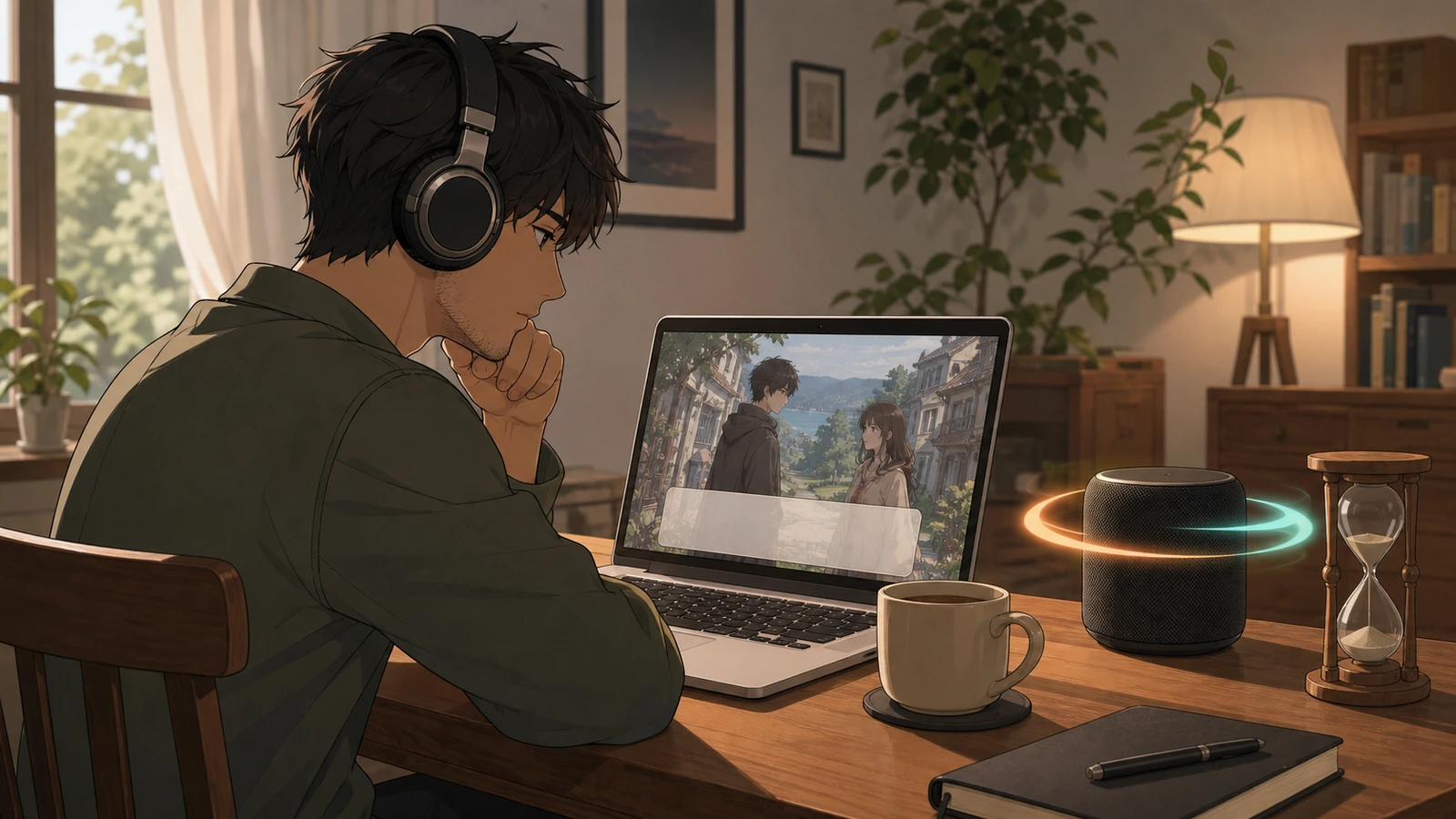
Test every candidate under the scene, not by itself. Put the music at the level a reader would actually use, then play from the first line to the last without skipping. Listen through at least two loops. The join should not click, drop into accidental silence, or restart with an entrance so dramatic that it sounds like the scene has begun again.
Also check whether the arrangement leaves room for reading. A melody that is delightful at full volume can compete with dialogue when it changes constantly in the same range as speech. Instrumental does not automatically mean unobtrusive. Dense percussion, sharp attacks, and a lead line that demands attention can tire the reader before the scene ends.
Use silence as a cue with a purpose. Stopping music just before a confession or discovery can narrow attention more effectively than adding another sad track. But unexplained silence after a file fails to load feels broken. The difference is placement: deliberate silence begins at a dramatic boundary and ends with an equally deliberate return.
Reuse without making the story feel small
Repetition becomes a problem when the same track follows the reader everywhere, not merely when a track returns.
Give each cue a clear territory. The ordinary track may cover routine scenes, but leave it out of the first real threat. The uneasy track can begin before the reader knows why, but should not also score every mildly awkward conversation. Protect one or two cues from overuse so they still have force near the end.
Transitions matter as much as the count. Ren'Py's playback statements can fade the current music and bring in the next cue, and its if_changed behavior can keep a track from restarting when it is already playing. In practice, that means adjacent scenes sharing a mood do not need a ceremonial stop and start. Let the music cross the scene boundary when the emotional state continues.
A variation can stretch a small score, but only if you truly have the rights and source material to make it. Removing percussion, changing instrumentation, or slowing a character motif can make later use feel different while preserving recognition. Editing a licensed stock track is not automatically permitted just because you downloaded it. The license has to allow adaptation, and attribution or share-alike conditions still apply when specified.
License the use you actually need
“Royalty-free” does not mean free of conditions, and “free download” does not say whether a file can ship inside a commercial game.
Record the creator, source page, exact license, download date, and proof of purchase for every cue. Check commercial use, redistribution inside a game, modification, credit requirements, and whether the license covers every platform you intend to publish on. If you plan to export a PC build later, do not approve a track only for a browser preview today.
Creative Commons licenses are not interchangeable. CC BY permits reuse and adaptation with attribution. CC BY-SA adds a requirement to license adaptations under the same terms. CC BY-ND does not allow distribution of adapted material, and licenses carrying NC restrict commercial use. CC0 is a public-domain dedication, but you should still keep the source record so you can prove where the asset came from.
Do not assume a streaming subscription grants game rights. Being allowed to listen to a song is different from synchronizing and distributing it with an interactive work. If the license language is unclear, ask the rights holder or choose another cue.
Test the story, not the soundtrack album
A cue list is finished on paper. A soundtrack is finished only after it survives the story.
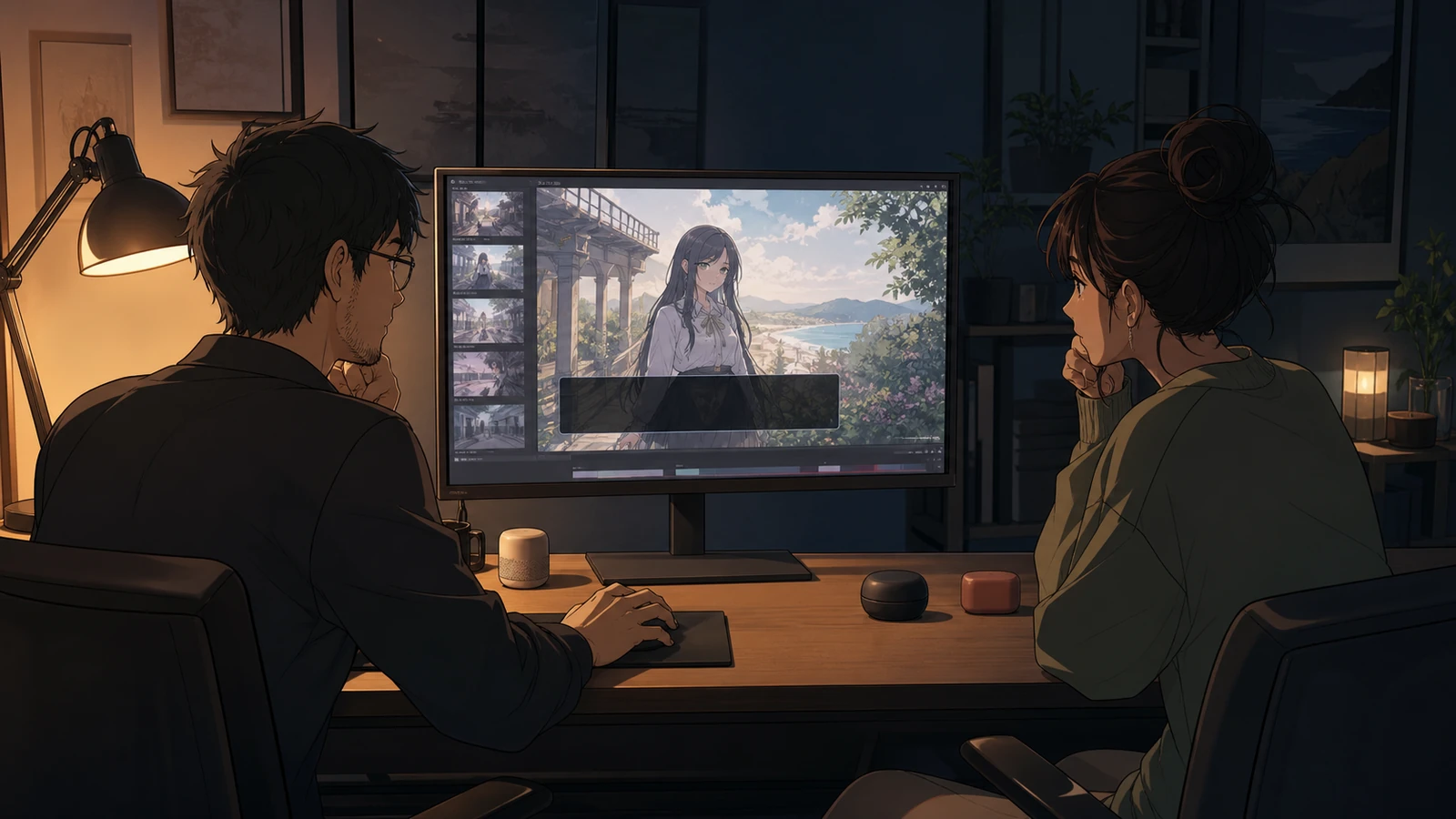
Play a continuous passage that includes at least one ordinary scene, one emotional change, one deliberate silence, and one return to a familiar cue. Check for abrupt cuts, volume jumps, delayed starts, tiring loops, and music that reveals the mood before the writing earns it. Then ask a fresh listener what changed in the scene. If they describe the soundtrack instead of the characters, the mix or the cue may be asking for too much attention.
Test with music lowered and muted as well. Ren'Py exposes separate volume controls because players use them. A critical plot beat cannot depend on hearing a sound effect, and a visual transition cannot become confusing when music is off. Audio should deepen the reading, not hold essential information hostage.
Where Novelez fits
Novelez does not compose music, clear licenses, or decide how many cues your story needs. Those remain creative and legal decisions.
It does give you the structure that makes the decision smaller. Novelez turns scripts and outlines into scenes, dialogue, characters, and choices, shows routes in a visual editor, and lets you preview the story in a browser. Use that scene and route structure to build the cue map before shopping for files. Stabilize the order of scenes first; otherwise every rewrite creates another round of music placement decisions.
When the story is ready for a PC build, Novelez provides a Ren'Py export path. Ren'Py then gives music, sound, and voice separate playback systems, along with looping and fades. That handoff is easier when your files already have consistent names, recorded licenses, and one documented purpose per cue.
A practical stopping rule
Stop adding tracks when every major emotional job is covered, the important transitions work, and the remaining scenes can reuse a cue without lying about their mood.
For a short project, make the first pass with the smallest set that can score the whole story. Preview it end to end. Add one track only when you can point to a specific failure: a major turn has no identity, a cue is being forced across incompatible scenes, or repetition is flattening a route that should feel different.
That method will not produce the same number for every visual novel. It produces something more useful: a soundtrack whose size can be explained scene by scene, and whose money is spent where the reader can hear the difference.