How Do You Get Players for a Visual Novel Nobody Has Heard Of?
August 13, 2026
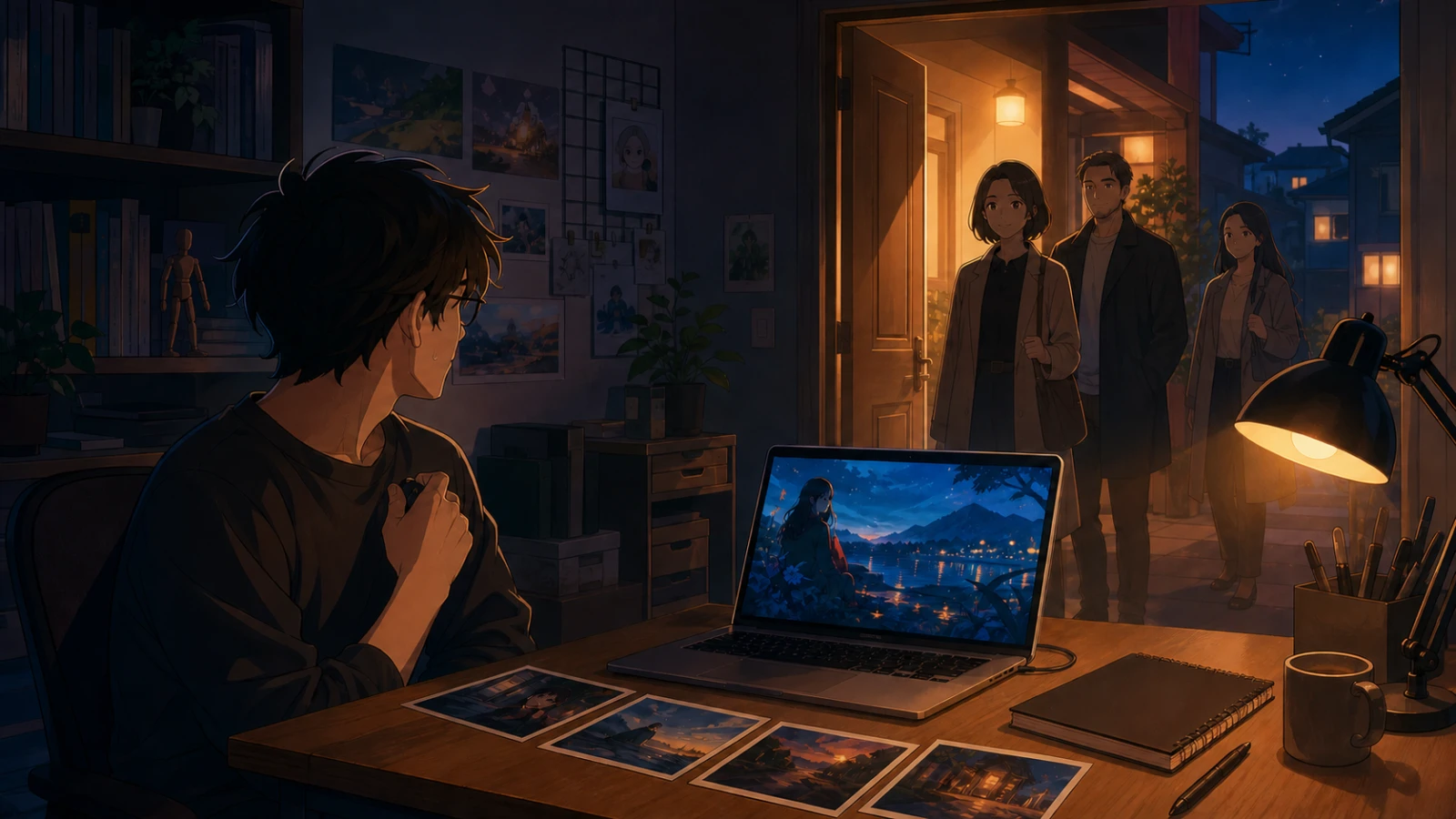
You wrote the last scene, exported the build, and posted the link somewhere. Four days later the counter says nine plays, and six of them were you, checking that the link still worked.
This is the part of visual novel development that nobody puts on the schedule. It gets treated as an afterthought, something that happens automatically once the game exists. It does not. And because it does not, a lot of finished stories quietly stop existing after their first weekend.
None of what follows requires money or a following. It requires deciding, before you publish, who this story is for and where those people already spend their evenings.
Why does a finished visual novel get almost no plays?
There are usually three reasons, and only one of them has anything to do with the writing.
The first is friction. If playing your story means downloading an archive, unpacking it, dismissing a warning about an unidentified developer, and finding the right file, you have asked a curious stranger for about ninety seconds of trust before they have read a single line. Most people scrolling on a phone will not spend it. They were mildly interested, not committed.
The second is context. Someone who has never heard of you needs to understand, in roughly four seconds, what kind of story this is, how long it will take, and why it might be worth their evening. A title and a screenshot of a menu screen do not carry that. Neither does the phrase "my first visual novel," which describes your relationship to the project rather than their reason to open it.
The third is placement. One post dropped into an enormous general feed reaches nobody in particular. A short post in a small room where forty people already read this exact genre reaches forty people who might actually care. The second is less exciting to write and works considerably better.
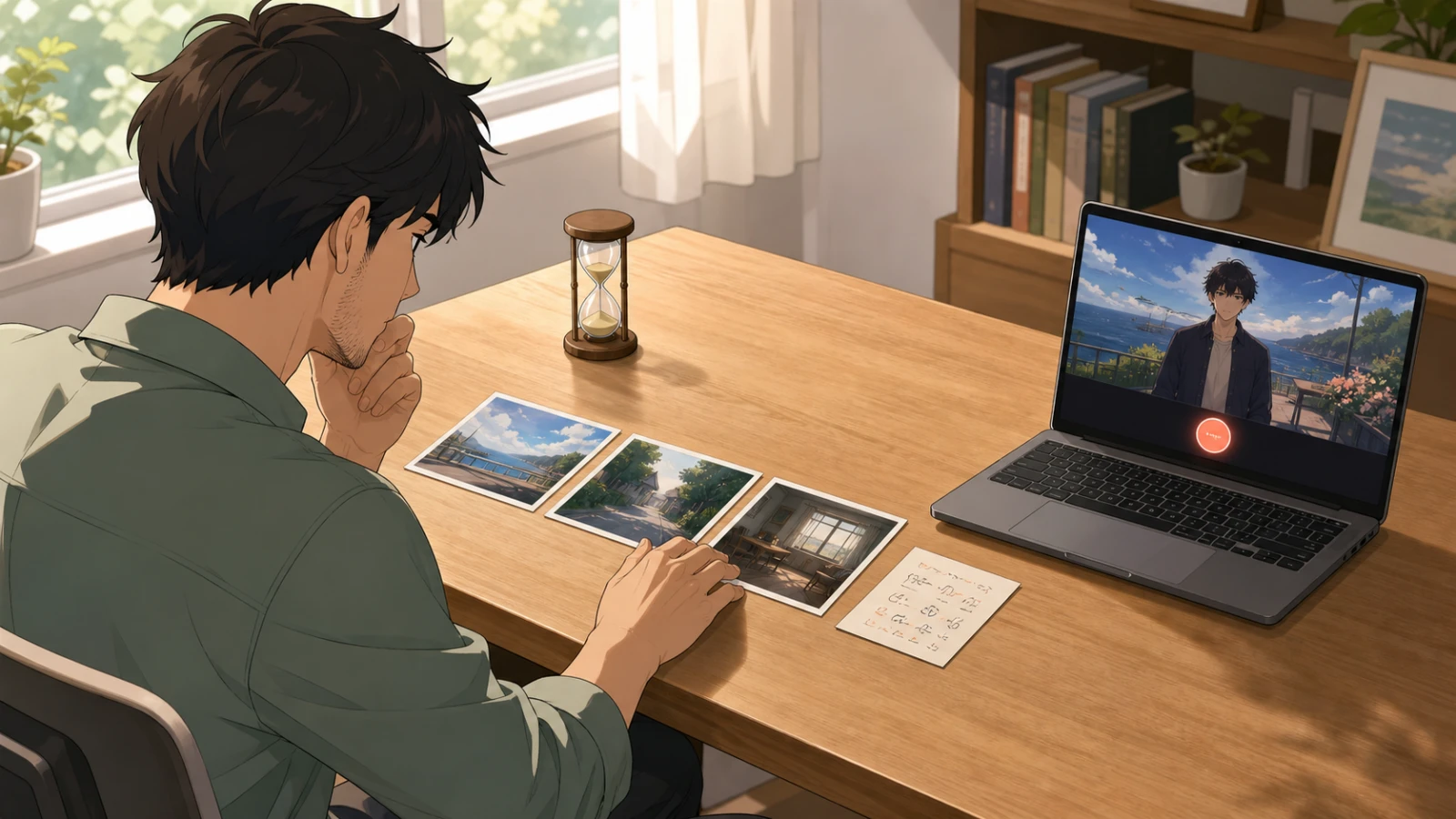
What should be ready before you tell anyone?
Prepare a release kit first. It is small, and having it ready is the difference between posting once with confidence and rewriting the same awkward introduction five times across five different places.
Five pieces:
- A link that plays immediately in a browser, with no download step and no account requirement to reach the first scene.
- Three screenshots from three different moments in the story, none of them a title screen or a menu.
- One sentence describing the premise, written for a stranger.
- The playtime, in minutes, as a plain number.
- Content notes, if the story goes anywhere that a reader would reasonably want warning about.
The screenshots deserve more thought than they usually get. Pick a moment with visible emotion, a moment that shows the setting, and a moment that hints at a choice. Avoid empty backgrounds with a line of dialogue at the bottom, which is what most creators post and what makes every visual novel look identical in a feed. If your art is simple, that is fine. Composition and expression carry a screenshot much further than rendering quality.
The playtime number matters more than people expect. "A short visual novel" is vague enough to be risky, so a reader who is not sure whether they are committing to twenty minutes or six hours often just moves on. "About 40 minutes" removes the question. If you have not measured yours, a full read at normal pace with a timer running takes one afternoon and gives you a number you can use everywhere.
Where do the first players actually come from?
Not from a broadcast. They come from a handful of specific rooms.
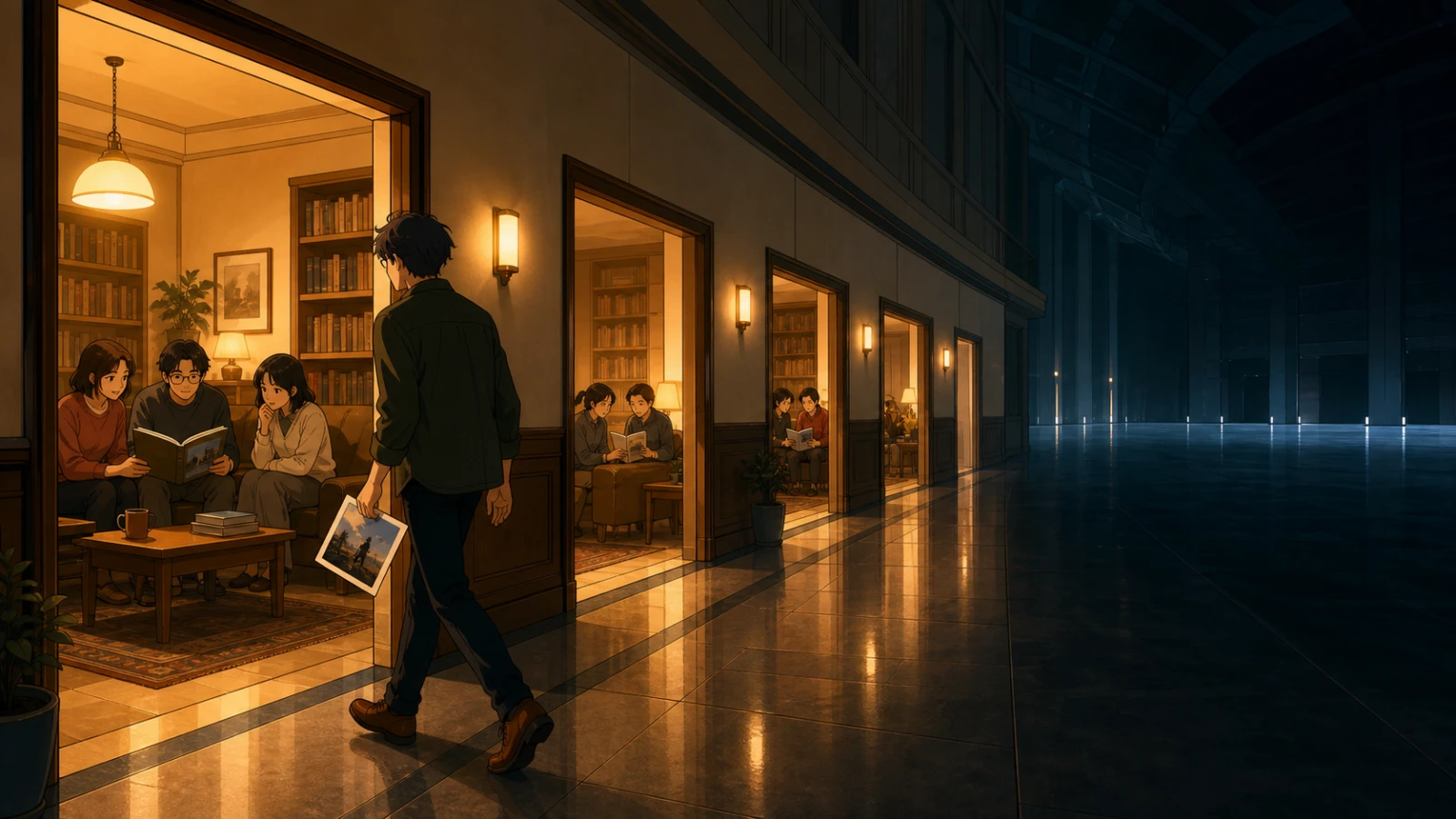
The most reliable sources, roughly in order of how well they tend to work for a first release:
- Communities you already read. If you have been in a forum or server for months, people there recognize your name, and that is worth more than any number of strangers.
- Spaces organized around your specific genre or theme rather than around game development in general. A romance-mystery story does better in a room about romance-mystery stories than in a room about engines and tooling.
- Jams and themed events, which come with a built-in audience whose entire purpose is playing entries.
- Galleries and storefronts that already have people browsing, so your entry gets seen by someone who arrived looking for something to play.
- The people who read your drafts. Beta readers who watched the story take shape are usually the first to open it and the most likely to tell others.
Five places you understand will beat thirty you do not. Before posting anywhere, read that community's rules on self-promotion, because many have a dedicated thread or a day for it, and posting outside it is the fastest way to have your only shot removed. Where you have not participated before, contribute to a few other conversations first. It costs an hour and it changes how your post lands.
How do you write a post that gets opened?
Compare two versions of the same announcement.
"Hi everyone, I just finished my first visual novel. It took me eight months and I learned a lot. Please check it out and let me know what you think."
"A 40-minute story about a night-shift pharmacist who keeps serving the same customer on three different nights, and each night she remembers a little more than he does. Plays in the browser, no download. I would especially like to know whether the second night feels too slow."
The second is not better because it is more polished. It is better because everything in it is aimed at the reader. It says what the story is about, tells them the time cost, removes the download objection, and asks for one specific kind of feedback, which is far easier to give than "what you think."
Lead with the premise, never with your process. Give the number. Put one strong image at the top rather than a gallery of five. Ask for one thing.
What do you do in the first week?
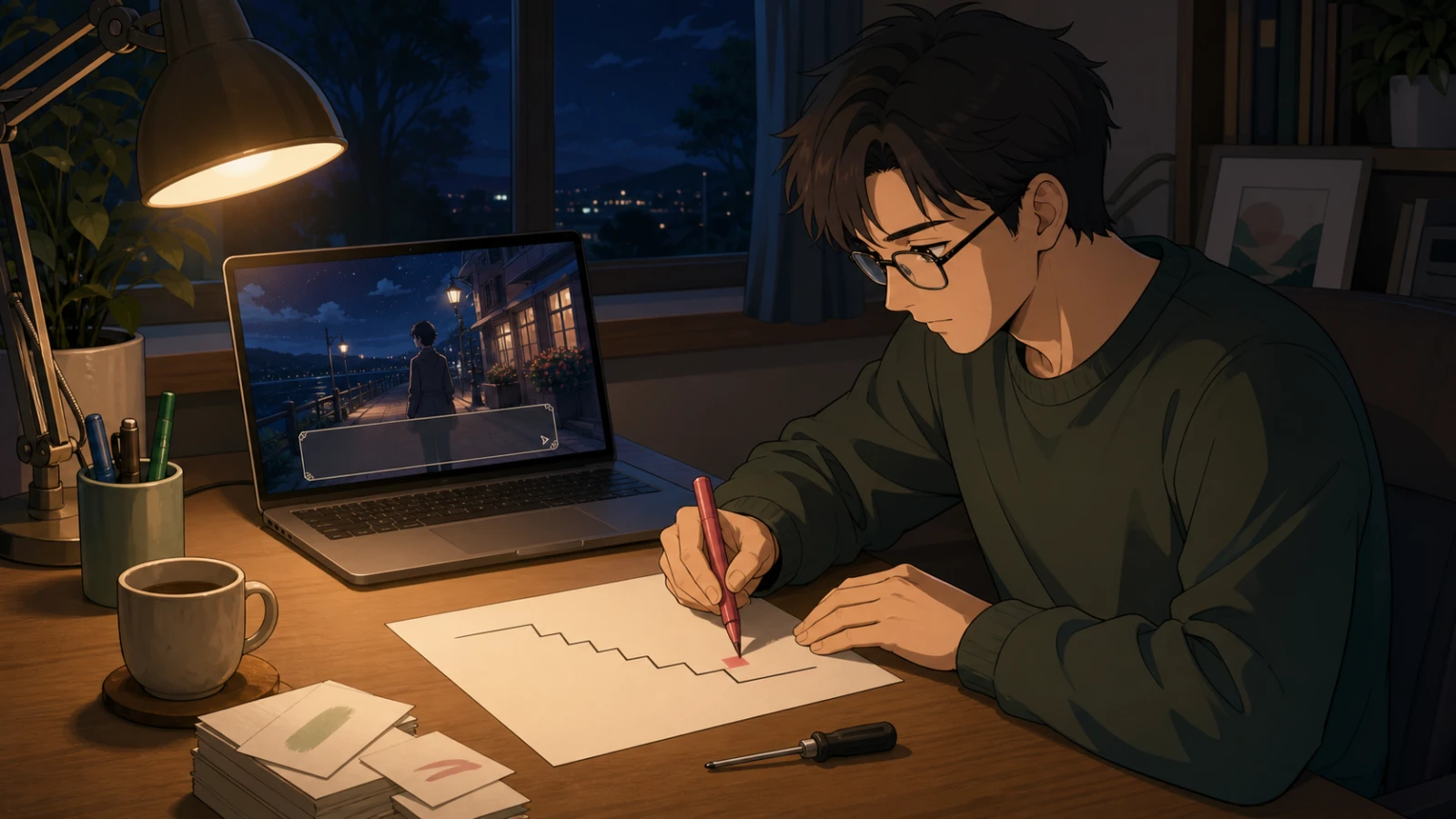
Watch where people stop. If your tool shows how far readers get, the number that matters is how many reach the end of the first three minutes, because that is where nearly all of the loss happens. When a large share leave before the first real choice, the problem is almost never the ending you agonized over. It is the opening: too much setup before anything happens, a first line that explains the world instead of starting a scene, a first choice that arrives too late to signal that this story listens.
Reply to everyone within a day, including the person who did not like it. Early feedback arrives when people are still deciding whether you are worth paying attention to, and a thoughtful reply to a critical comment does more for your next release than the release itself.
Then ship one patch, once. Fix the thing more than one person mentioned, republish, and tell the people who reported it. That last step, oddly, is what turns a player into someone who comes back for the next project.
Then stop. A first release does not need daily updates. It needs one honest week of attention and then your time back for the next story.
How does Novelez change this part?
Most of the friction above comes from distribution, which is exactly the part that a browser-based tool removes.
A Novelez project plays from a link. There is no archive, no unpacking, no security warning, and no install step between a curious reader and your first scene, on a phone or on a laptop. That single difference moves more people past the opening than any amount of clever posting.
The gallery gives a finished project somewhere to sit where people are already browsing for something to read, which means it can be found after your announcement post has scrolled away. Screenshots come straight out of your own scenes, so the release kit above takes minutes rather than an evening of cropping. And when the first week tells you the opening is slow, you edit the scene and republish to the same link, without asking anyone to download anything again.
What should you check before you post the link?
- Someone who has never seen your project has opened it from a fresh browser and reached the first choice without asking you a question.
- You have three screenshots from three different scenes, and none of them is a menu.
- Your one-sentence premise mentions a person, a situation, and a tension, and it does not contain the phrase "first visual novel."
- You know your playtime as a number.
- You have picked five specific places, checked each one's self-promotion rules, and written a slightly different post for each.
- You have decided what single question you want answered, and you asked it.
The gap between a finished story and a played story is not talent and it is not luck. It is a few hours of preparation that almost nobody spends. Spend them, and the same story you already wrote reaches an entirely different number of people.