How Do You Create Characters People Never Forget?
June 23, 2026

Think about a game or a novel you love. Even if the plot has gone fuzzy, isn't there one character you still remember perfectly?
It's funny. You went in for the story, but what stays with you afterward isn't "that event" — it's "that person." The way they talked, the secret they kept until the very end, the look on their face in the final scene… those things follow you around for years.
Visual novels are exactly like this. Maybe even more so, because it's a genre where the player talks, chooses, and grows close to characters over hours. So knowing how to create a character people never forget is, honestly, almost everything in visual novel writing.
Today let's unpack that secret together — not with heavy theory, but with things you can actually use. I struggled with this too at first; I kept trying to make "cool" characters and they kept coming out flat. Let's start with why that happens.
🪞 Why the "Perfect" Character Is Forgotten First
When we first design a character, we usually picture an impressive person. Smart, kind, strong, good-looking… someone with no weaknesses.
But strangely, those are the characters we forget fastest. Why?
A perfect person leaves us no room to relate. Someone who never makes mistakes, never wavers, always chooses right — we can cheer for them, but we never feel "that's me." And a story only sticks when it touches something that feels like our own heart.
So what a character really needs isn't perfection. It's a flaw.
1️⃣ The one who's so afraid they run away at the crucial moment
2️⃣ The one who has everything and is still lonely
3️⃣ The one who acts kind but is quietly full of envy
The moment you plant a flaw like that, the character suddenly starts breathing like a real person. A flaw isn't a weakness — it's the door the reader walks through to get inside the character.
Here's a tip: when you make a new character, write a weakness right next to their charm point. Just ask, "What is the one thing this person never wants anyone to find out?" That single question makes a character so much more three-dimensional.
🩹 Every Character Has a Wound They Don't Talk About
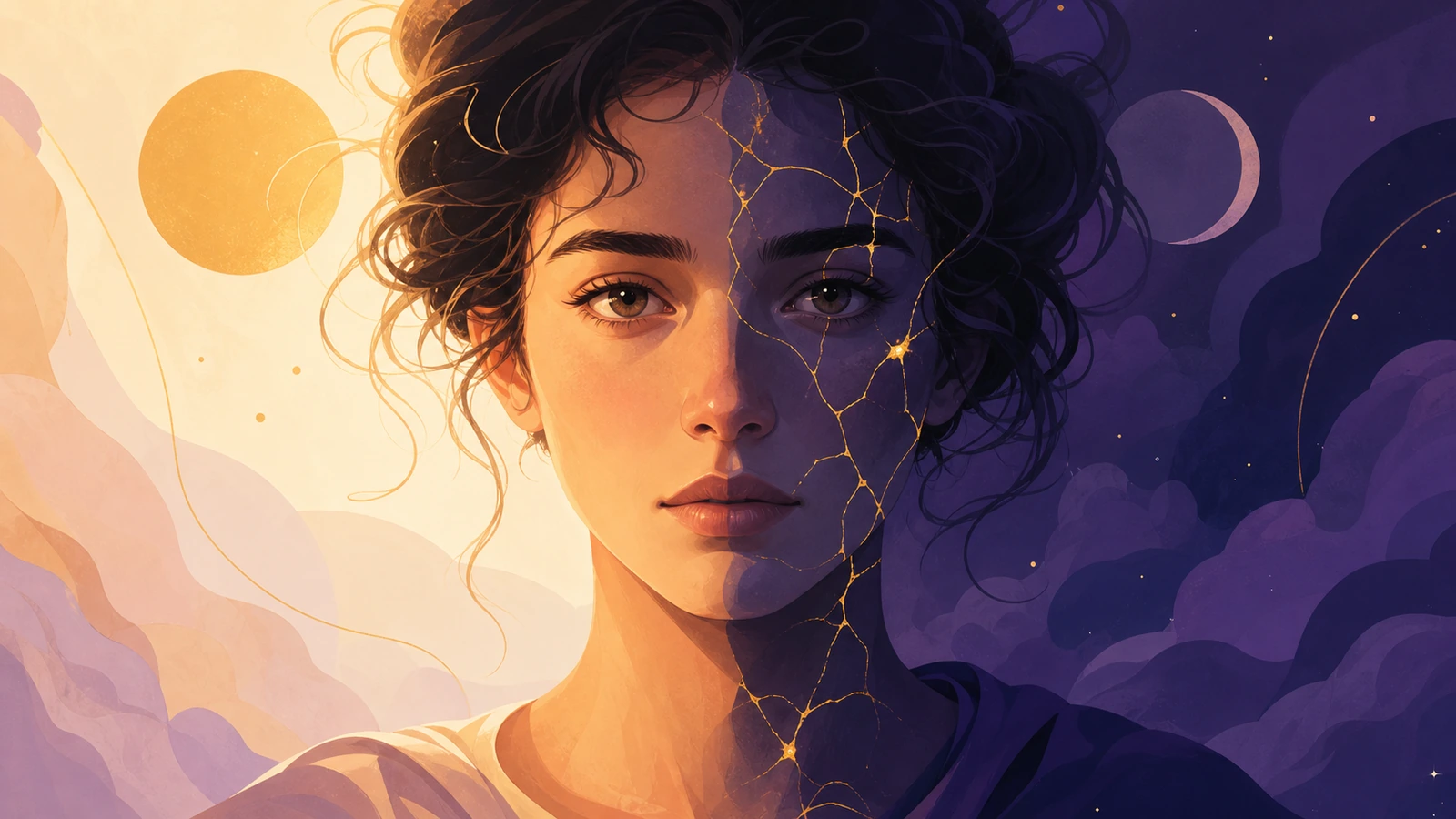
Let's go one step deeper than flaws. Great characters usually carry a wound.
A flaw and a wound are a little different. A flaw is "the rough edge this person has now." A wound is "why they got that way." Something that happened in the past, a memory they'd rather forget, a hurt that never healed — that's what shapes how they act today.
Here's an example. Say you have a character who never opens up to anyone. Call them "cold" and it's ordinary. But what if it's because, as a child, they were betrayed by the one person they trusted most? Suddenly that coldness makes sense, it aches a little, and you find yourself rooting for them.
That's the power of a wound. The moment the player learns the reason hiding behind a character's behavior, that character becomes unforgettable.
You don't have to reveal the wound all at once, though. In fact, letting it leak out slowly works far better. Drop a small hint, let the player wonder "wait, why are they like that?", and reveal the real reason much later. Visual novels are a wonderful genre for this — you get to know characters over a long, slow arc.
When building a character, ask yourself: "What past event made this person act the way they do now?" Once you have an answer, that character is already alive.
🗣️ You'd Know Who's Speaking With Your Eyes Closed — The Magic of Voice
The same words sound different from different people.
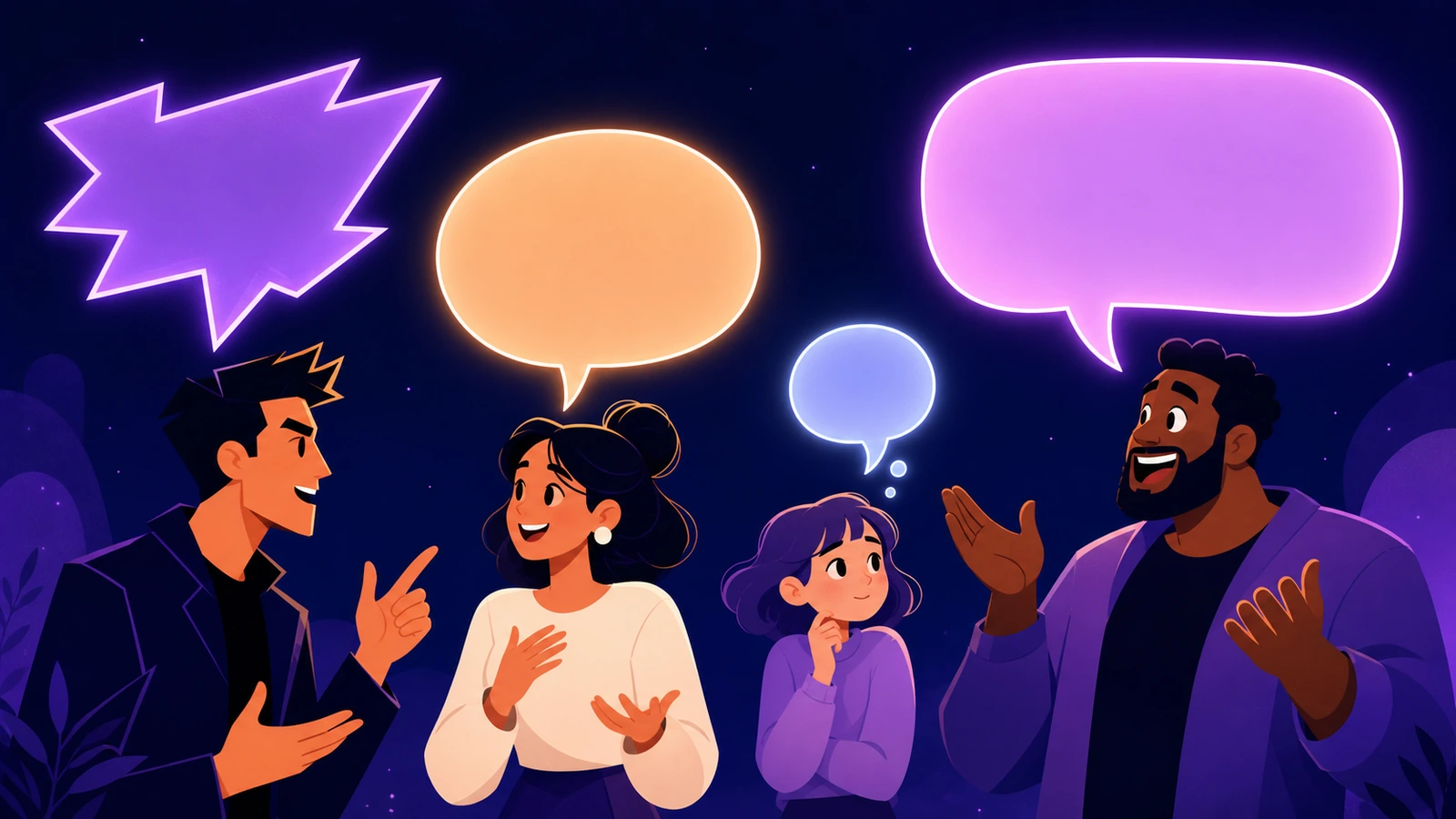
Take a simple "I'm fine." One person says it flatly — "It's nothing." Another says it anxiously — "Are you… are you really okay?" Another tosses it off playfully — "Pfft, this is nothing!" Same meaning, completely different people.
That's voice. When each character has their own way of speaking, you can tell who's talking without a name tag. In a good visual novel, at some point you just know "that's totally something OO would say." That's well-crafted voice at work.
Here are a few small tools for building voice.
1️⃣ Verbal habits — words or phrases they reach for a lot. "I guess," "honestly," "how do I put this…"
2️⃣ Sentence length — some people speak in short, clipped bursts; others let sentences run long.
3️⃣ Temperature — warm, cold, distant. A character's state of mind seeps into how they talk.
4️⃣ Metaphor habits — someone who compares everything to food, someone who compares everything to games… the world they reach for reveals who they are.
You don't need to nail it from the start. Write two or three characters' lines side by side and read them. If you can tell who's who even with the names hidden, you've succeeded. If not, push one character's voice a little more boldly.
🎭 "Kind, but Mean Sometimes" — Contradiction Makes a Person
Real people can't be summed up in one word.
The brave one who's secretly scared of a lot of things. The cold-seeming one who can't walk past a stray cat. The gentle one who's oddly sharp only with their own family… you definitely know people like this. And strangely, it's these contradictory people we remember most.
Characters are the same. Contradiction isn't a mistake — it's dimension.
"A strong, cool leader" on its own is flat. But let that leader show a flash of weakness when they're alone, and suddenly they feel real. When the outside and the inside don't match, the player feels like they've met "the real person." And that's the moment they grow attached.
So when you build a character, deliberately let their "outside" and "inside" drift apart. They always smile but are worn out underneath; they're smarter than anyone but can't read their own heart. This one small mismatch casts a shadow over the character — and that shadow is what makes them human.
🎮 The Visual Novel's Secret Weapon — The Player Completes the Character
Everything so far works for any kind of story. But visual novels have one powerful weapon that novels and films don't: choice.
A character in a novel walks only the path the author set. But in a visual novel, the player speaks to the character directly and decides how to treat them — coldly, or warmly. And the character reacts accordingly.
That makes a huge difference. The player isn't watching the character; they're building a relationship. They grow closer through their own choices, and a single line from them can make the character smile or look hurt. Memories made that way are never forgotten. The character stops being "the author's character" and becomes "the person I made a story with."
So when you write characters for a visual novel, it helps to plan how the character reacts at each choice. It's the same when you build a story in the Novelez editor — give your character a flaw, a wound, and a voice, and then let the player's choices reach them. That's when the story starts to move on its own.
🤖 So How Far Can AI Help?
A lot of people hand character work to AI these days. Let me be honest with you: AI is a genuinely great starting point.
It's wonderful for laying out a character's basic profile, quickly drafting dialogue, or asking "what would this character say here?" when you're stuck. When you're staring at a blank screen, having AI rough out the skeleton makes starting so much easier.
Just remember one thing. There's a difference between dialogue that sounds plausible and dialogue that sounds like that character. Where to place the flaw, which wound to hide, what contradiction to give — breathing a real soul into that character is, in the end, your job. AI shapes the clay fast, but deciding what expression it wears is up to the maker.
So the best approach is to take AI's draft and add your own finishing touch on top. The moment you lay your own flaw and wound over an AI's perfectly fine character, it becomes a one-of-a-kind person.
🌱 So, What Makes a Character Unforgettable
Let's pull it together. Characters that stay with us usually have these:
1️⃣ Not perfection, but a flaw
2️⃣ A wound that gives a reason to their actions
3️⃣ A voice you'd recognize with your eyes closed
4️⃣ A contradiction where the outside and inside don't match
5️⃣ And in a visual novel, a place where the player's choices can reach them
It sounds grand, but it all comes down to "making them feel like a real person." It's the same reason we remember someone for years — not because they were perfect, but because they were fragile and contradictory and, somehow, all the more lovable for it.
There's surely a character like that living inside your story too. Shall we go give them one flaw, one wound, and a voice all their own?
Go bring your character to life. 🎬