How Do You Design Visual Novel Choices That Actually Matter?
July 7, 2026
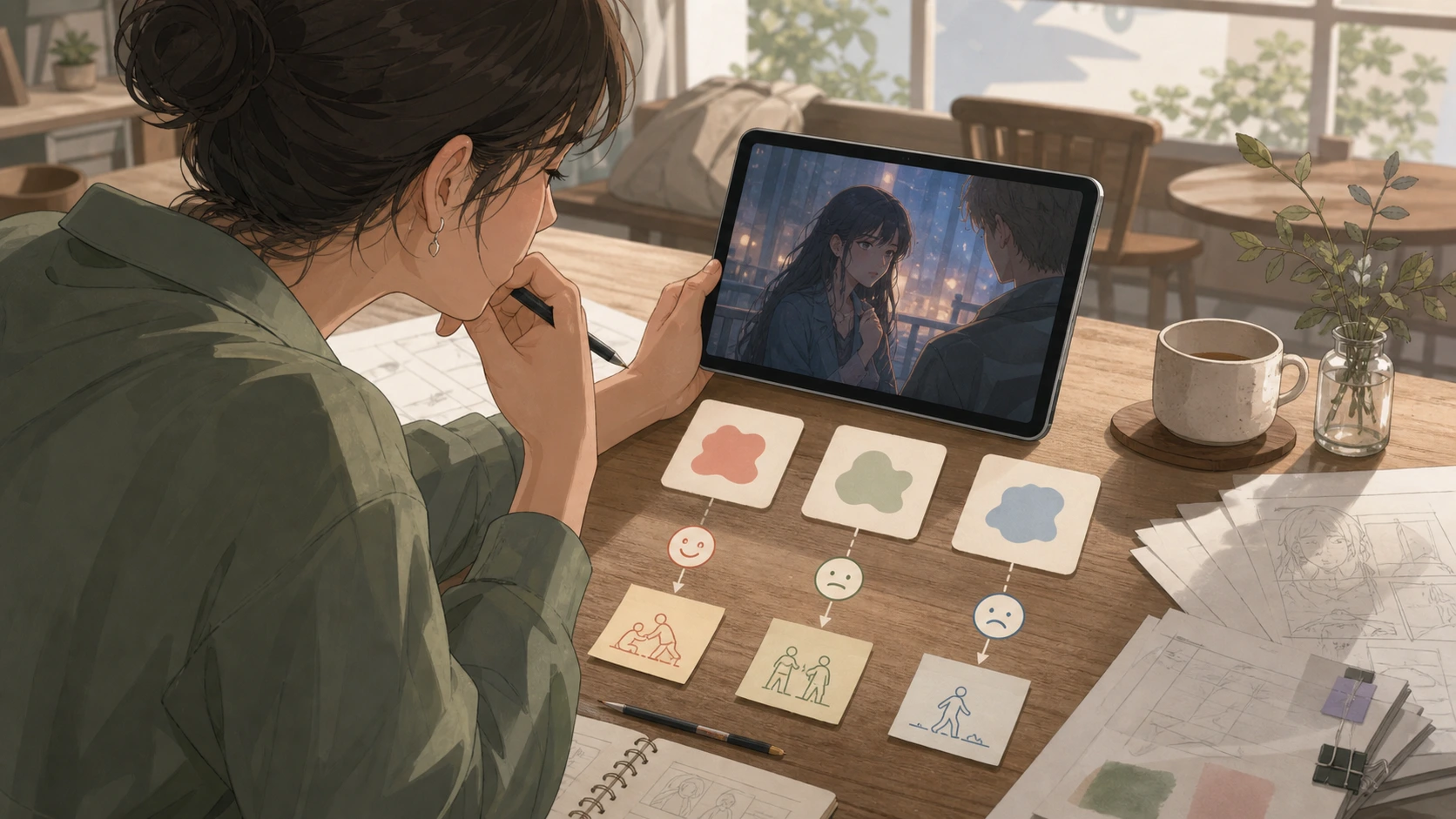
Have you ever added a choice to a visual novel and then quietly wondered, "Wait... does this choice actually do anything?"
Yeah, same.
Choices are one of the reasons visual novels feel so personal. A good choice can make the player pause, reread the line above it, think about what kind of person they want the protagonist to be, and then click with a little bit of nervousness.
But a weak choice can do the opposite. It can feel like a menu pretending to be drama. Two buttons, same outcome. Three options, no emotional difference. A branch that exists only because "a visual novel should have choices."
That's why choice design is worth thinking about before you build too much.
Not because every choice needs a huge alternate route. It doesn't. A visual novel can use tiny branches beautifully. The important thing is that the player understands what they are deciding, and the story respects that decision in some visible way.
So today, let's talk about how to design visual novel choices that actually matter, especially if you are planning your story before opening an editor.
🎭 Start With the Feeling, Not the Button
The easiest mistake is to begin with the interface:
1️⃣ Option A
2️⃣ Option B
3️⃣ Option C
That looks like choice design, but it is only button design.
Before you write the options, ask a more useful question:
What feeling should the player have at this moment?
Maybe they should feel guilty. Maybe they should feel curious. Maybe they should feel like both answers are slightly wrong. Maybe they should feel safe for now, then realize later that the safe option cost them something.
That emotional pressure is the real design.
For example, "Go left" versus "Go right" can work if the player understands what left and right mean. But if the player has no reason to care, it becomes navigation, not drama.
"Tell her the truth" versus "Protect her from it" is usually stronger because the player can feel the values underneath the action. Honesty. Care. Fear. Trust. Control.
That is where visual novels shine. The format gives you time to let a line sit. It lets a character look away before answering. It lets a choice appear at exactly the moment when the player understands the cost.
So when you plan a choice, don't start with "How many branches do I need?"
Start with:
What is the player really deciding about this relationship, this secret, or this version of themselves?
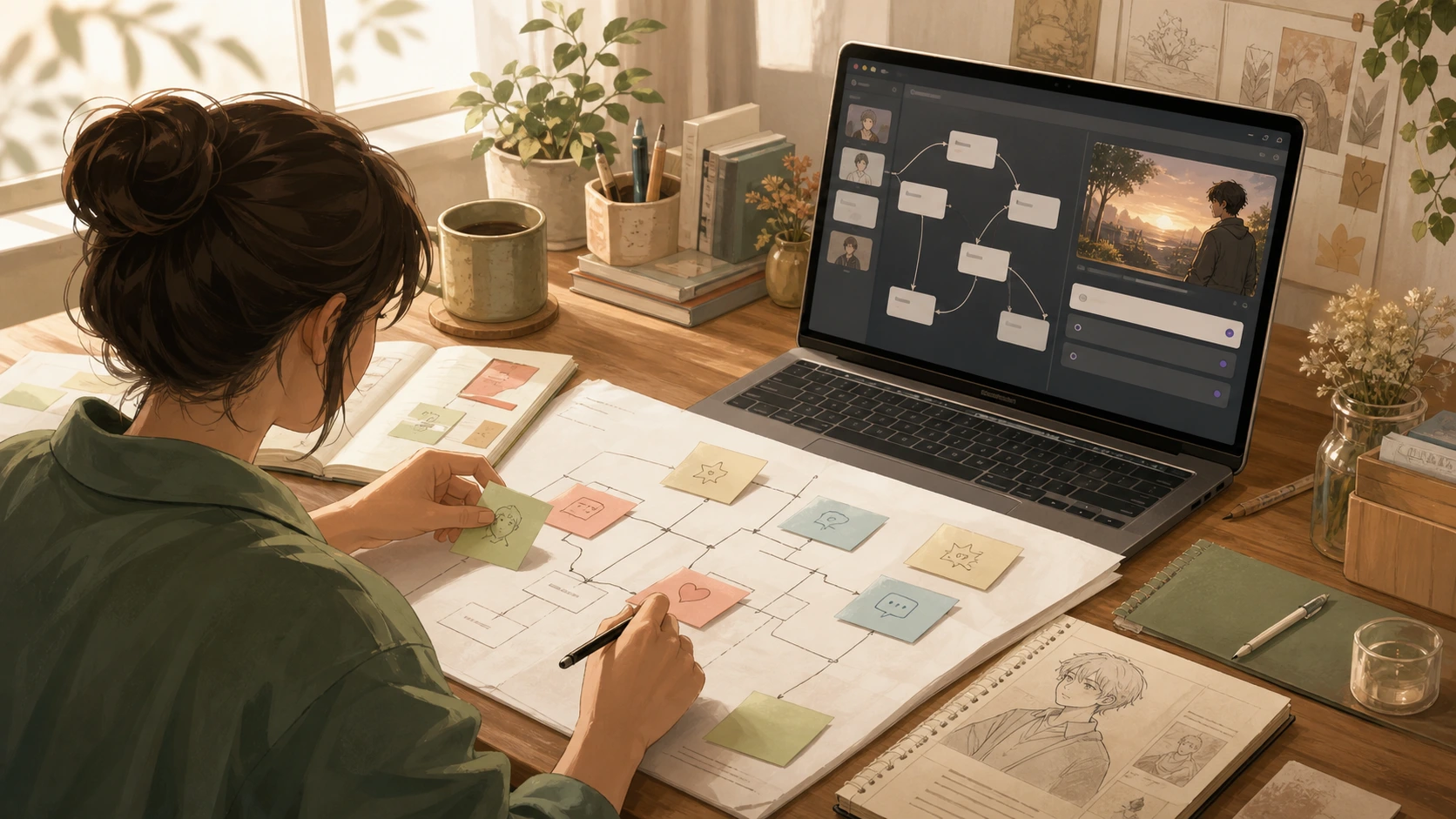
🧭 A Meaningful Choice Needs a Visible Echo
A choice does not have to create a whole new chapter to matter.
This is important, because a lot of creators get scared of branching. They imagine that every choice must split the story into two full games. Then the project becomes impossible, and the draft quietly disappears into a folder.
But meaningful does not always mean massive.
A choice can echo in small ways:
1️⃣ A character remembers what the player said earlier.
2️⃣ A line changes tone.
3️⃣ A scene opens with different emotional distance.
4️⃣ The player receives a different clue.
5️⃣ A later choice becomes easier, harder, or more painful.
These small echoes tell the player, "The story heard you."
That feeling is powerful.
In visual novels, the player often cares less about the size of the branch than the sincerity of the response. If they choose to apologize, and the next scene still treats them as if they stayed silent, the choice feels fake. If the next scene contains one quiet line that acknowledges the apology, the choice suddenly feels alive.
So when you design a choice, write down its echo right away.
Not a whole route. Just one clear consequence.
"If the player lies here, the friend becomes warmer in the next scene but trust becomes fragile later."
"If the player asks the direct question, they get the clue early, but the character closes off emotionally."
"If the player says nothing, the scene ends faster, but the protagonist carries the regret into the next monologue."
That is enough to make the branch feel intentional.
🌿 Keep Branches Small Until They Prove They Need to Grow
There is a very practical reason to design choices this way:
Big branches are expensive.
Not only technically. Emotionally too.
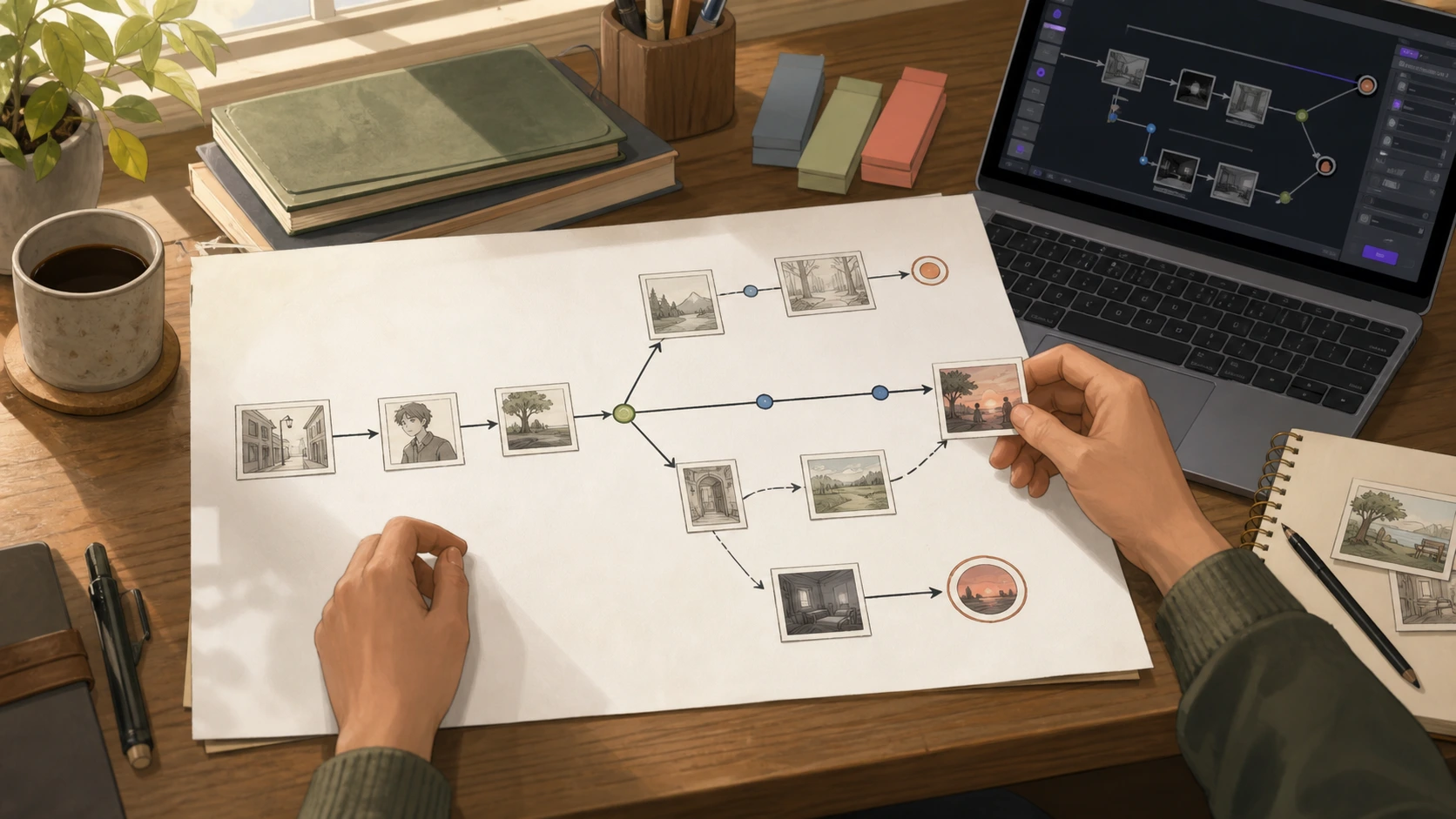
Every new route needs pacing, assets, continuity, testing, and revision. If you open five branches too early, you may spend all your energy maintaining structure instead of improving the scenes that matter most.
A good first draft can be much simpler.
Try this:
1️⃣ Main route: the story everyone sees.
2️⃣ Flavor branches: short variations that reveal personality.
3️⃣ Information branches: different clues or context.
4️⃣ Relationship branches: subtle trust, distance, warmth, or tension.
5️⃣ Ending branches: only where the story truly needs a different destination.
This keeps the project readable.
It also helps you avoid the "fake branch" problem. If every choice immediately returns to the same line without any change, the player notices. But if a branch returns after giving the player a different tone, clue, relationship beat, or internal monologue, it can feel satisfying without becoming huge.
Think of it like music. Not every note needs to become a new song. Sometimes a small variation is enough to make the moment feel played by hand.
✍️ Write the Choice in the Player's Language
Choice wording matters more than people think.
A lot of weak choices are weak because the options describe mechanics instead of intention.
"Accept" and "Refuse" are clear, but they may not be emotional.
"Take her hand" and "Step back" tell the player more.
"Ask why she lied" and "Pretend you didn't notice" tell the player even more.
The best option text usually sits close to the player's inner voice. It should make the player understand the action and the emotional stance behind it.
That does not mean every option needs to be long. Short options can be beautiful. But they should be specific.
Before publishing a scene, read the choice options without the surrounding dialogue. Can you still feel the difference between them? If not, the options may need sharper intention.
Also, avoid tricking the player unless the story has earned it.
A surprise consequence can be great. A misleading choice label usually feels unfair. If the player chooses "Stay calm" and the protagonist suddenly screams, the player may feel like the tool took the character away from them.
Visual novels work best when the player feels guided, not cheated.
🧪 Test the Choice Before You Polish the Scene
Here is a small habit that saves a lot of time:
Make the choice playable early.
Not pretty. Not final. Just playable enough that someone can click through it.
When a choice lives only in a document, it can look stronger than it feels. On the page, you know what every option means because you wrote it. In the player, timing changes everything.
Does the choice appear too soon?
Does the player understand the stakes?
Are both options tempting?
Does one option sound obviously "correct" while the other sounds like a punishment?
Does the follow-up scene acknowledge the player's decision fast enough?
These questions become much easier to answer when the choice is inside a playable flow.
This is where a visual editor helps. In Novelez, the useful part is not that a tool magically writes the choice for you. The useful part is that you can organize scenes, connect choice nodes, preview the flow in the browser, and notice where the story feels honest or flat.
That quick feedback loop matters.
Because choice design is not only writing. It is timing, layout, consequence, and revision.

🎬 A Good Choice Makes the Creator Visible
One of my favorite things about visual novels is that you can feel the creator's hand in the smallest moments.
The pause before a confession.
The option that looks kind but isn't simple.
The route that does not punish curiosity, but makes curiosity complicated.
The ending that feels earned because the story remembered what the player valued along the way.
That is the goal.
Not more branches for the sake of branches. Not a huge flow chart that becomes impossible to finish. Not choices that exist only because the genre expects them.
A good visual novel choice says:
This moment could go more than one way, and each way says something about the character.
If your story has that, even a small branch can feel meaningful.
So before you build your next scene, try writing three notes:
1️⃣ What is the player really deciding?
2️⃣ What changes because of it?
3️⃣ Where will the story echo that choice later?
That's a simple start, but it can save your visual novel from feeling flat.
And if you can turn that small plan into a playable scene quickly, even better. Sometimes the moment you click through your own choice is the moment you finally understand what the scene is about.
July 7, 2026