AI Conversion or Manual Editing: Which Novelez Start Fits Your Story?
August 25, 2026
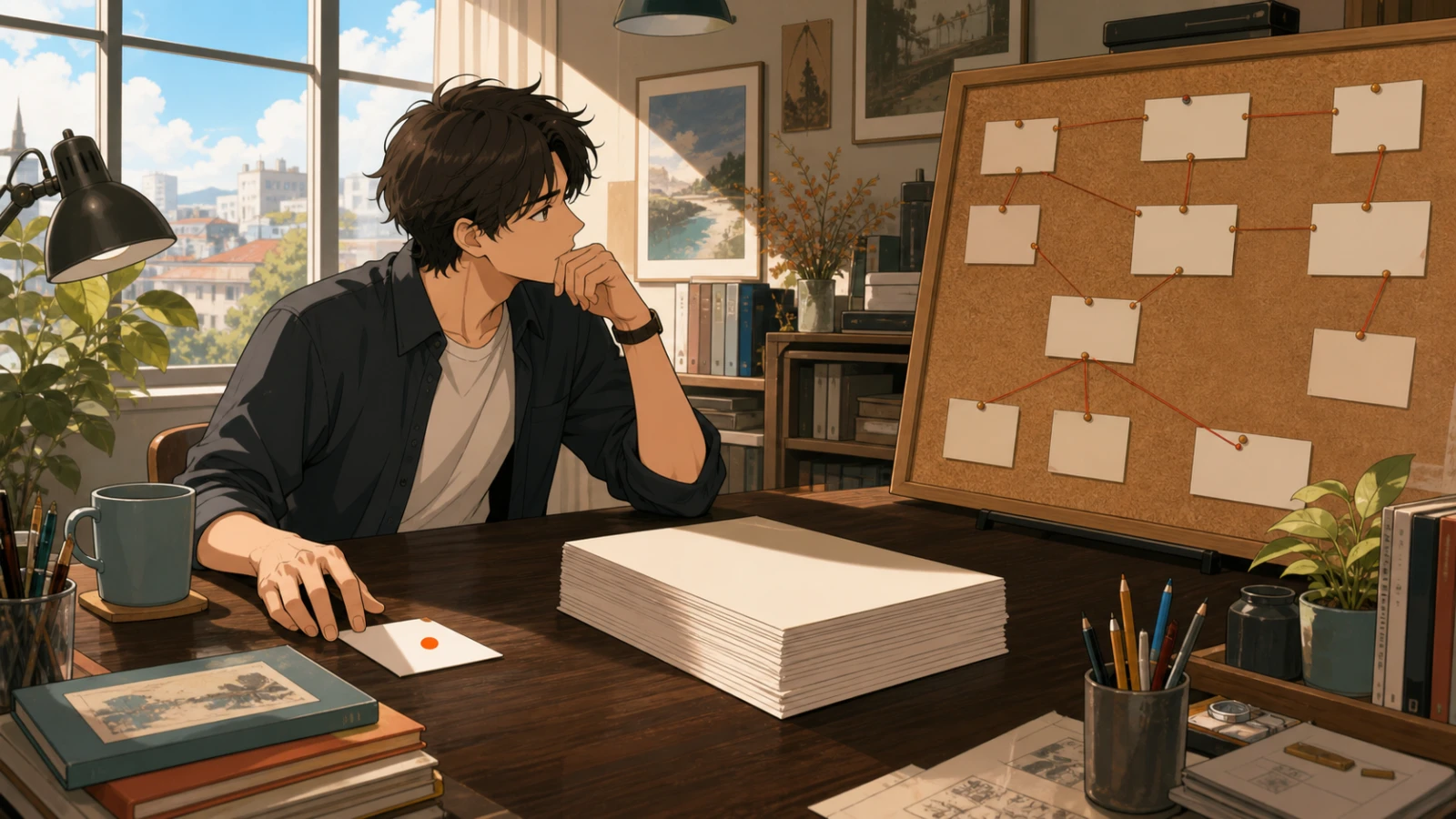
Three writers can open Novelez with three completely different things in hand. One has a sentence about a stranger who knows the protagonist's name. One has forty pages of prose. One already knows every scene, choice, and ending, but has not built a playable route.
They should not all begin the same way.
Novelez offers AI scenario conversion and a visual node editor inside the same production flow. The first can turn an idea, outline, or existing script into scenes, dialogue, characters, and choices. The second lets you place and connect those story parts yourself. Neither route is the advanced option or the beginner option. The useful difference is how much of the story's structure you have already decided.
What does AI conversion actually save?
AI conversion is most valuable when the material is rich in story but poor in playable structure. A prose chapter may contain setting, interior thought, and conversation without saying where a scene should end or where a player decision belongs. An outline may know the major turns but have no dialogue yet. A one-line premise may have mood but no route at all.
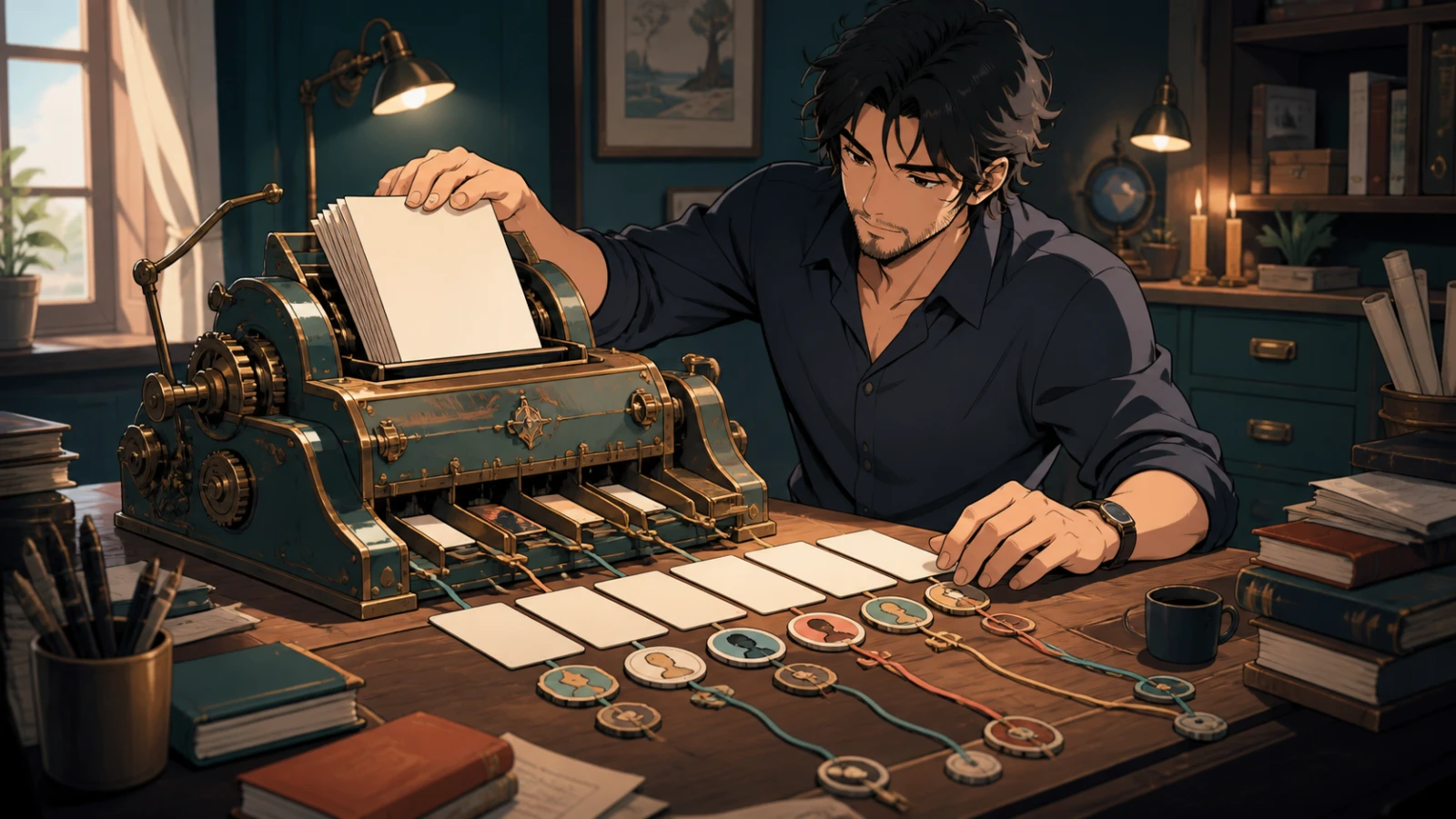
In those cases, conversion gives you a first arrangement. It can separate dialogue from description, identify a cast, group material into scenes, and propose connections or choices. That removes the blank-project problem. Instead of deciding the first twenty structural moves before anything can be played, you receive something concrete enough to inspect.
Concrete does not mean final. Conversion cannot know which sentence you consider untouchable, which silence carries the scene, or whether a small gesture is setting up the ending. It sees the material you provide and makes a workable interpretation. Treat that result as an editable first build, not as a verdict on the story.
The best reason to use conversion is speed to a question. Once the draft is playable, you can ask whether the opening arrives too late, whether the protagonist makes a meaningful choice, and whether a relationship changes on screen. Those questions are harder to answer while the story is still a continuous document.
When is direct editing the better start?
Begin in the visual editor when structure is already part of the idea. If the story depends on a clue appearing before a branch, a variable unlocking one response, or two routes rejoining at an exact beat, placing those parts directly may be faster than correcting an inferred structure.
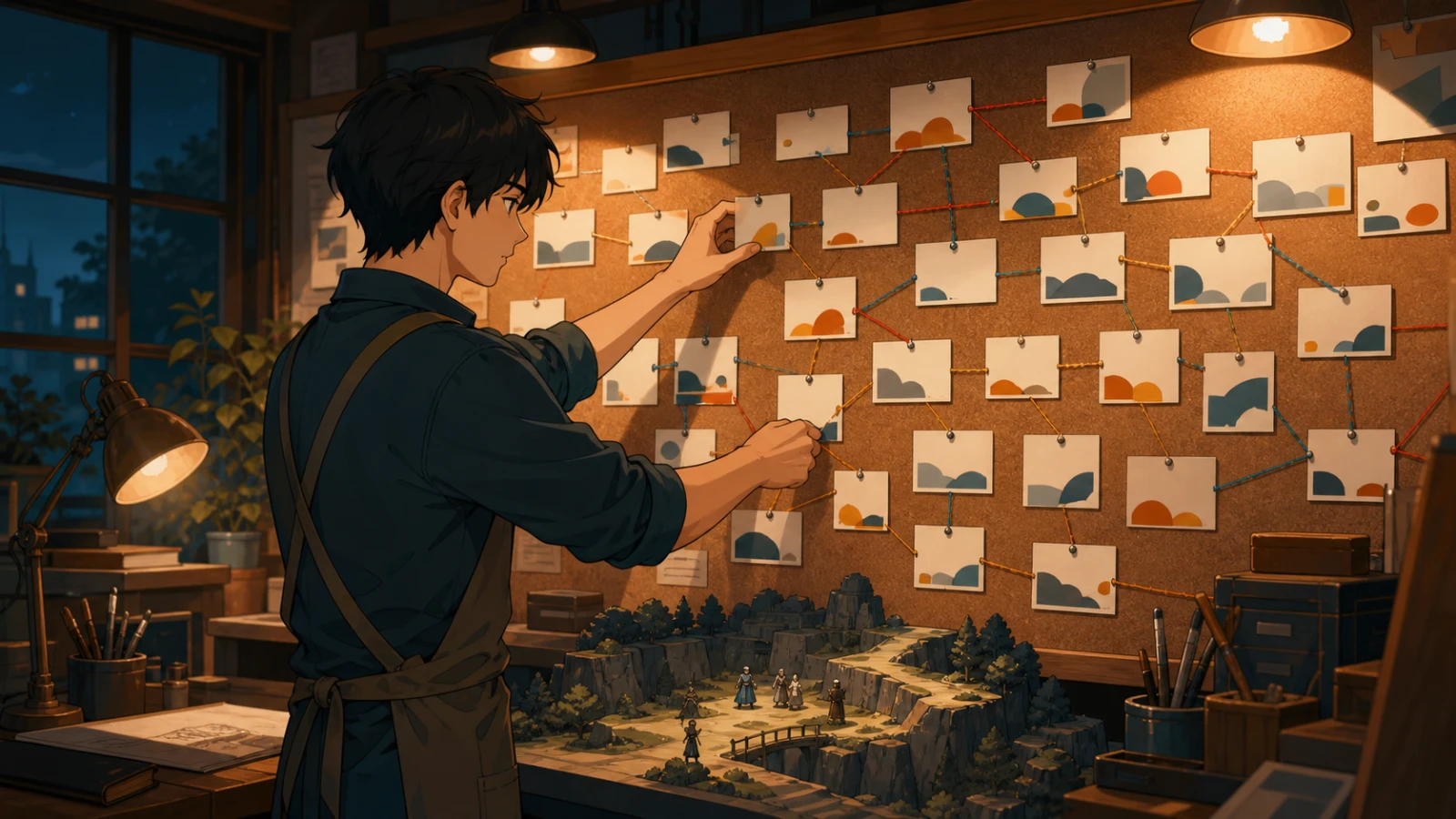
Direct editing is also useful for a very small test. A creator checking one conversation, one choice, and two reactions does not need a whole script converted first. Building those few nodes by hand keeps the experiment narrow and makes every connection visible.
The cost is setup. You must decide where scenes begin, who speaks, how the route continues, and which assets belong to each moment. That work is not wasted. It is authorship expressed as structure. But it does mean the first playable version arrives later when the source is a long manuscript.
Choose direct editing when exact sequence matters more than quickly seeing a complete draft. Choose it when you already have a route map, when interaction is the core of the concept, or when the original prose is so carefully paced that automatic segmentation would create more repair work than it saves.
Your starting material is the real decision
Do not choose based on whether you think you are technical. Both paths end in the same visual editing work. Choose based on what you already know.
If you have only a premise, AI conversion can propose enough material to reveal what is missing. Before starting, write down the protagonist's goal, the obstacle, the relationship at the center, and the kind of ending you want. Four clear constraints are more useful than a page of atmosphere with no direction.
If you have an outline, conversion is a strong bridge. Mark the turning points that must remain, identify any choice whose consequence matters later, and note the ending you do not want the system to replace. The outline can stay concise, but its non-negotiable parts should be obvious.
If you have finished prose, decide what the conversion is allowed to change. Are you asking it only to divide scenes and speakers, or may it also add choices and shorten narration? Keep a copy of the source beside the result. A conversion that produces a smoother game but removes the voice you wrote is not a successful shortcut.
If you already have a scene and branch map, start directly. The hard structural decisions are done, so converting a second description of the same plan adds another interpretation between you and the project.
Why the hybrid route is usually strongest
The two approaches do not have to compete. Novelez presents AI structuring, visual editing, preview, and publishing as stages of one workflow. For many writers, the practical route is conversion first and deliberate editing second.
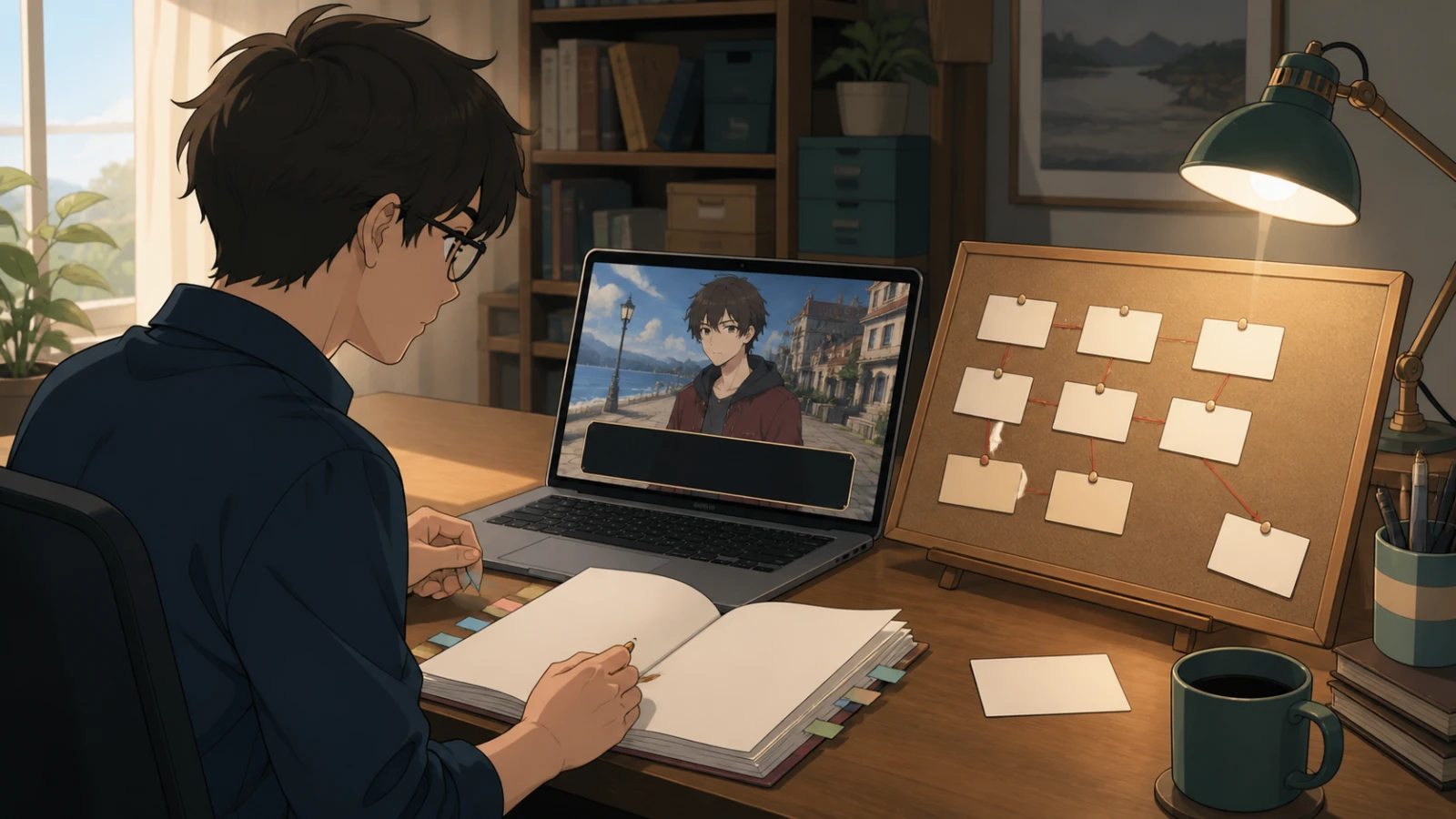
Start by checking facts. Are names, relationships, locations, and event order correct? Next check dramatic function. Does every scene change the situation, reveal necessary information, or force a decision? Then inspect the route. Can every choice reach a valid next scene, and does the consequence appear where the player can feel it?
Only after those passes should you polish individual lines. It is tempting to repair the first awkward sentence immediately, but a beautiful paragraph inside a scene you later remove is still wasted work. Structure first, voice second, assets third, full preview last.
The browser preview matters because a node map can be logically connected and still feel wrong. A choice may appear before the player understands it. Two short scenes may create an accidental pause. A background change may reveal a location too early. Play the opening without stopping, then return to the editor with specific fixes.
What Novelez does not decide for you
Novelez can structure text, make the route visible, hold assets with scenes, and let you preview the result without writing code. It cannot decide which parts of your manuscript are sacred. It does not know whether a strange rhythm is an error or your character's voice. It cannot take responsibility for rights, attribution, or the final promise made to a player.
That boundary is useful. Let automation handle the first arrangement when arrangement is the bottleneck. Keep direct control where meaning depends on exact order, wording, and consequence.
Before you start, answer one question: what do you have today, a premise, an outline, finished prose, or a route map? If Novelez offered one more handoff between those materials and the editor, which handoff would save you the most repair work?