Can You Actually Ship the Art and Music in Your Visual Novel?
August 15, 2026
The build works. Four backgrounds, two sprite sets, a title font you liked, six music tracks, and a folder of sound effects that has been sitting in your project since a weekend in March. Someone asks whether you can sell it.
And you realize you have no idea.
This is the least glamorous problem in visual novel development and one of the few that can undo everything else. Art and audio arrive from a dozen places over months, each with its own terms, and the terms are what decide whether your story can go on a storefront, take donations, or stay up at all. The good news is that sorting this out is bookkeeping, not law school. A finished project usually takes an evening.
What follows is a working creator's summary, not legal advice. When real money or a contract is involved, that is the point to ask someone qualified.
What does "free" on an asset page actually mean?
It usually means free of charge. That is a different thing from free to use, and the gap between the two is where most releases get into trouble.
Every asset carries permissions the author decided on: whether you may earn money from a work containing it, whether you may modify it, whether you must credit anyone, and whether anything you build with it inherits obligations. A download button says nothing about any of that. The license does, and on most marketplaces it sits in a small line on the page or inside a text file in the archive.
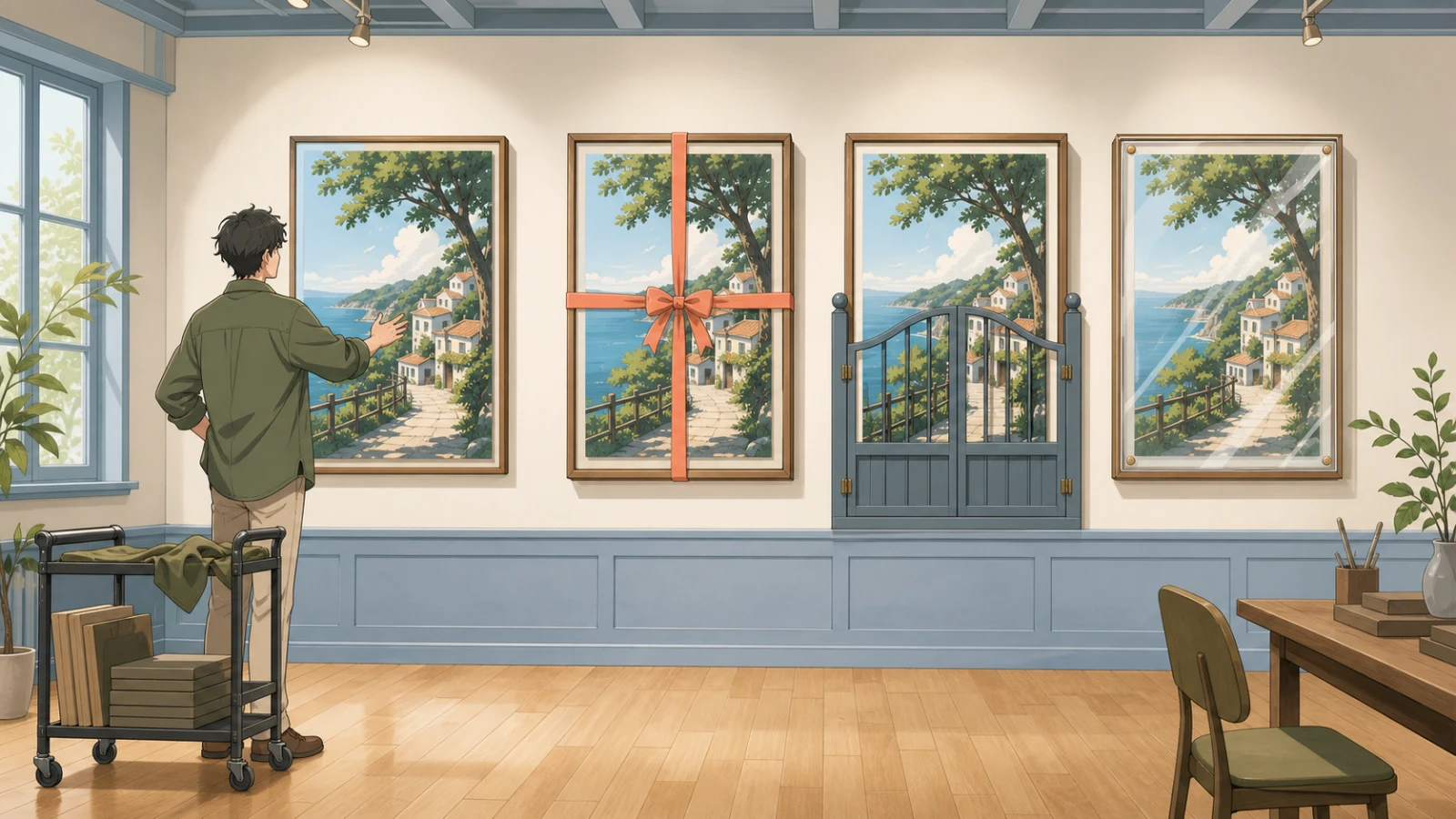
Creative Commons covers a large share of what independent creators use, and the family splits along a few axes that matter enormously in practice.
CC0 is a waiver. The author gave up their claims, you owe no credit, and you can modify and sell freely. For a first commercial project this is the safest pool to draw from, and it is large.
CC BY is the same freedom with one condition: credit the author as they asked. Cheap to comply with, easy to forget, and forgetting is a breach rather than a rounding error.
The rest need care. NonCommercial blocks anything commercial, which is broader than "I charged money for it" and reaches things like ad-supported distribution and some bundle arrangements; even the question of donations sits in a grey zone that Creative Commons itself has acknowledged is widely misread. ShareAlike means derivative works carry the same license forward, so a recolored sprite or a cropped background can pull obligations into your project. NoDerivatives forbids modification, and resizing a background to your resolution or cutting a sprite into expressions counts as modification.
One more piece surprises people: on itch.io and similar marketplaces, sellers often write their own terms instead of using a standard license. Those pages have to be read individually. A pack can be paid, look entirely professional, and still say the assets are for personal projects only.
Which terms actually stop a release?
Five, in roughly the order I see them cause trouble.
Non-commercial assets in a project you later want to sell. This is the common one, because a hobby project turns into a store page nine months later and nobody re-checks the folder from month one.
ShareAlike on anything you edited. The obligation attaches to the adaptation, and in a visual novel almost everything gets edited.
Fonts. Genuinely the sleeper issue. Plenty of attractive free fonts are licensed for personal use only, and a visual novel embeds its font in the build, which is distribution. Check every typeface in your project, including the one in your logo. Open Font License and CC0 typefaces are fine and there are thousands of them.
Assets from tools or games. Sprite rips, extracted UI, ports of official character art, and anything from a fan wiki are not licensed for you no matter how widely they circulate. This includes the copy of the file that a well-meaning person reuploaded to a forum in 2019.
Undocumented origin. If you cannot say where a file came from, you cannot demonstrate you were allowed to use it, and that is functionally the same as not being allowed.
Worth knowing on the other side: a Creative Commons license, once granted, cannot be revoked for the copy you received. If an author later takes the pack down or switches to paid, your existing use under the original terms stands. This is exactly why saving evidence at download time is worth the two minutes.
How do you keep a record you can defend?
One sheet, one row per asset. Filename, where you got it, the license name, the date you downloaded it, the exact attribution line if one is required, and a saved screenshot or PDF of the page as it read that day.
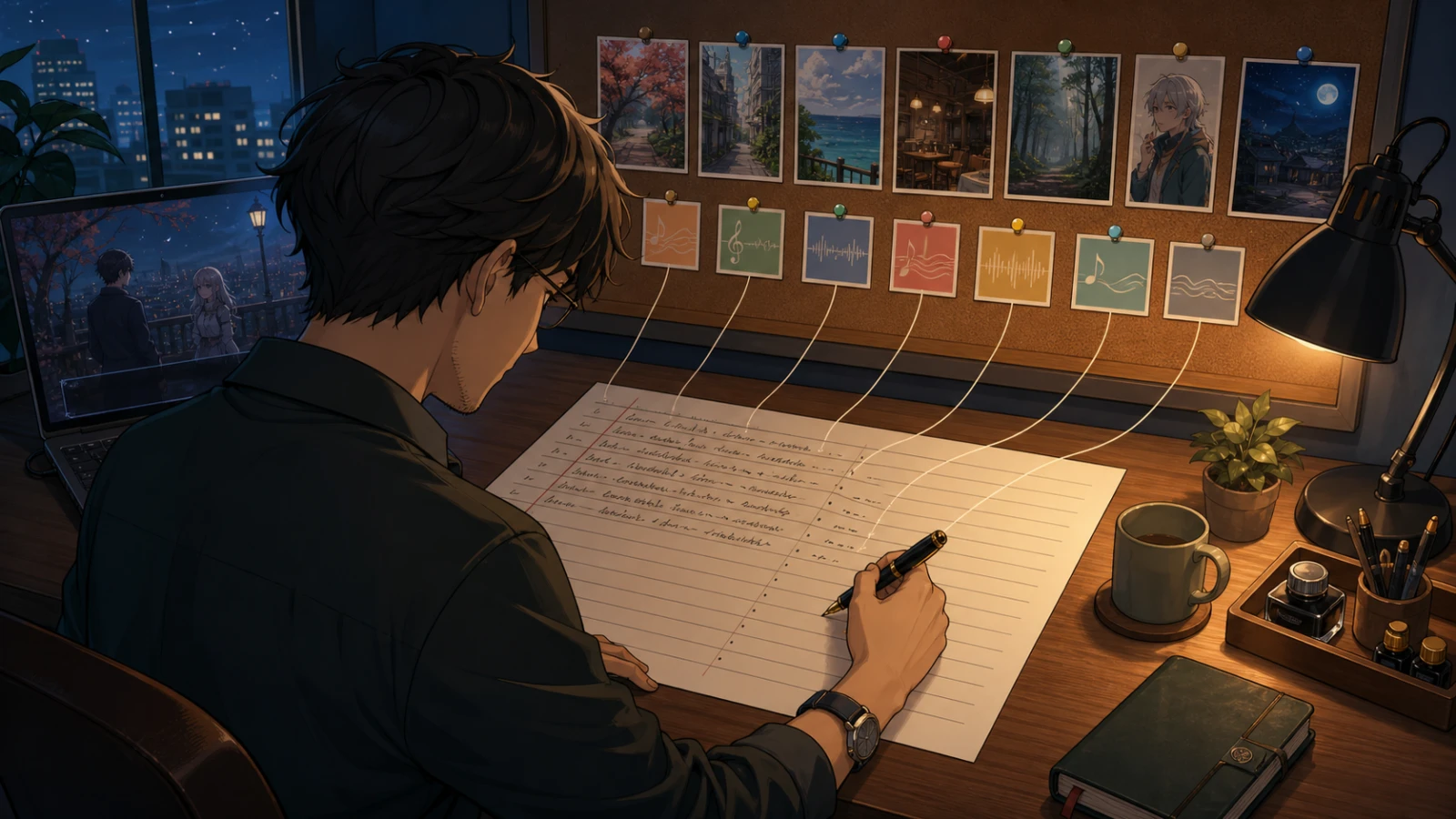
That last column does the real work. Asset pages disappear, prices change, authors switch licenses, and platforms restructure their terms. A screenshot from the day you downloaded is the difference between a defensible position and a shrug.
Then put the credits inside the game, not only on the store page, because store pages are not always what a player is looking at. A credits screen reachable from the main menu, plus a plain text file in the build, covers nearly every attribution requirement you are likely to encounter. Group entries by type, name the author exactly as their license specifies, and include the license name and a link.
Do this as you go. Adding a row when you download a file takes ten seconds. Reconstructing forty rows from browser history eight months later takes a very unpleasant Saturday.
What about art and music you generated with AI?
Two things are in play here and they are not the same: whether you may use it, and whether you must say so.
On the first, ownership of purely generated output is unsettled in most jurisdictions, and what you are permitted to do commercially is set by the terms of the tool you used. Read those terms. Generators aimed at creators typically grant commercial use of output, sometimes only on paid tiers, and a few restrict it outright.
On the second, the platforms have gotten specific. Steam requires developers to disclose generative AI content, and in January 2026 Valve narrowed the requirement to content that ships in the game and reaches players, covering art, audio, narrative, localization, and store page material, while treating behind-the-scenes development tooling as outside the focus. itch.io went further for asset pages, where disclosure is mandatory and untagged AI work becomes ineligible for indexing, and pages are tagged either as containing AI generated content or as having none.
The practical version for a solo creator is short. Note in your ledger which files were generated, with which tool and on what plan. Disclose on any platform that asks, and describe it in one flat sentence rather than an apology. Do not generate work that imitates a specific living artist or an existing property, which is a separate and much older problem than the disclosure rules. And be aware that a growing share of players want to know, so writing it yourself reads far better than being asked.
Where should you look first?
Start with pools where the terms are simple and hold up commercially. CC0 asset collections on itch.io, community archives for royalty-free game audio, and public domain music are the usual first stops, and they cover more of a visual novel than people expect. Paid packs from marketplaces are often the better deal once you value your own time, since a good pack costs less than an evening and typically comes with a plain commercial license.
For commissioned work, get the scope in writing before anyone starts. Who owns the result, whether commercial use is included, whether you may modify it, whether it can be reused in your next project, and whether the artist may show it in their portfolio. Most disputes I have seen between creators and artists came from none of this being said out loud, not from bad faith.
And there is the option people skip past. Simple original backgrounds, your own photographs processed into painterly plates, plain solid-color UI, and text-forward presentation all sidestep the entire problem. Several beloved visual novels ship with almost no art.
How does Novelez change this?
Novelez does not decide licensing for you, and no tool can. What it changes is how much of your project's asset history stays visible.
Your assets live in the project rather than scattered across a hard drive, so when you go to write that ledger, you are reading from one place instead of excavating a downloads folder. Characters generated inside Novelez come with their origin known by definition, which means the disclosure question above has an answer you do not have to reconstruct. Since a project publishes to a link rather than a downloadable archive, swapping a file whose terms turned out to be wrong is a replacement and a republish, not a recall of builds that are already on other people's machines.
That last point is the one worth holding on to. Most licensing accidents are survivable if you find them early and can fix them quickly. The ones that hurt are the ones discovered after the file has traveled.
What should you check before you publish?
- Every image, audio file, and font in the build has a row on your sheet with a named license.
- Nothing marked non-commercial is in a project you might ever monetize, including through donations.
- Nothing you modified carries a ShareAlike or NoDerivatives condition.
- Every font is licensed for embedding, including the one in your title art and logo.
- A credits screen exists inside the game, with attribution worded the way each license asks.
- Generated assets are noted in your ledger and disclosed wherever the platform requires it.
- You saved a screenshot of each source page on the day you downloaded from it.
None of this makes your story better. It makes it shippable, and it keeps it shipped. An hour of bookkeeping now is cheaper than a takedown on a project you spent a year writing.