How Many Sprite Expressions Does a Visual Novel Character Need?
July 31, 2026
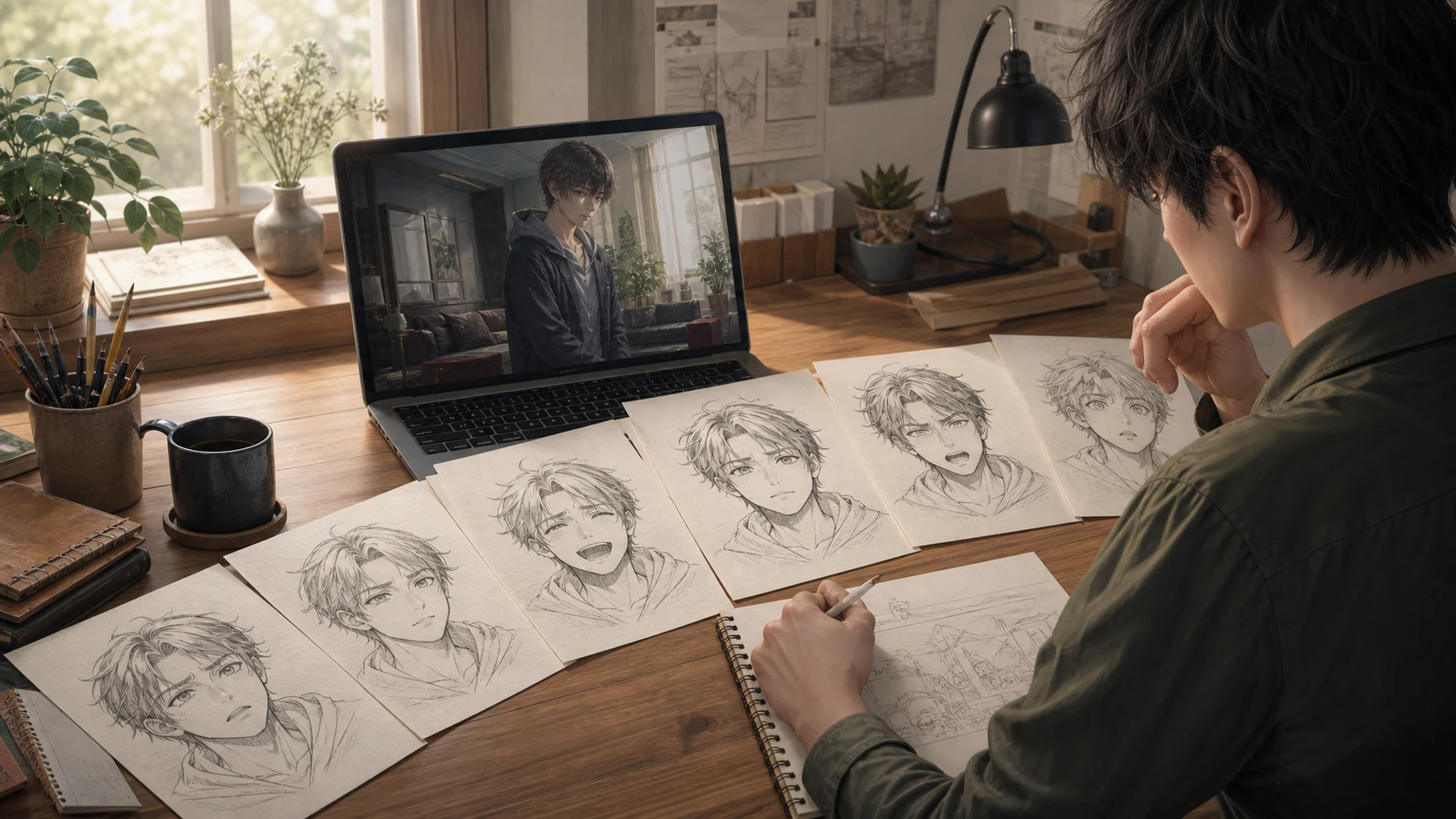
How Many Sprite Expressions Does a Visual Novel Character Need?
You have a character design. You have a script. Then the asset list starts growing.
Should the lead character have a neutral face, a happy face, a softer happy face, a sad face, a shocked face, an angry face, an embarrassed face, and three versions of every one?
Here is the short answer: most visual novel characters do not need a huge expression library before production starts. They need enough expressions to make the important emotional turns readable.
For a major character, a practical first set is often neutral, happy, hurt or sad, angry or tense, and surprised. Add expressions only when a specific scene asks for an emotional beat that this set cannot carry. Minor characters may need only one to three expressions. A lead in an emotionally intense route may eventually need more, but the script should earn those additions.
That answer is less satisfying than one perfect number. It is also much more useful.
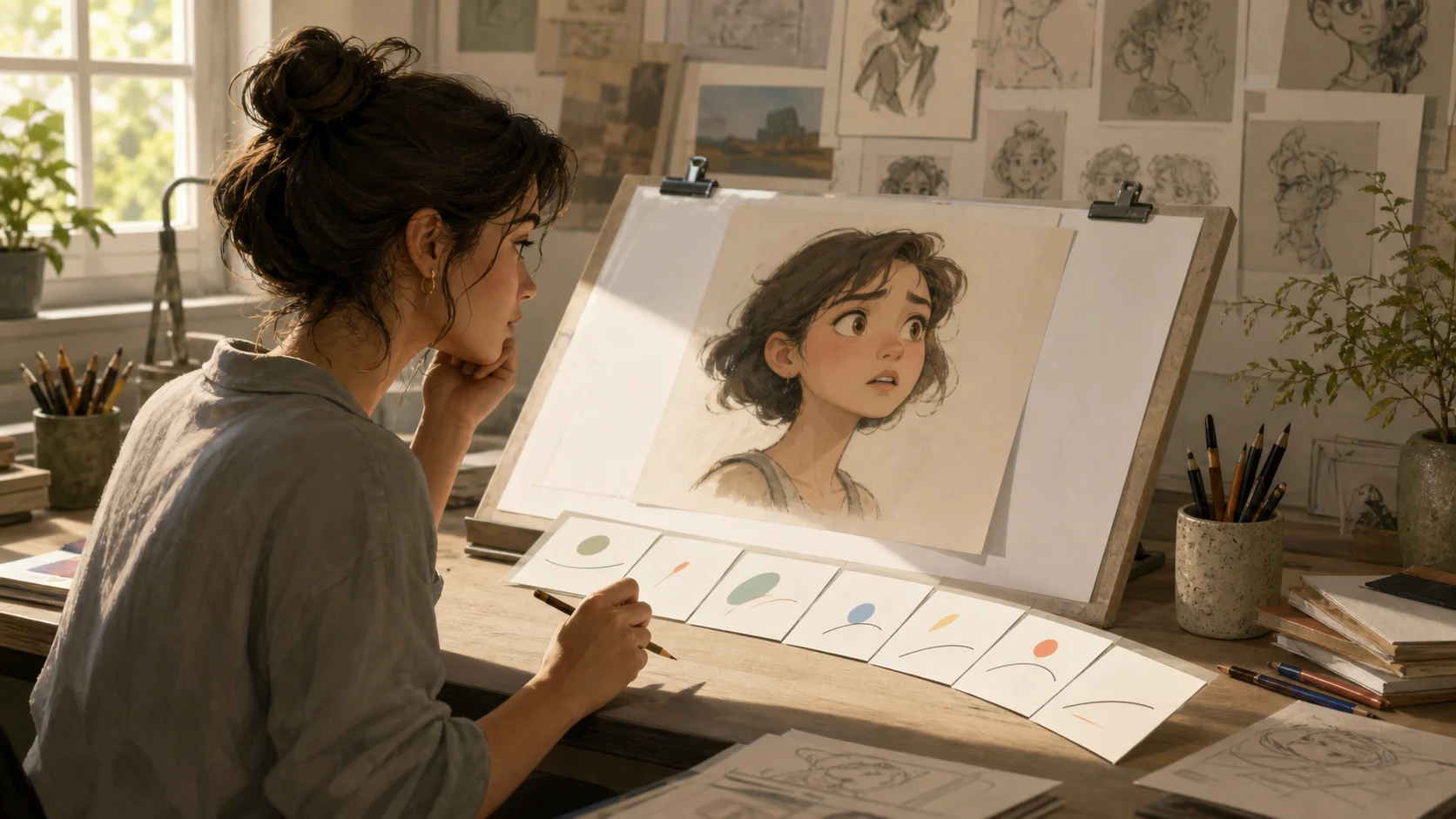
🎭 Why one fixed number does not work
People count sprite expressions in different ways.
One artist counts five complete faces. Another counts separate eyes and mouths, so the same emotional range becomes dozens of combinations. One game keeps the body pose fixed. Another treats every pose, costume, lighting state, and facial change as a new sprite.
That is why advice like "every character needs ten expressions" can be misleading.
The real question is not how many files you have. It is:
Can the player read the emotional change that matters in this scene?
A quiet mystery may get more value from neutral, suspicious, guarded, relieved, and frightened than from a standard list of comedy faces. A bright dating sim may need playful embarrassment and teasing more often than fear. A side character who delivers one clue does not need the same range as the person whose trust changes across an entire route.
Start from the role and the scenes, not from a universal asset checklist.
🧭 Build an expression map from story beats
Open the script for one playable chapter and mark the moments when a character's emotional state visibly changes.
You are looking for turns such as:
1️⃣ They enter feeling composed, then hear unexpected news.
2️⃣ They hide a reaction, then let the mask slip.
3️⃣ They challenge the player, then soften after the answer.
4️⃣ They realize they have made a mistake.
5️⃣ They leave the scene with a different intention.
Now ask which of those turns must be visible on the sprite.
Dialogue and sound may already carry part of the beat. A background change or pause may do more than a new face. But if the scene depends on the player noticing that the character is no longer joking, the expression deserves its own asset.
This process usually produces a smaller and sharper list than brainstorming every emotion a human face can make.
It also gives every asset a reason to exist.
🌡️ Prioritize intensity before variety
Many expression sets cover many emotion names but miss the difference between a small feeling and a breaking point.
A single "sad" face may not work for both quiet disappointment and grief. One "angry" face may feel too strong for irritation and too weak for betrayal. The issue is not that you need every possible emotion. The issue is that your important emotion may need more than one intensity.
For the central relationship in your story, consider a light and strong version of the emotions that shape the route.
That might mean:
- a guarded smile and a genuinely open smile
- mild concern and visible fear
- annoyance and real anger
- awkward embarrassment and complete emotional exposure
Choose these pairs only where the story returns to that emotion and asks the player to notice the escalation.
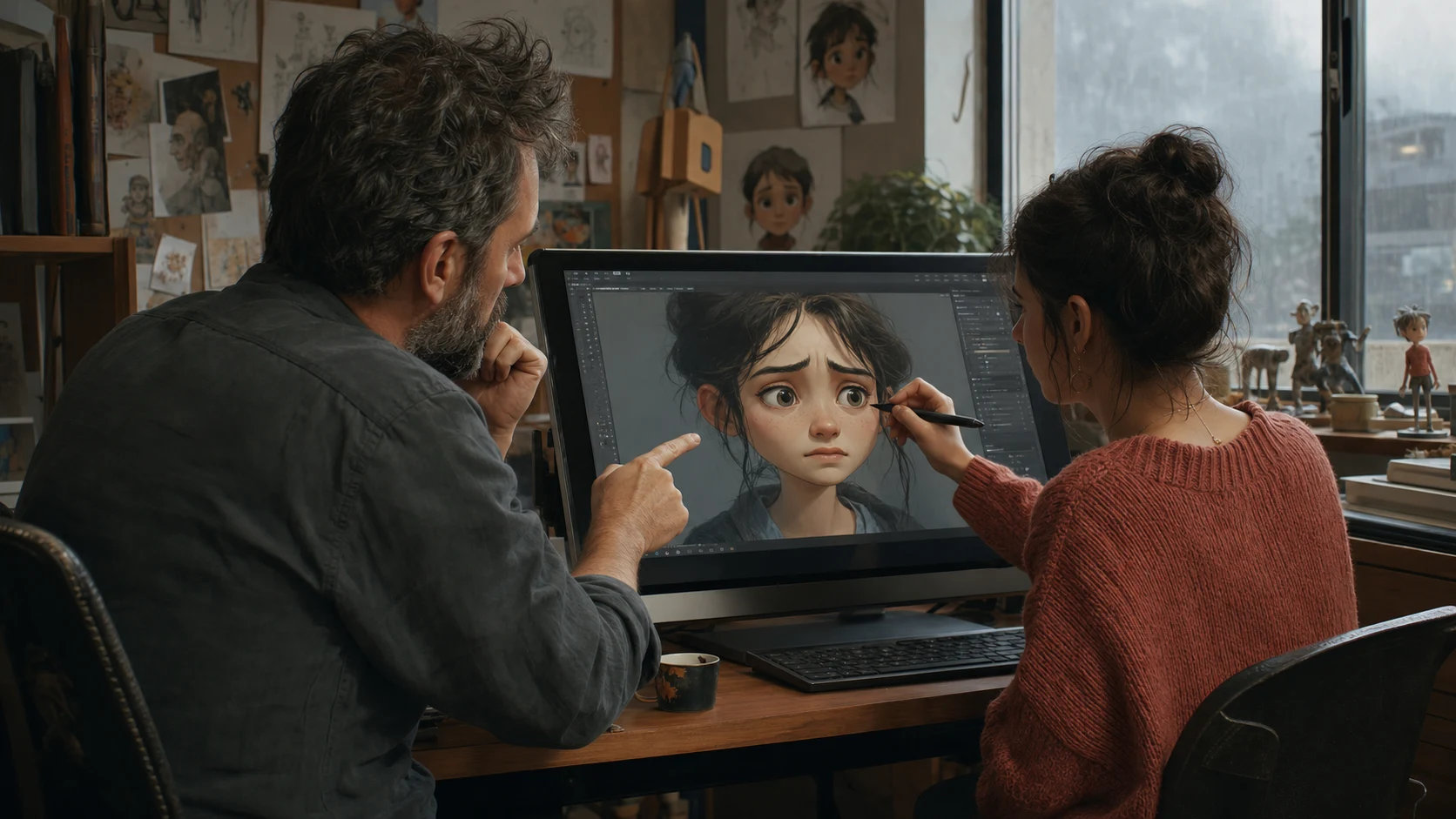
One well-directed intensity change can make a scene feel more alive than five unrelated novelty faces.
🎨 Separate face, pose, and production cost
Before requesting more art, decide what actually needs to change.
Sometimes a different eyebrow and mouth are enough. Sometimes the emotional beat lives in the shoulders, hands, or distance from the camera. A frightened face on a relaxed body can feel disconnected. A calm face with a defensive pose can create exactly the tension you want.
If your art workflow supports interchangeable face parts, you can create range without exporting a full new sprite every time. If each expression is a complete painted image, each addition costs more drawing, export, storage, naming, and testing time.
So write the asset request clearly:
- facial change only
- face plus hand gesture
- alternate upper-body pose
- costume-specific variation
- special scene-only expression
This keeps the artist, writer, and implementer aligned. It also prevents a tiny script note like "she looks uneasy" from quietly becoming a completely new illustration.
🧪 Test expressions inside the real scene
An expression sheet can look wonderful and still fail in the game.
The dialogue box may cover important body language. The sprite may be smaller than expected. A subtle mouth change may disappear on a phone screen. A dramatic expression may arrive too early and flatten the rest of the conversation.
Put the first expression set into one playable scene as soon as possible.
Then check:
1️⃣ Can you notice the change at normal play size?
2️⃣ Does it arrive on the line where the emotion turns?
3️⃣ Does it add information, or just decorate the dialogue?
4️⃣ Are two expressions doing the same job?
5️⃣ Is the missing feeling actually a writing or pacing problem?
If two expressions feel identical in context, merge them. If one important beat still reads flat, add the smallest useful variation.
This is asset planning through playtesting, not guesswork.
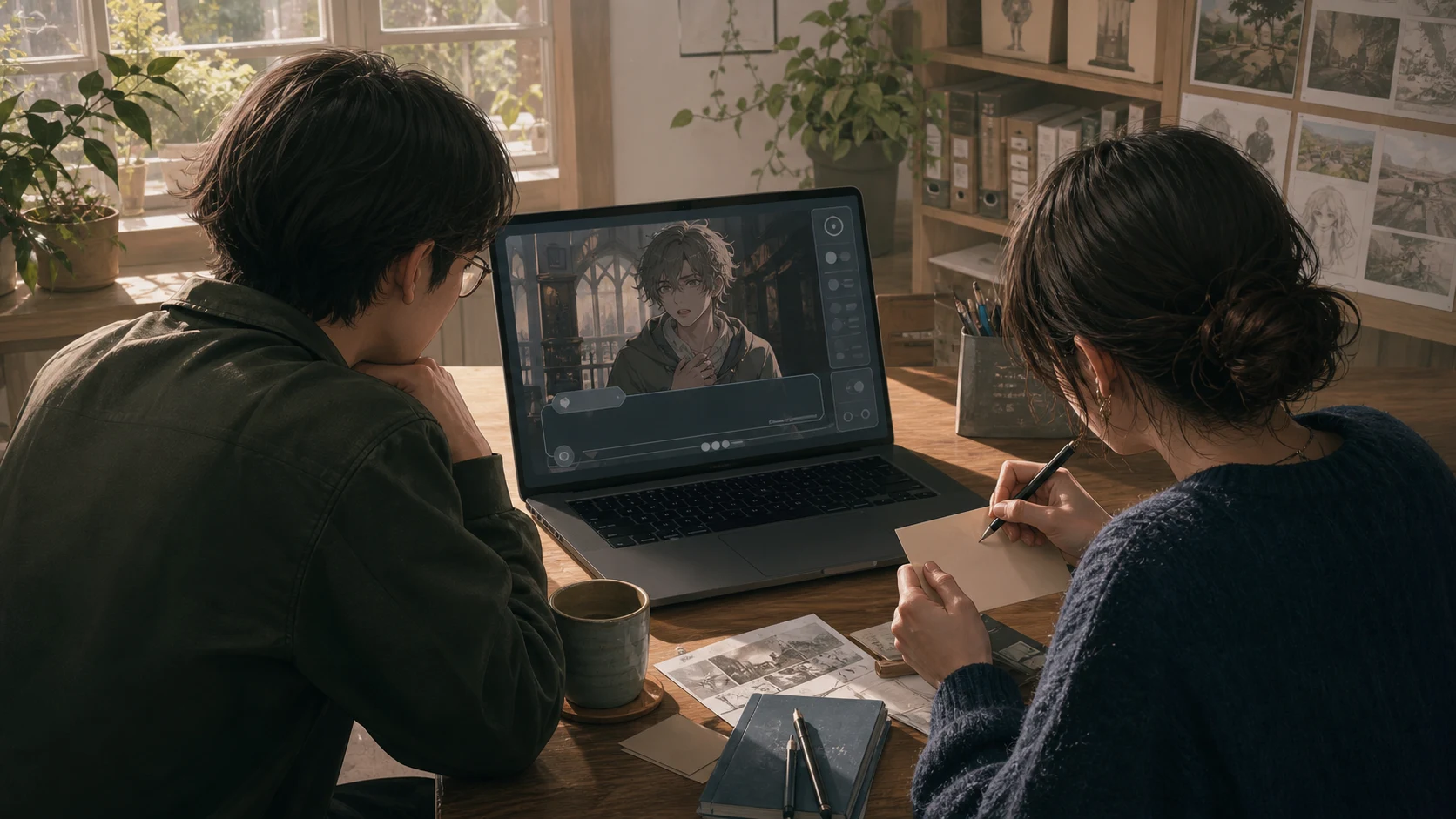
🗂️ A practical starting set by character role
Use this as a starting point, not a rule.
Major character: Begin with a compact core set that covers their ordinary state and the main emotional turns of the first chapter. Five clear expressions are often enough to start testing.
Route lead: Add intensity variants for the emotions that define the relationship. Build these from actual route scenes.
Minor recurring character: Give them a readable default plus the one or two reactions the story truly needs.
One-scene character: A strong default may be enough. Add another expression only if their scene contains a meaningful turn.
Point-of-view protagonist: If the protagonist is rarely shown on screen, do not budget a full set just because other characters have one.
The rule underneath all of these is simple: screen time does not create expression requirements by itself. Emotional function does.
🛠️ How this fits a Novelez workflow
Novelez does not generate character art. It helps you organize uploaded character assets, connect them to dialogue and scenes, preview the story in the browser, and inspect the branching flow without writing code.
That makes it useful for expression planning.
Build one short scene with your core sprite set. Place expression changes on the exact dialogue beats. Preview the scene, notice what reads, and add only the variation that is still missing. You can keep the asset library tied to playable evidence instead of an expanding wish list.
If your draft is still prose or a scenario, Novelez can also structure that writing into editable scenes, characters, dialogue, and choices. It organizes the story structure, but it does not create the images for you. Your artist stays in control of the visual identity.
❓ Quick answers
Do all characters need the same number of expressions?
No. Match the set to each character's emotional role and actual scenes.
Should I finish every expression before building the game?
No. Build a core set, test it in a playable chapter, then expand from missing beats.
Is five expressions always enough for a major character?
It is a useful starting point, not a finish line. Some stories need fewer. Emotionally intense routes may need more.
Do eye and mouth combinations count as separate expressions?
Count production units in the way your art pipeline uses them. For story planning, count distinct emotional reads instead.
When should I add a new pose?
When the body language carries information the face cannot, or when an important scene needs a clear physical shift.
🎬 Start with the scene, not the spreadsheet
You do not need to predict every face your character will ever make.
You need a small set that makes the first playable chapter emotionally clear.
Start with the character's normal state. Add the major emotional turns. Give important feelings a second intensity only when the route needs it. Then test everything in context.
If the scene works, keep building.
If one beat feels flat, you now know exactly what to draw next. 🎨
July 31, 2026