How Many Character Expressions Does Your Visual Novel Actually Need?
August 20, 2026
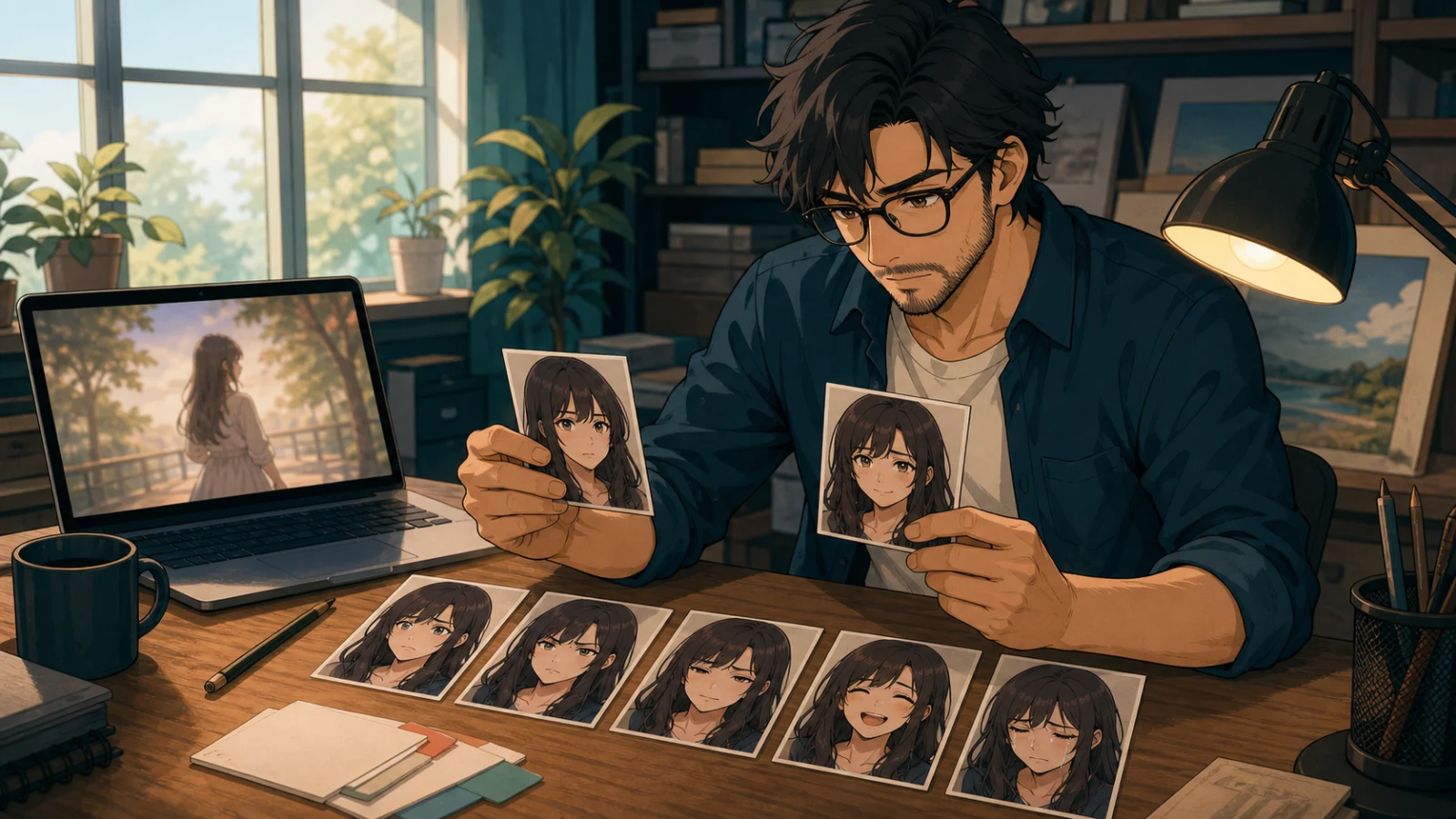
You have finished the character design, and now the artist asks the question that turns one drawing into an asset list: how many expressions should this character have?
Search for a number and you will find almost any answer you want. Five is enough. Eight is the minimum. A lead needs twenty. A commercial pack offers thirty, so perhaps thirty is normal. None of those numbers knows whether your character appears for ten minutes, carries an entire route, hides every feeling behind politeness, or changes clothes in the middle of the story. The useful answer does not begin with a pack size. It begins with the scenes.
A first visual novel can usually start leaner than its creator expects. Not because faces do not matter, but because a well-chosen expression can cover several nearby beats. The expensive mistake is drawing every emotion you can name before you know whether the script ever needs to show it.
Start with emotional jobs, not emotion words
Open the script and mark every moment when the reader should learn something from the face that the dialogue does not say by itself. A character answers calmly while their eyes give away doubt. Someone tries not to laugh. A friendly look closes the distance after an argument. Those are expression jobs.
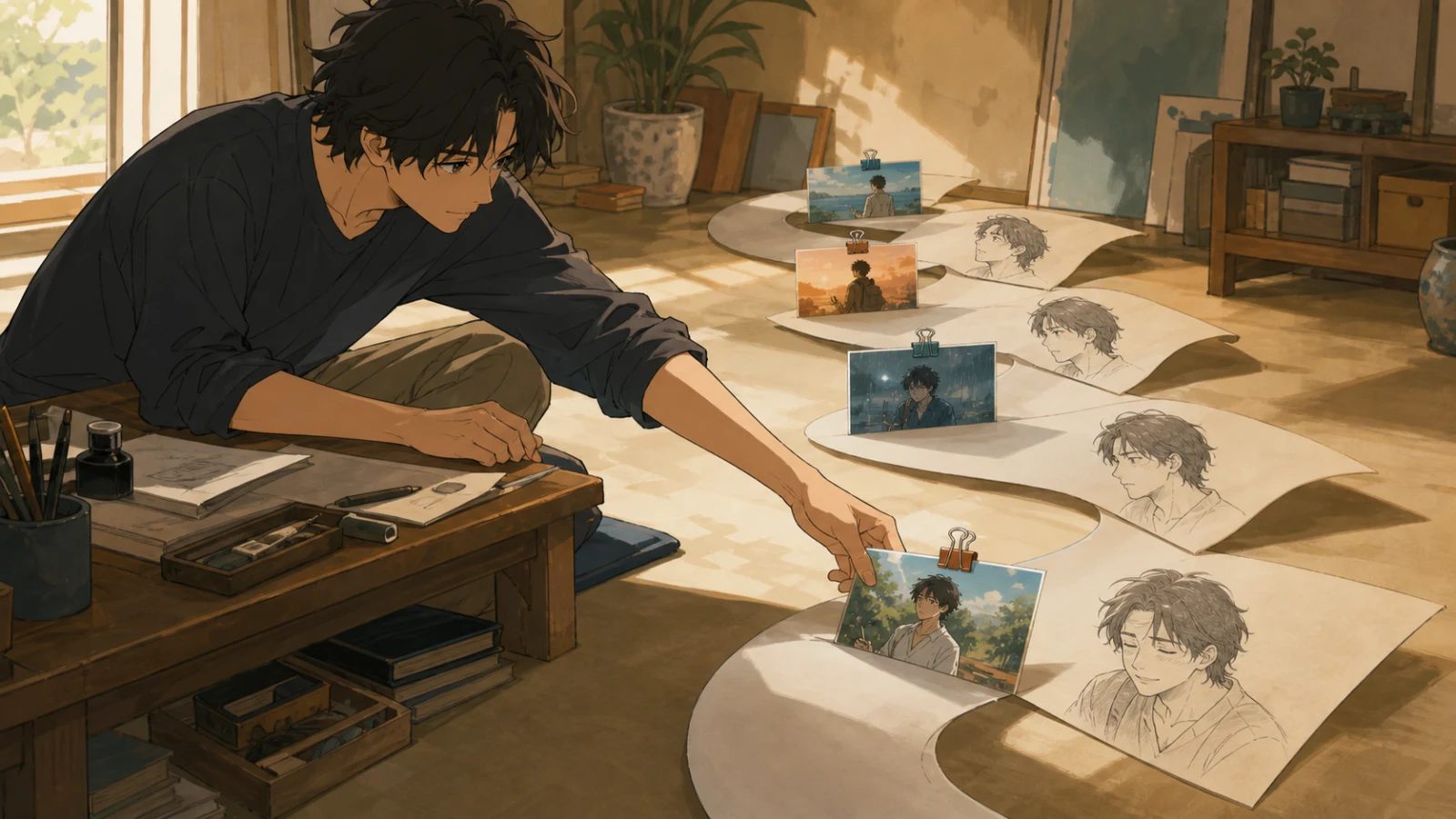
Do not mark every line where a feeling exists. If the narration already says that Mina is furious and the dialogue is an unmistakable shout, a new face may add less than you think. Mark the changes that alter how the line is read: sincere or teasing, controlled or slipping, open or guarded. The face earns its place when it supplies information.
This pass usually reveals a small foundation. One neutral listening face appears constantly. A warm response covers ordinary affection, relief, and light amusement. A guarded or uneasy face handles hesitation and suspicion. An irritated face covers pressure before it becomes open anger. A story may also need a vulnerable low point and one unrestrained high point. That is not a universal list. It is a useful first hypothesis to test against your own scenes.
The main character may need all of them. A shopkeeper who appears once may need neutral and one memorable reaction. Give art according to dramatic work, not equal shares. Equal expression counts across the cast look orderly in a spreadsheet and waste time in the build.
When does one emotion need two versions?
The script may ask for surprise three times, but that does not mean it needs three surprise sprites. Read the scenes beside one another.
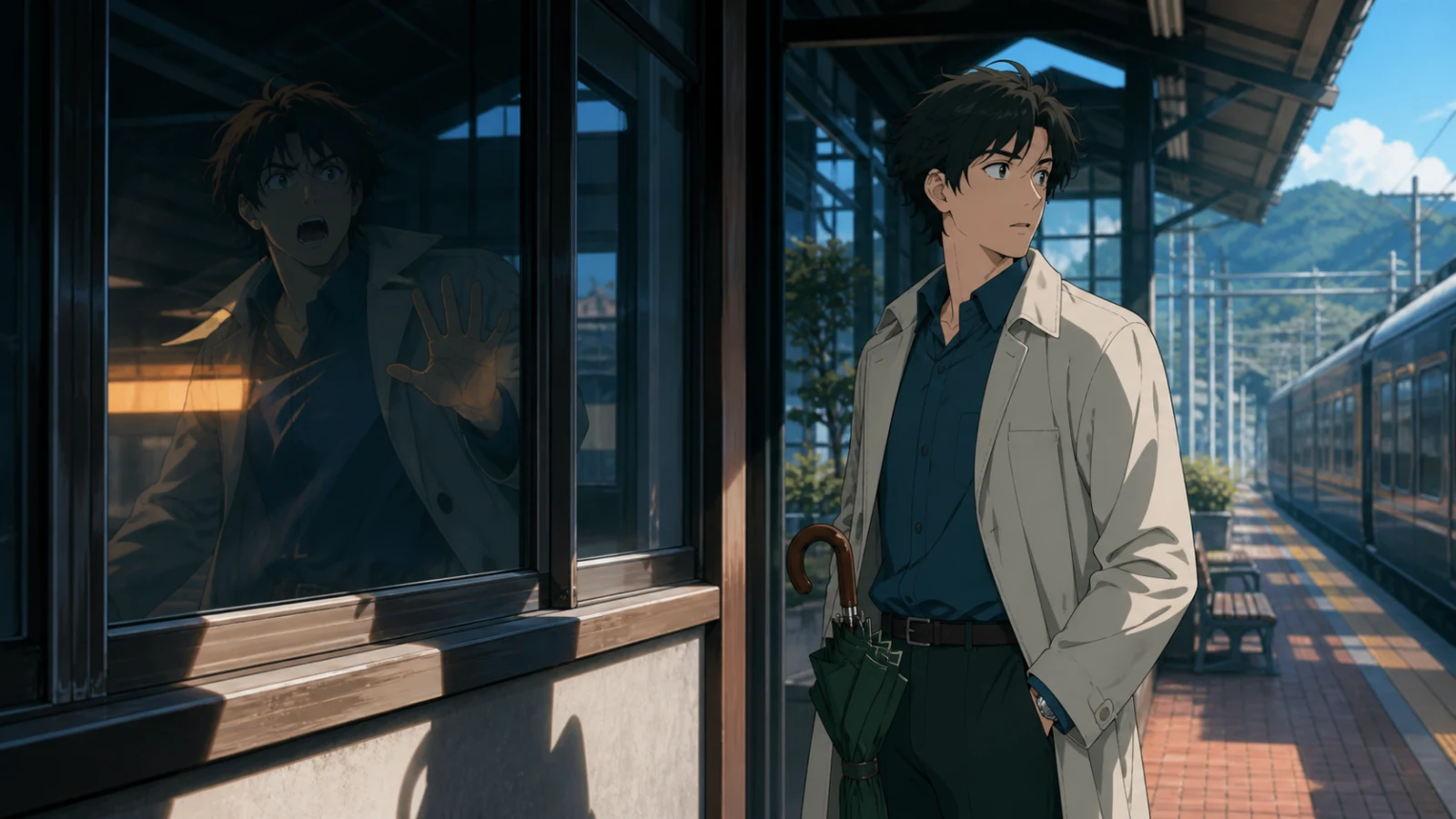
If the character hears an unexpected menu choice in one scene and discovers a betrayal in another, the same wide-eyed face will flatten one of those moments. The first can be a raised brow and a pause; the second may change the mouth, shoulders, and direction of the gaze. They do different narrative work, so two levels are justified.
By contrast, two small smiles that differ only because they were commissioned in different weeks are not helping the story. Readers see expressions in motion, separated by dialogue and timing. They rarely compare the files side by side. If two faces produce the same reading in the scene, keep the clearer one.
Intensity is only one reason for a variation. A character may need a public face and a private face. Someone who performs confidence around the group may relax only with one friend. Those expressions can share the same broad emotion while communicating different relationships. That distinction is often more valuable than adding another generic happy or sad face.
Before commissioning the variation, write the exact scenes beside it. If you cannot point to two moments that need different readings, the second face can wait.
Should you add poses and outfits at the same time?
Be careful here. Faces, poses, and outfits multiply rather than add.
Suppose a character has six faces, three body poses, and two outfits. If every combination is exported as a complete image, the theoretical set is thirty-six files. Add another arm position and the list grows again. Most of those combinations may never appear, yet they still have to be drawn, named, checked, uploaded, and kept consistent.
This is why production systems often separate reusable parts. Ren'Py's layered images, for example, can group attributes such as a face, clothing, or pose and assemble valid combinations. Its image naming rules can also associate attributes with the same character tag. The technical option does not remove the art work, but it avoids exporting every possible full-body combination as an unrelated file.
Layering is not automatically the right answer. It demands that every part align perfectly, and complicated hair, hands near the face, or a jacket crossing the torso can make separate layers harder than complete drawings. For a short project, one base pose with several complete facial variants may be faster and safer. Use modular pieces where the artwork truly reuses the same silhouette; use complete variants where the body language changes the meaning.
Outfits deserve an even stricter test. A costume change that marks a new day, role, or turning point is part of the story. A second jacket chosen only because the first one feels repetitive creates a full new consistency problem. Readers forgive a reused outfit much sooner than a character whose face or proportions drift between files.
Build a coverage board before the artist starts
Turn the script marks into a small board. Put scenes down one side and candidate expressions across the top. A mark means the scene actually uses that face. Empty columns are suspicious; a face with no scene is not an asset yet, only an idea.
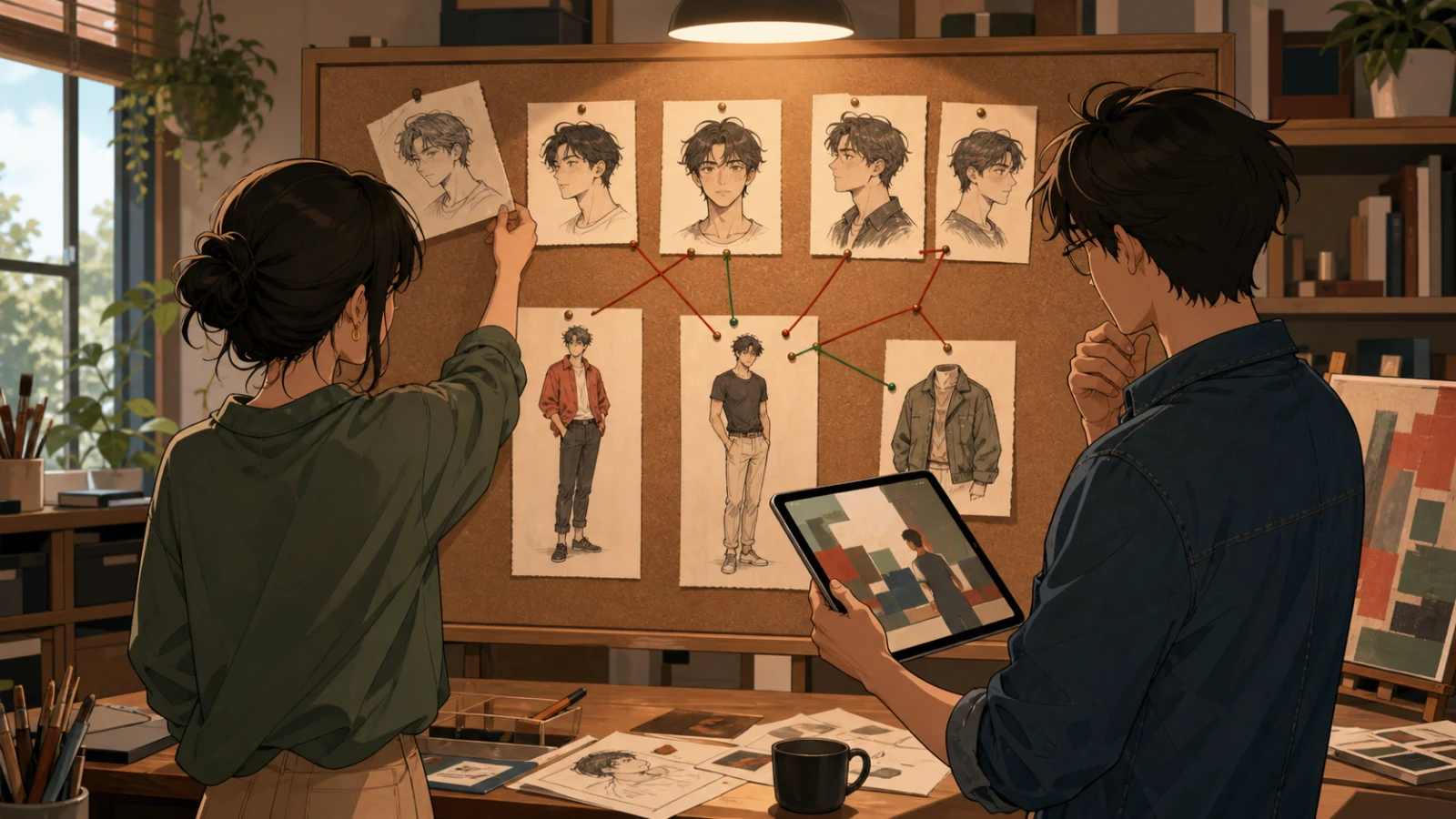
Now look for the opposite problem. If one expression is asked to cover nearly every scene, it may be too broad. Neutral is allowed to appear often, but the route's decisive turns should not all land on the same polite smile. Add a variation where the story changes, not simply where the asset feels overused.
Name each expression by what the reader should perceive rather than by a vague drawing instruction. guarded is more useful than face_07; trying_not_to_smile is more useful than happy_2. A good name helps the writer choose it consistently and helps the artist understand the difference before drawing.
Then make a cheap test. Rough sketches, flat-color busts, or temporary placeholders are enough. Put them into three scenes: an ordinary conversation, a conflict, and a turning point. Click through at reading speed. The test will show whether two faces are indistinguishable, whether a subtle expression disappears at the displayed size, and whether the dramatic face arrives so often that it stops feeling dramatic.
Only after that test should the full rendering begin. It is far cheaper to remove or rename a sketch than a polished sprite.
What should you commission first?
For a small first project, commission in rounds rather than ordering the imagined final set at once.
The first round needs the base pose and the expressions required to play one representative scene from beginning to end. Pick a scene with ordinary conversation and one turn, not the climax. If the character reads clearly there, add the faces required by the rest of the route. Story-specific extremes come last because they are easy to identify and rarely reusable.
Ask for consistency before abundance. The head size, eye line, crop, lighting direction, and transparent canvas need to match across the set. One beautifully painted face that shifts position when it replaces another will look like a jump. A simpler set that swaps cleanly will feel more professional in motion.
Keep the source files and an expression sheet. Record the exact filename, character, pose, outfit, intended reading, and the scenes that use it. If an artist returns months later, this record matters more than memory. It also makes missing combinations visible without generating them just in case.
How does Novelez fit into this plan?
Novelez does not decide how many faces your cast needs, and it cannot make a weak expression plan meaningful. That work still comes from reading the script and choosing the moments where the art should carry part of the scene.
What it changes is the cost of testing the plan. You can assemble the scene, place the available character images, and move through the dialogue without first building a custom presentation layer in code. That makes the rough-play pass practical while the art list is still small. A creator can discover that guarded and uneasy read identically in context before paying to finish both.
The same project also keeps the scene order and visual assets together, so an expression can be checked where it is actually used instead of judged only on an art board. When the scene works, publish a link and ask a reader a concrete question: where did the character's reaction feel wrong or missing? That feedback is much easier to act on than asking whether the art has enough expressions.
Start with coverage, test it in motion, and expand only where the story becomes clearer. The right expression count is not the largest set you can afford. It is the smallest set that lets the reader notice every important change.
A practical expression check
- Every planned face is tied to at least one named scene.
- The default listening face works through ordinary dialogue without looking blank.
- Major emotional turns do not reuse a mild reaction that weakens them.
- Similar expressions produce meaningfully different readings at actual display size.
- Supporting characters receive only the variants their scenes require.
- Poses and outfits are counted as combinations before production begins.
- Layered parts are used only where alignment and silhouette truly stay reusable.
- Filenames describe the intended reading and remain consistent across scenes.
- Rough variants have been tested in an ordinary scene, a conflict, and a turning point.
- The polished set is commissioned in rounds, with source files preserved.