How Much Does It Cost to Make a Visual Novel? A Practical Budget Plan
August 5, 2026
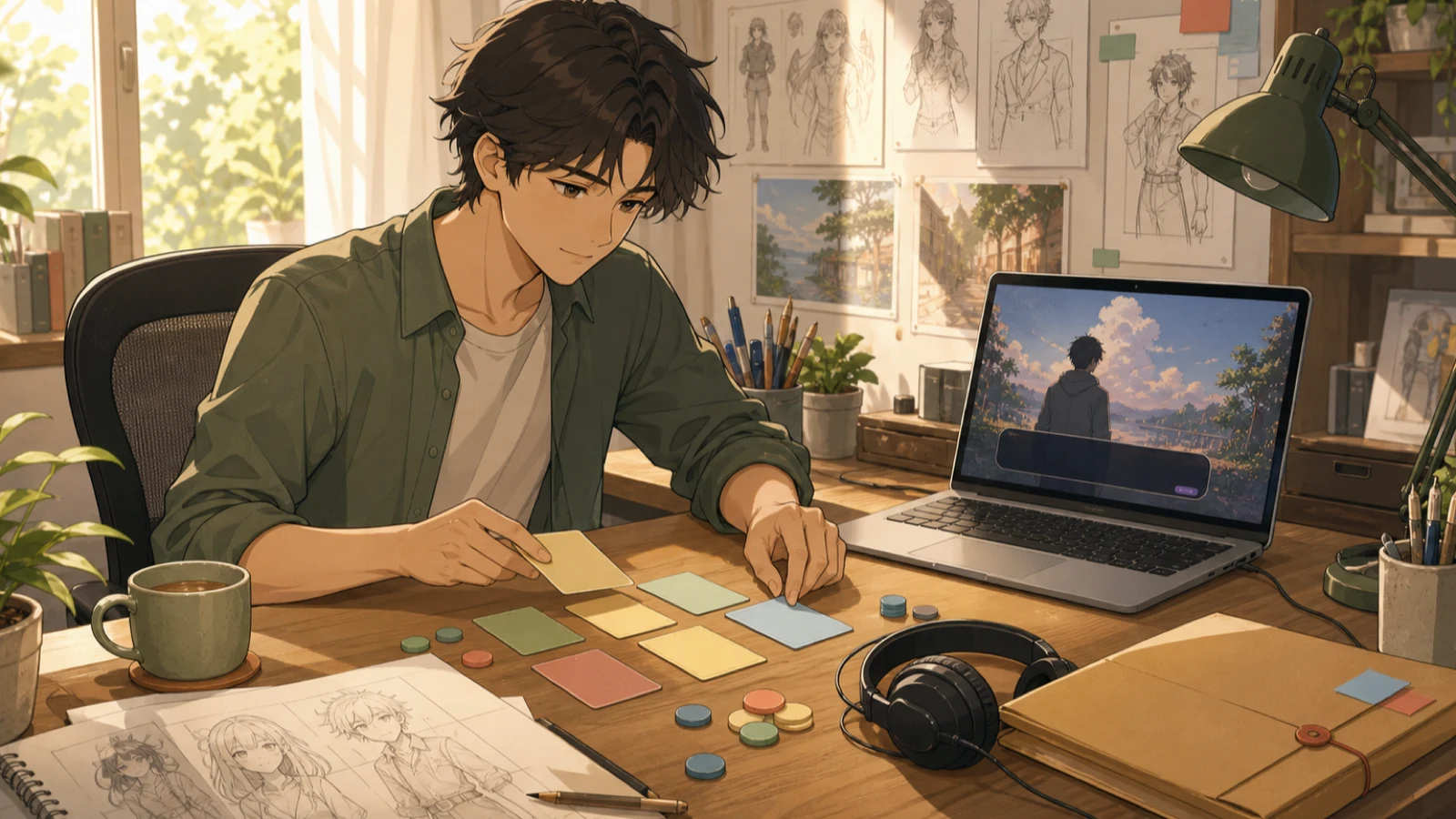
How Much Does It Cost to Make a Visual Novel? A Practical Budget Plan
How much does it cost to make a visual novel?
Search that question and you will find wildly different answers. One creator spent almost nothing but evenings and favors. Another hired specialists for writing, character art, backgrounds, music, interface design, voice work, and testing. Both numbers may be honest, and neither tells you what your game will cost.
Here is the useful answer: a visual novel costs whatever it takes to cover its roles, production time, and chosen assets until a tested version is finished. The total is shaped less by the label “visual novel” than by the number of scenes, characters, routes, unique illustrations, audio requirements, revision rounds, and jobs you cannot do yourself.
That means a universal price tag is the wrong starting point. A budget plan should show what the game promises, which work that promise creates, who will perform it, and what gets reduced first if time or money tightens.
You do not need a perfect quote on day one. You need a cost map that makes hidden work visible.
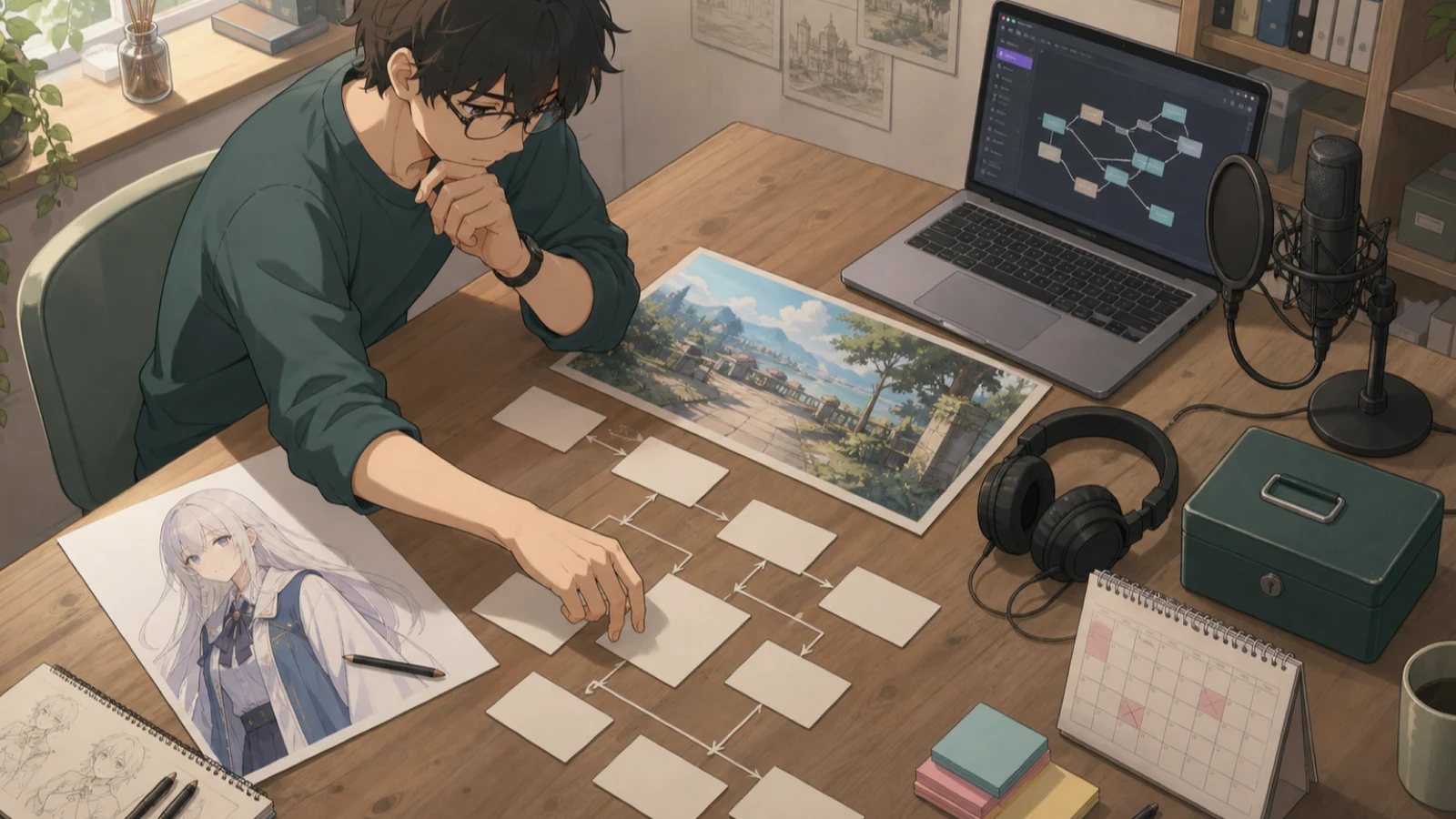
🧭 What are you actually paying for?
Every visual novel has a different mix of cash cost and creator time. Even a project made alone is not free. You are paying with evenings, attention, delayed releases, software subscriptions, learning time, or work you could have taken elsewhere.
Start by separating the project into three budget layers.
1️⃣ Roles: Who writes, edits, illustrates, composes, implements, tests, markets, and manages the files?
2️⃣ Time: How long does each role need for the first pass, feedback, revisions, integration, and final checks?
3️⃣ Assets: How many distinct deliverables must be created, exported, named, reviewed, and tested?
These layers overlap, but they answer different questions. “Four characters” is an asset count. “Each character needs expressions and cleanup” is labor. “The illustrator is also directing the visual style” is an additional role.
This is why copying another game’s total budget rarely works. Their team may have owned reusable backgrounds, composed music in-house, used stock interface elements, or accepted a much rougher editing pass. Your game may look smaller on paper while asking for more bespoke work.
👥 Build a role budget before an asset shopping list
It is tempting to begin with the visible items: sprites, backgrounds, CGs, and songs. Players see those, so they feel like the budget.
But a folder full of attractive assets is not a finished visual novel. Someone still has to shape the script, turn it into scenes, place choices, track variables, time transitions, prepare files, revise continuity, test every path, fix the interface, and package the release.
Make a role sheet with one owner beside each job:
- story development and script writing;
- editing, proofreading, and localization;
- character design, sprites, and expressions;
- backgrounds, event illustrations, and interface art;
- music, ambience, and sound effects;
- scene implementation and branching logic;
- playtesting, route checks, and bug fixes;
- store page, trailer, screenshots, community posts, and launch support;
- production management, feedback, file organization, and backups.
One person can own several rows. That is normal for a small project. The important thing is not to leave a row ownerless and assume it will somehow finish itself.
For every role, mark one of three plans: do it yourself, use licensed or reusable material, or commission a specialist. Then add the learning and revision time to the first option, license restrictions and adaptation time to the second, and briefing plus feedback time to the third.
The cheapest-looking option is not always the lowest-cost option. Learning an unfamiliar skill can be valuable, but it can also delay the entire project. A commission can save production time, but a vague brief may create expensive revisions. A reusable asset can be efficient, but it may demand extra work to make the rest of the game feel coherent.
⏳ Turn the story outline into a time budget
An outline hides work because one bullet can become a two-minute conversation or a twenty-minute sequence with several emotional states.
Break the game into buildable units: scenes, routes, endings, and reusable systems. For each scene, note:
1️⃣ how much new writing and editing it needs;
2️⃣ which characters, expressions, backgrounds, and audio cues appear;
3️⃣ whether it introduces a choice or variable;
4️⃣ how many later scenes depend on that choice;
5️⃣ how many times the scene must be tested after changes.
Then estimate time in passes rather than one heroic block. A scene usually moves through planning, draft, edit, implementation, asset integration, playtest, revision, and regression testing. If voice work or localization is involved, script locking and late changes become even more important.
Do not schedule every available evening as production capacity. Feedback arrives late. Files need re-exporting. A choice that looked clear in the outline may confuse players. A background crop may fail on another screen. Leave room for integration and fixes, because the last stretch of a visual novel is full of small jobs that were invisible at the concept stage.
Your time budget should also reveal the expensive multiplication points. A new route is not only more words. It may add exclusive art, music transitions, save-state combinations, localization strings, ending logic, and another complete path to replay after every important fix.
🎨 Count asset families, not just individual files
“We need three characters” sounds manageable. What does one character actually include?
Perhaps the base design needs a turnaround, one standard pose, several facial expressions, a second costume, alternate arm positions, and export crops. Or perhaps one portrait with a small expression set is enough. Those are very different budgets even though both plans say “one character.”
Group assets into families so the quote and workload stay readable:
- Character family: design, base pose, expressions, costumes, pose variants, cleanup, and exports.
- Background family: location design, time-of-day variants, weather changes, foreground elements, and crops.
- Event art family: one base composition, meaningful variants, and presentation crops.
- Audio family: theme, looping background tracks, ambience, interface sounds, and dramatic cues.
- Interface family: dialogue box, menus, choice states, save/load screens, accessibility states, and store screenshots.
Count the base asset first. Add variants only when they change the story, readability, or player experience. “It would be nice to have” is not the same as “the scene stops working without it.”
Also write down technical requirements before requesting quotes. Resolution, aspect ratio, layer separation, file format, commercial usage, revision rounds, crediting, source-file delivery, and localization-safe interface space all affect the real scope. Clear requirements protect both the creator and the specialist.
🪜 Which parts deserve the budget first?
When everything feels important, use the player promise as the filter.
If the game is a quiet character drama, the script edit, expressive portraits, and musical restraint may matter more than a large gallery. If it is a mystery built around locations, readable clues and coherent backgrounds may carry more weight. If its main appeal is elaborate route discovery, implementation and testing deserve more protection than decorative variants.
Create three priority levels:
1️⃣ Promise-critical: Without this, the game no longer delivers its central emotional or mechanical experience.
2️⃣ Quality-supporting: This makes the experience clearer, more polished, or more memorable, but the project still functions without the full version.
3️⃣ Expansion: Alternate costumes, extra event variants, bonus routes, full voice work, or launch extras that can wait for a later milestone.
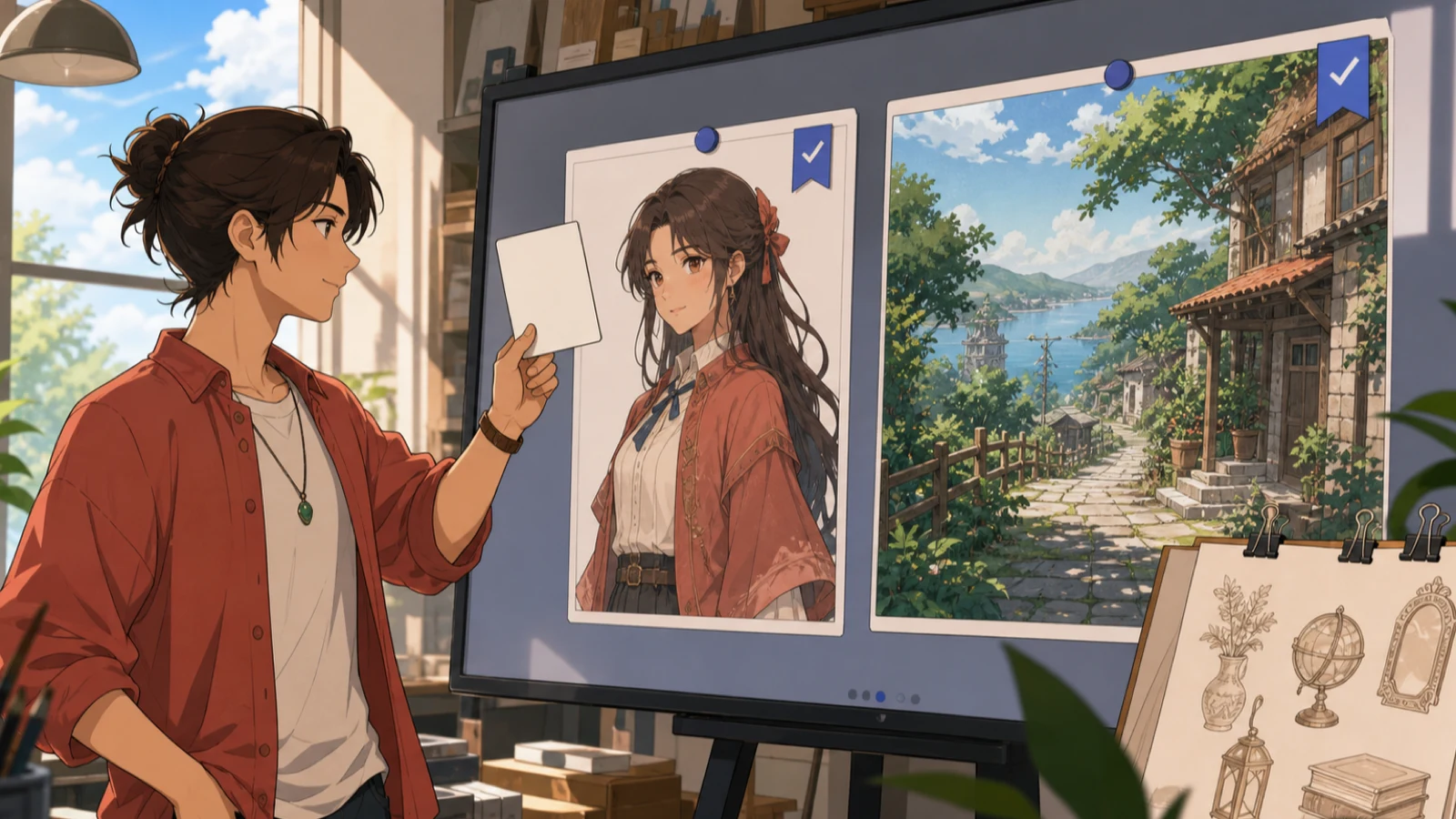
Now define the cut order before you spend. Cut breadth before cutting clarity. Reduce route count, decorative variants, minor locations, and bonus material before removing the editing, readable interface, or testing that lets the core story work.
A smaller game with deliberate art direction feels finished. A larger game with inconsistent assets, untested branches, and exhausted creators feels expensive in all the wrong ways.
🤝 How should you request quotes without wasting anyone’s time?
Do not send an artist or composer a one-line message asking for “a visual novel price.” Give them a scope they can evaluate.
A useful request includes:
- a one-paragraph project description and intended release;
- the exact asset family and base quantity;
- required variants and what changes in each;
- target dimensions, formats, layers, and delivery stages;
- visual or audio references that describe mood without requesting imitation;
- the review process and expected revision rounds;
- commercial usage, crediting, and source-file needs;
- your desired schedule and which dates are flexible.
Ask what is included, what counts as a revision, what triggers a new fee, and how schedule changes are handled. Put the answer in writing. This is not about distrusting collaborators. It gives everyone the same definition of “done.”
Avoid requesting unpaid custom tests unless the specialist offers them. A portfolio, a paid small asset, or a clearly scoped prototype commission is a better way to confirm fit. If you are comparing quotes, compare the deliverables, usage rights, revision structure, communication, and reliability, not only the bottom-line number.
🧪 Prototype before you commission the full game
The most useful budgeting step happens before the expensive assets are final.
Build a small playable slice with temporary material. Choose a sequence that includes ordinary dialogue, one emotional turn, one choice, one transition, and a consequence. Use rough sketches, simple shapes, temporary audio you are allowed to use internally, and a basic interface.
Then play it with someone who did not write it.
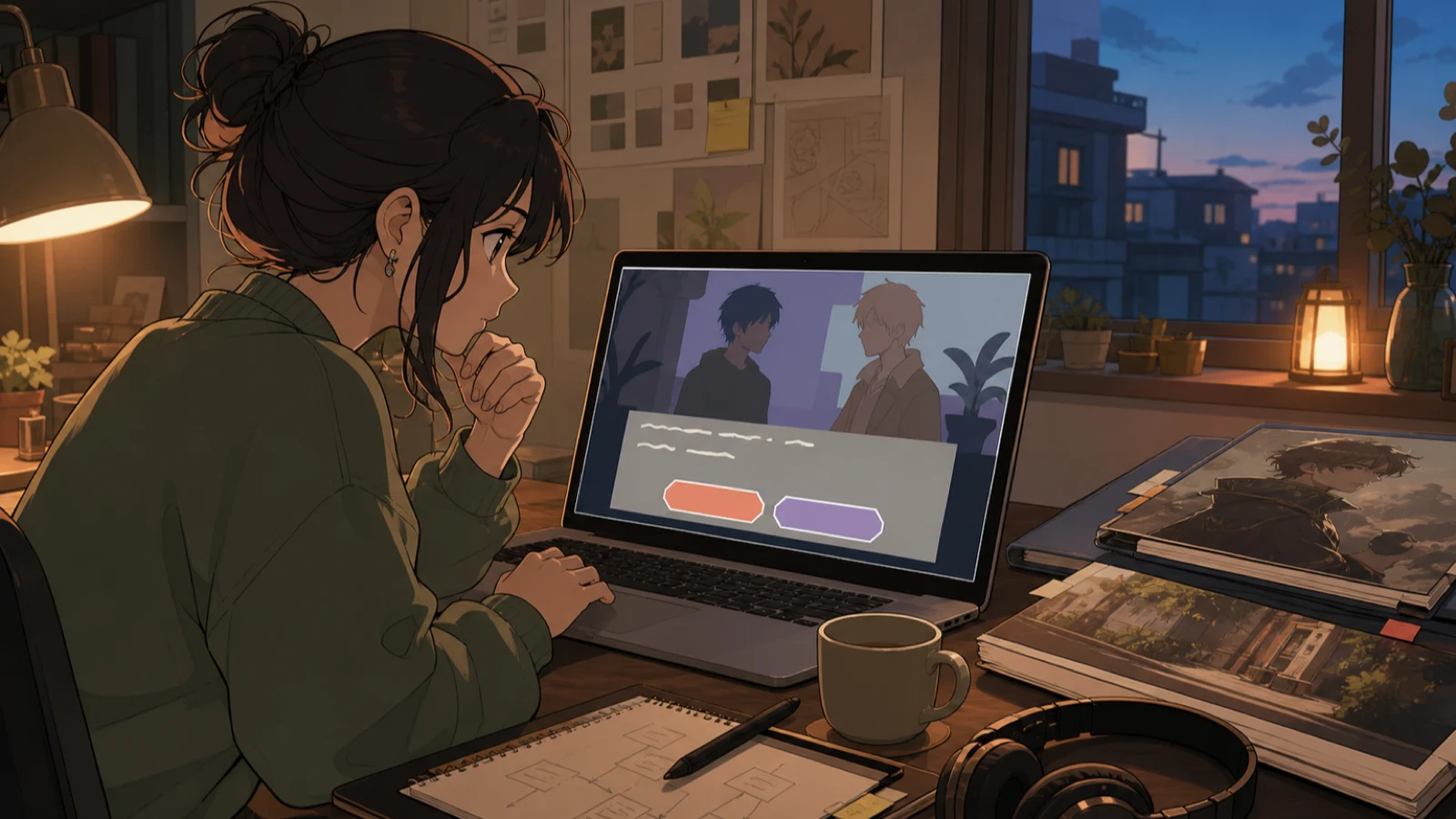
Watch what the prototype reveals:
- Does the scene need every planned expression?
- Is a unique background necessary, or would one reusable location work?
- Does the event illustration appear at the right emotional moment?
- Is the choice understandable without extra explanation?
- How long does implementation take compared with the writing estimate?
- Which transition, sound, or interface state was missing from the asset list?
- How much time does one complete feedback and revision cycle take?
Use that evidence to update the budget. If one polished slice takes far longer than expected, multiplying the original plan will not make it safer. Reduce scope, change the asset approach, move optional work later, or adjust the schedule before the full commission begins.
The prototype is not throwaway work. It is your first production measurement, a clearer brief for collaborators, and proof that the story promise survives contact with the player.
🌱 How can Novelez help you test the budget plan?
Novelez is a browser-based, no-code visual-novel creation tool. You can organize scenes and branches in the Flow editor, arrange dialogue, choices, assets, and timing in the Timeline, and test the result in the built-in player.
That makes it useful at the budgeting stage. Place temporary portraits and backgrounds into a small route, preview the pacing, and see which planned assets actually earn their place before commissioning a complete set. A working scene also gives an artist, composer, editor, or tester better context than an asset list alone.
You can start and preview the project in the browser. Ren'Py export provides a path toward a PC build when you later need deeper engine work. It is not a one-click native multi-platform publishing promise.
The practical order is simple: define the promise, map roles and assets, build one playable slice, revise the budget, then commission the full production.
✅ A budget worksheet you can copy
Before you approve a full production budget, answer these questions:
1️⃣ What is the smallest version of the game that still fulfills its promise?
2️⃣ Who owns writing, editing, art, audio, implementation, testing, launch work, and file management?
3️⃣ Which work will be self-made, licensed, or commissioned?
4️⃣ How many base assets exist in each family, and which variants are truly necessary?
5️⃣ What are the technical requirements, usage rights, revision rounds, and delivery stages?
6️⃣ How much time does one scene take from draft through tested integration?
7️⃣ Which routes or features multiply testing and revision work?
8️⃣ What gets cut first if the estimate grows?
9️⃣ Has a new player tested a representative playable slice?
🔟 What did that prototype change about the quote, schedule, or asset plan?
You may still decide to make a large visual novel. The goal is not to make every project tiny. It is to make the ambition visible early enough that you can fund it, schedule it, and finish it without guessing.
Start with one honest slice. A budget built from real production evidence is much more useful than a confident number borrowed from someone else’s game. 🎬
August 5, 2026