Want to Finish Your Visual Novel? Start With a Tiny Complete Version
July 10, 2026
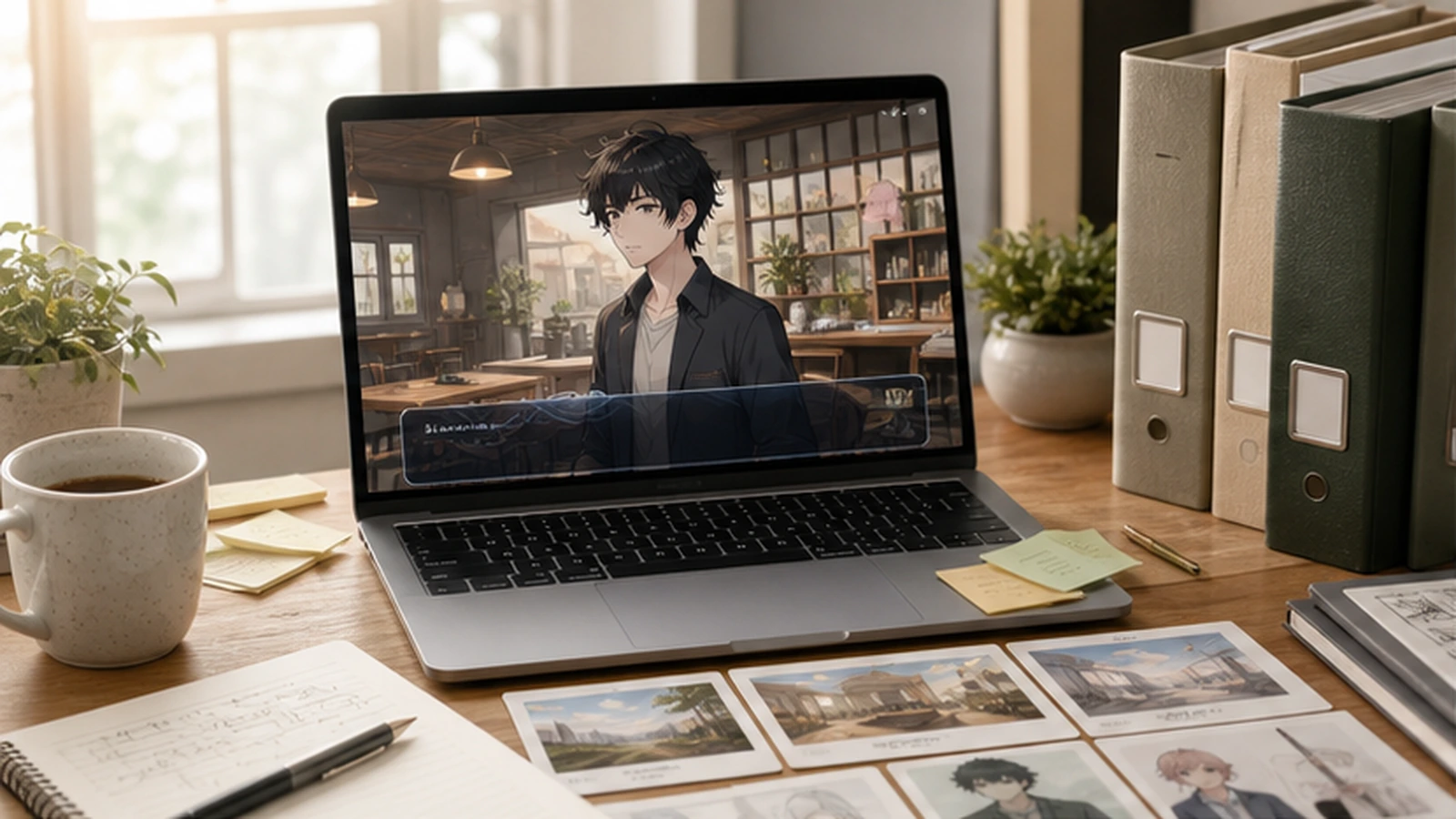
Want to Finish Your Visual Novel? Start With a Tiny Complete Version
Many visual novel projects do not fail because the story is bad.
They fail because the first version is too big.
The creator opens a new project with a world, a cast, a long plot, three routes, relationship variables, custom backgrounds, multiple endings, a soundtrack list, and a very reasonable belief that everything will come together once the editor is set up.
Then the project becomes heavy before it becomes playable.
One scene needs five assets. One character needs three expressions. One choice needs consequences later. One route needs a different version of the same event. Soon the creator is not making a visual novel anymore. They are managing a production plan that is larger than the game they have actually played.
This is why a tiny complete version matters.
Before you try to build the full story, build a small version that has a beginning, a choice, a consequence, and an ending. Not a prototype that only tests a mechanic. Not a document that explains the game. A playable slice that proves the experience works.
What is a vertical slice for a visual novel?
In game development, a vertical slice is a small part of the game that shows the final experience in miniature.
For a visual novel, that does not have to mean a huge polished demo. It can be much smaller.
A useful visual novel vertical slice might include:
- one opening scene
- one character introduction
- one meaningful choice
- one short consequence scene
- one ending or temporary stopping point
- one background
- one or two character sprites
- one music track or ambient sound
- a complete playthrough from start to finish
The key word is complete.
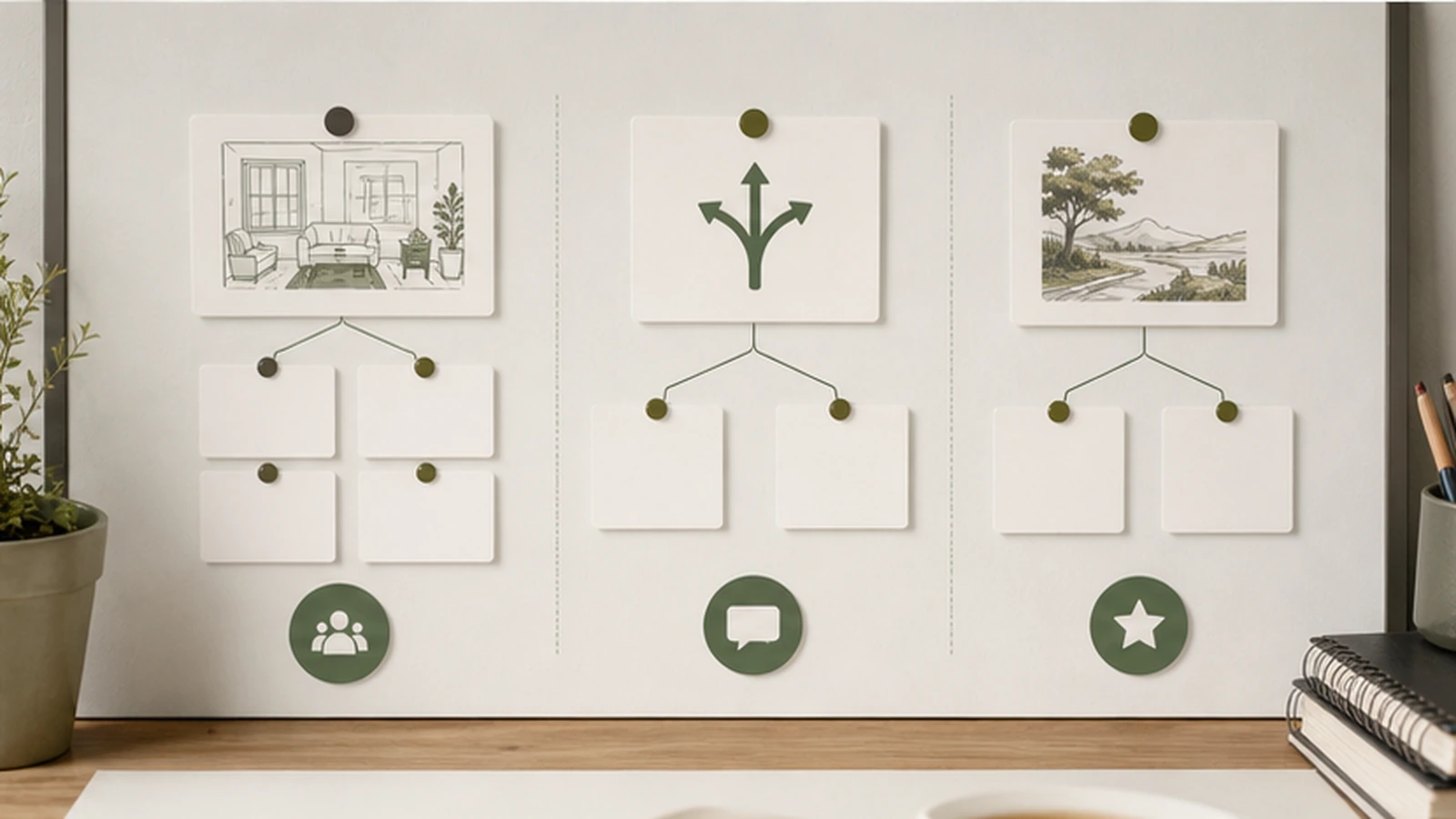
If a player can start it, make a decision, see the result, and reach a clean stopping point, you have something real. It may be short, but it is not imaginary anymore.
Why this helps more than a big outline
Outlines are useful. They help you understand the structure of your story. But an outline cannot tell you how the story feels when someone clicks through it.
A visual novel is not only writing. It is timing, screen composition, character expression, choice placement, background changes, music, pauses, and reader attention. A scene that looks short in a document can feel slow in play. A choice that looks dramatic in an outline can feel obvious on screen. A character introduction that reads well in prose can feel crowded when it needs assets, portraits, and pacing.
A tiny complete version reveals those problems early.
It shows whether the premise is clear. It shows whether the first choice feels interesting. It shows whether the UI rhythm supports the story. It shows how many assets you actually need to make one scene feel alive.
Most importantly, it gives you a finished thing.
That matters emotionally. Finishing a small version teaches your brain that this project can become real. It is much easier to continue after you have played something that exists.
A good first slice is smaller than you think
Many creators make the first slice too ambitious.
They choose the most dramatic chapter, the biggest reveal, or the route split that defines the whole story. That is understandable, but it often creates too much pressure. A first slice should be built to answer one question:
Can this story become enjoyable when it is played, not just imagined?
You can answer that with a very small scope.
Try this structure:
- A character enters a situation.
- The player learns what the character wants.
- The player makes one decision.
- The story reacts to that decision.
- The scene ends with a clear emotional direction.
That is enough.
For example, if your full game is a mystery romance set in a coastal town, your first slice does not need the whole town, the full case, and every romance option. It can be one evening at a closed cafe, one conversation with one character, one suspicious clue, and one choice about whether to trust them.
If the slice works, you will feel it.
If it does not, you will learn why before you have built ten chapters around the wrong rhythm.
What to include and what to leave out
Your first vertical slice should include the parts that affect the player's experience directly.
Include:
- the actual opening lines or a near-final version of them
- the main character's voice
- one important interaction
- one choice that changes the immediate next scene
- the basic visual tone
- enough sound or silence to test the mood
- a real ending point
Leave out:
- full route logic
- relationship systems
- every planned expression
- placeholder lore dumps
- complex inventory or stat systems
- polish that does not affect the core feeling
- long explanations of what will happen later
The goal is not to impress people with how much the game will contain someday. The goal is to discover whether the smallest playable version already has a pulse.
The first playtest should be uncomfortable
When you play the first slice, it may feel rough.
That is normal. It is supposed to expose the parts that were hidden in the document.
You may notice that the scene takes too long to reach the first choice. You may notice that two characters sound too similar. You may notice that your background image does not match the emotional tone. You may notice that the choice is not really a choice because one answer is clearly correct.
This is good news.
These discoveries are much cheaper in a five-minute slice than in a two-hour build.
After the first playtest, do not immediately expand the story. First, fix the slice until it feels stable. Make the first minute clearer. Make the choice sharper. Remove lines that explain what the player already understands. Add one expression change if the scene feels emotionally flat. Cut one branch if it makes the story harder to follow.
Then play it again.
This loop is where the project starts to become a game.
How Novelez fits into this workflow
Novelez is built around the idea that story creators should be able to reach a playable version quickly.
If you already have a script, outline, or web novel draft, you can use Novelez to turn that material into structured scenes, dialogue, characters, and choices. Then you can adjust the flow visually, preview the result in the browser, and keep shaping the experience without writing code first.
For a vertical slice workflow, that is especially useful.
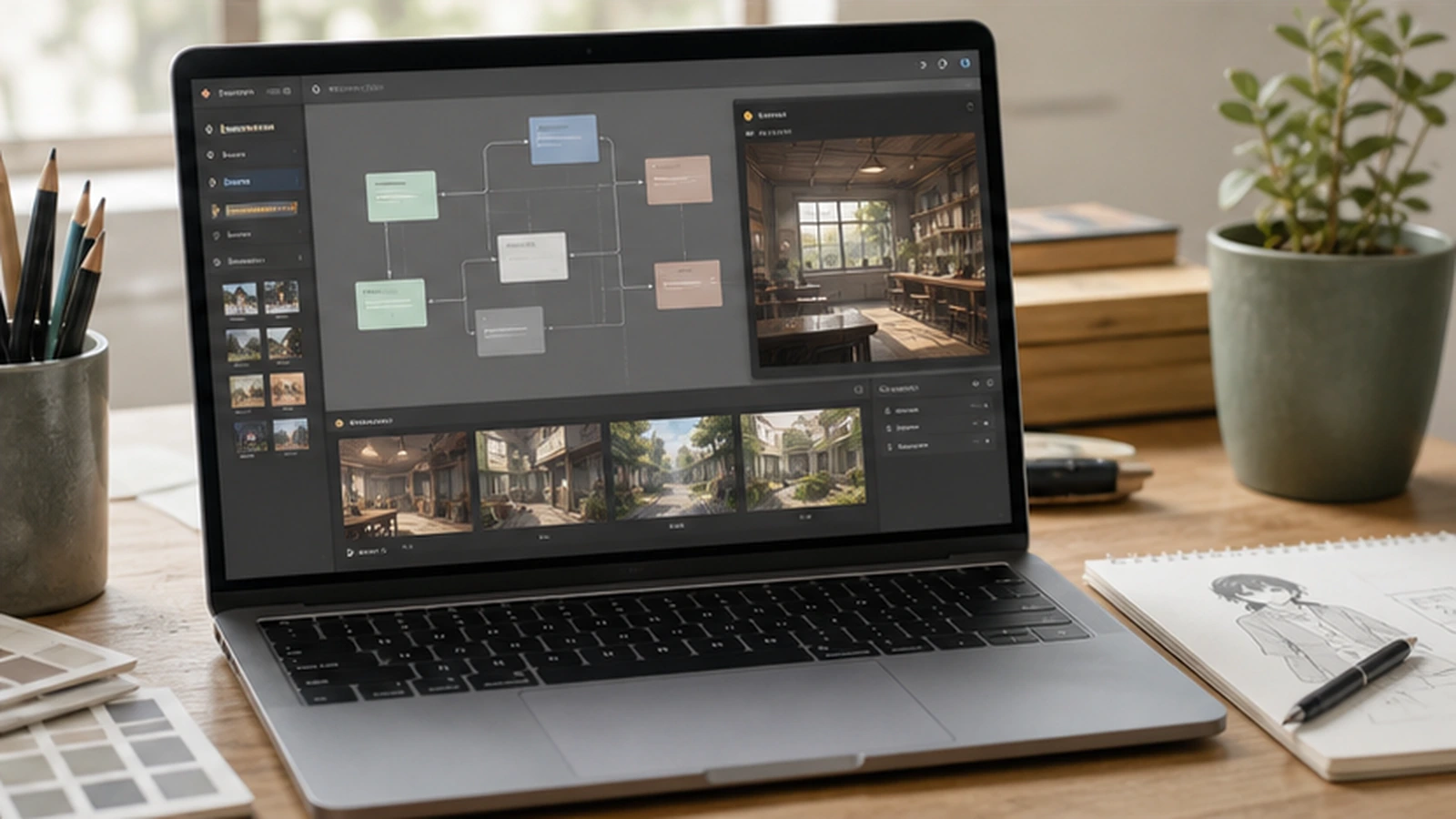
Instead of waiting until the entire story is planned, you can choose one short section, structure it into scenes, connect a choice, add the assets you need, and test the pacing. The editor becomes a place to think with the story, not just a place to assemble it at the end.
That is the real advantage of starting small: you are not lowering your ambition. You are giving the project a body early enough that you can learn from it.
A simple checklist before expanding
Before you grow the slice into a larger chapter, ask:
- Can someone play it from start to finish without explanation?
- Does the first choice arrive before attention starts to fade?
- Does the choice reveal something about the character or situation?
- Does the consequence feel visible, even if it is small?
- Do the visuals support the mood instead of fighting it?
- Did the playtest reveal one clear thing to improve?
- Do you still want to continue after playing it?
If the answer is mostly yes, expand carefully.
Add one more scene. Add one more consequence. Add one more character. Keep the project playable after each step.
A visual novel is easier to finish when it is always becoming more complete, not just bigger.
The full story can still be ambitious. It can still have routes, endings, surprises, and emotional turns. But the path to that story starts with something small enough to finish and honest enough to test.
Build the tiny version first.
Then let it teach you what the bigger version needs to become.